Young people were convicted for their alleged involvement in the deaths of four security agents; Organizations denounce closed trials, forced confessions and risk of new executions
Iran publicly executes two protesters and expands repression after protests
Young people were convicted for their alleged involvement in the deaths of four security agents; Organizations denounce closed trials, forced confessions and risk of new executions Iran publicly executed this Tuesday,...
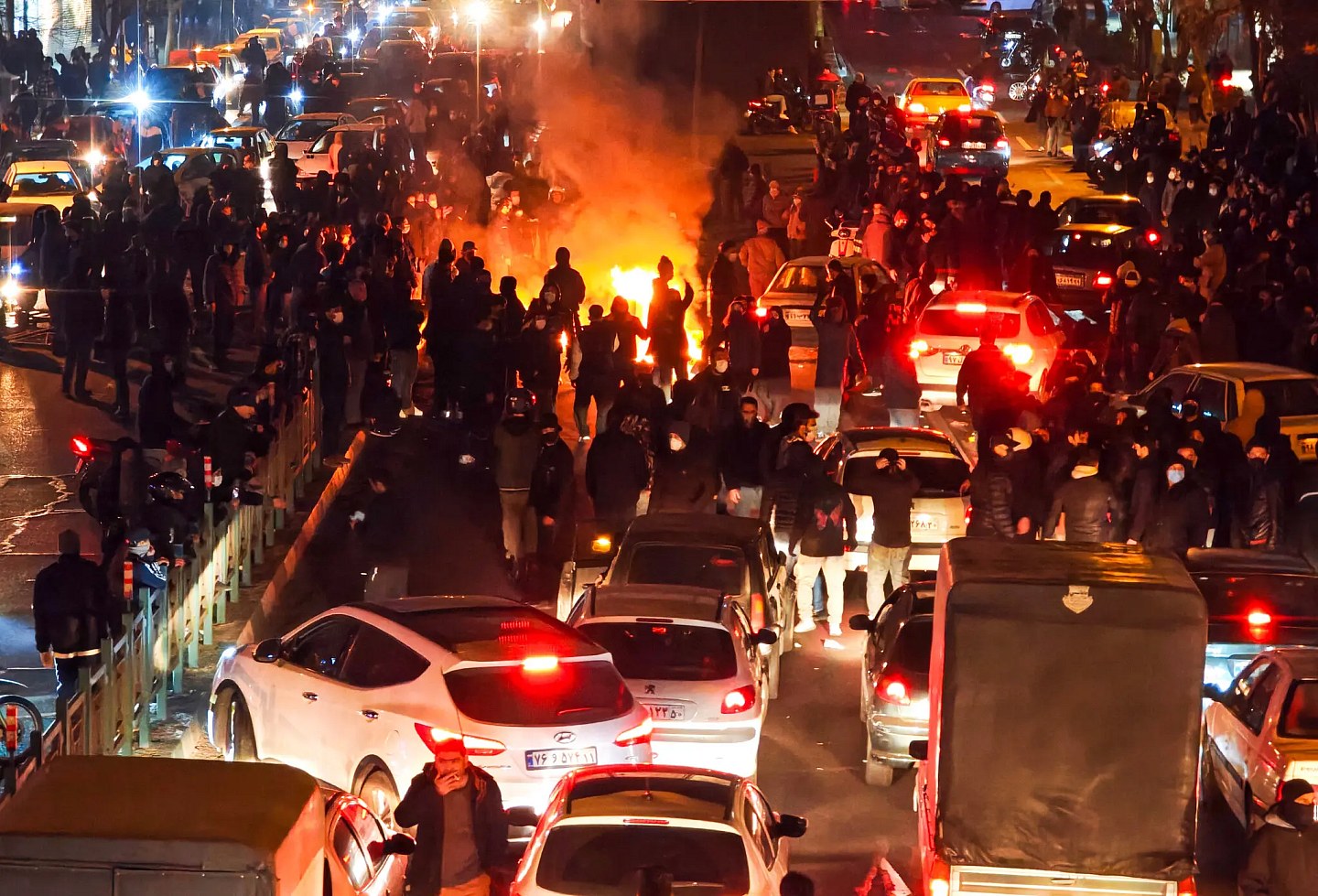
Iran publicly executed this Tuesday, July 28, two men arrested during the wave of demonstrations against the government that took place in early 2026. The deaths are part of a campaign of repression that, according to international organizations, uses the death penalty to intimidate opponents and prevent the emergence of new protests.
The convicts were identified as Abolfazl Sepahi-Badjani and Amirhossein Safari-Hosseinabadi. They had been detained after clashes that occurred on January 8 in Alikhani Square, in the city of Isfahan, one of the main areas hit by the demonstrations.
According to the Mizan agency, linked to the Iranian Judiciary, the two participated in the deaths of four members of the security forces. Authorities also assigned the defendants charges related to possession of weapons, arson, vandalizing buildings and destroying public property.
Human rights organizations, however, claim that the men were tried in a collective process marked by serious irregularities, without the presentation of individual evidence and using statements obtained during the period of detention.
Executions took place in front of the public
The sentences were carried out in the early hours of the morning, amid a heavy security operation in Isfahan.
Reports released by activists indicated that an iron structure had been installed in Alikhani Square the night before, raising fears that the site would be used for public hangings.
Residents reportedly approached the square during the early hours of the morning, while security agents surrounded the area. Information was also released about small clashes between those present and Iranian forces. These reports could not be independently confirmed.
The Mizan agency announced the executions, but did not initially provide the exact location. The semi-official Mehr agency later stated that the deaths occurred in Alikhani Square in front of a group of people. Organizations such as Amnesty International and Iran Human Rights also stated that the hangings were carried out publicly. Reuters
Twelve people received the death penalty in the same case
Abolfazl Sepahi-Badjani and Amirhossein Safari-Hosseinabadi were part of a group of at least 12 young people sentenced to death for the so-called “Alikhani Square case”.
Two other defendants in the same case, Erfan Esfandiari and Gol-Mohammad Mohammadi, were executed on July 19. With the new deaths, four of the 12 convicts have already had their sentences served.
Eight other men remain on death row and, according to Amnesty International, are at imminent risk of execution. Among them is Shervin Bagherian, who had turned 18 just days before he was detained.
The organization claims that Bagherian disappeared for 21 days after his arrest and was allegedly subjected to assaults and other forms of ill-treatment. A statement presented as a confession was shown on state television even before the trial took place.
According to Amnesty, the young man did not have access to a lawyer during the investigation phase. Iranian authorities repeatedly deny allegations of torture and abuse against detainees. Amnesty International
UN experts denounced collective judgment
A group of United Nations experts had called on the Iranian government to suspend the executions of defendants linked to the Alikhani Square case.
Experts said the 12 defendants received the death penalty during a single hearing held behind closed doors. They also said that the individual responsibility of each defendant for the crimes attributed to the group was not clear.
According to the UN, this type of procedure violates international fair trial standards. The accused were allegedly subjected to arbitrary detention, enforced disappearances and, in some cases, ill-treatment.
Another cause for concern is the use of alleged confessions broadcast on state television. Experts highlight that statements obtained through coercion cannot be accepted as evidence and that their presentation before trial violates the principle of presumption of innocence.
The complete decisions of the case were not made public, making it difficult to verify the evidence used by the Iranian Judiciary.
Protests began after the worsening of the economic crisis
The demonstrations began on December 28, 2025, initially motivated by the increase in the cost of living, the devaluation of the Iranian currency, inflation and the deterioration of economic conditions.
The protests quickly grew into a broader movement against the Islamic Republic's political and religious system. Thousands of people took to the streets in different cities, some of them openly defending the end of the clerical government.
Authorities responded with a large-scale repression operation, involving police forces, members of the Revolutionary Guard and members of the Basij militia.
Human rights groups say thousands of demonstrators and people near the protests were killed, especially during the clashes on January 8 and 9. Tens of thousands would have been detained.
The numbers vary according to each organization and could not be independently confirmed, mainly due to restrictions on the press and prolonged internet shutdowns imposed by the government.
Death penalty is used against opponents
Before Tuesday's executions, UN experts reported that at least 24 people had already been killed on charges related to the January protests.
Human Rights Watch estimates that at least 50 people have been executed in the past four months on charges considered broad or inaccurate related to national security.
Amnesty International claims that, since the start of attacks by the United States and Israel against Iran, on February 28, authorities have intensified the executions of protesters, dissidents and people accused of collaborating with foreign governments.
Many defendants are convicted of crimes known in the Iranian legal system as “enmity against God” and “corruption on Earth.” These charges can result in the death penalty and are often applied in cases involving demonstrations, political opposition, espionage or attacks against government facilities.
International organizations argue that some people have been convicted for acts such as blocking streets, participating in fires, damaging property or disseminating information about the protests. For human rights defenders, these conducts do not reach the level required by international law for the application of capital punishment.
Confessions shown on television provoke questions
The use of recorded confessions during detention is one of the main criticisms made of the Iranian judicial system.
In several cases, the accused appear in videos broadcast on state channels admitting participation in attacks, fires or activities considered contrary to national security. Recordings are often shown before trial.
Family members and humanitarian organizations allege that many of these statements are obtained through torture, threats or psychological pressure. There are also reports of defendants being prevented from choosing their own lawyers or from consulting with defenders during interrogations.
The Iranian government claims that the processes follow national legislation and that those convicted participated in violent acts, terrorism or operations promoted by Israel, the United States and organizations considered enemies of the Islamic Republic.
War has increased pressure on the Iranian population
The repression comes as Iran faces a scenario of war, international isolation and internal instability.
The military campaign led by the United States and Israel began on February 28 and targeted Iranian leaders, military installations and strategic structures. The attacks killed the supreme leader, Ayatollah Ali Khamenei, and other members of the country's top leadership.
The main clashes were temporarily halted by an agreement reached in June, but new attacks took place in July. US President Donald Trump warned that operations could be resumed if negotiations do not result in an agreement.
Iranian authorities use the war situation to justify stricter measures against opponents. The government maintains that demonstrations and contacts with foreign organizations could pose threats to national security.
Human rights groups, on the other hand, say the conflict is serving as justification to speed up trials, execute prisoners and silence reports of abuse.
Trump had threatened to react to the executions
In January, when protests were still spreading across the country, Donald Trump warned Iranian authorities against using firearms and hanging them against protesters.
At the time, the president stated that the United States could adopt severe measures if the Iranian government began executing people detained in the demonstrations.
Despite these statements and subsequent military operations against Iran, protest-related executions continued.
Humanitarian organizations assess that the international response has been insufficient and call for coordinated diplomatic action to pressure Tehran to immediately suspend the sentences.
Amnesty International advocates the creation of a moratorium on the death penalty and requests that the human rights situation in Iran be referred to the International Criminal Court.
Meanwhile, the families of the eight men who remain convicted in the Alikhani Square case face the fear that new executions could be carried out at any time.