Ukrainian offensive hit an Iranian vessel, killed a crew member and opened a new source of tension between Kyiv and Tehran
Wars in Ukraine and Iran intersect after attack on ship in the Caspian Sea
Ukrainian offensive hit an Iranian vessel, killed a crew member and opened a new source of tension between Kyiv and Tehran The wars involving Ukraine and Iran, until then fought in different regions, began to intersect...
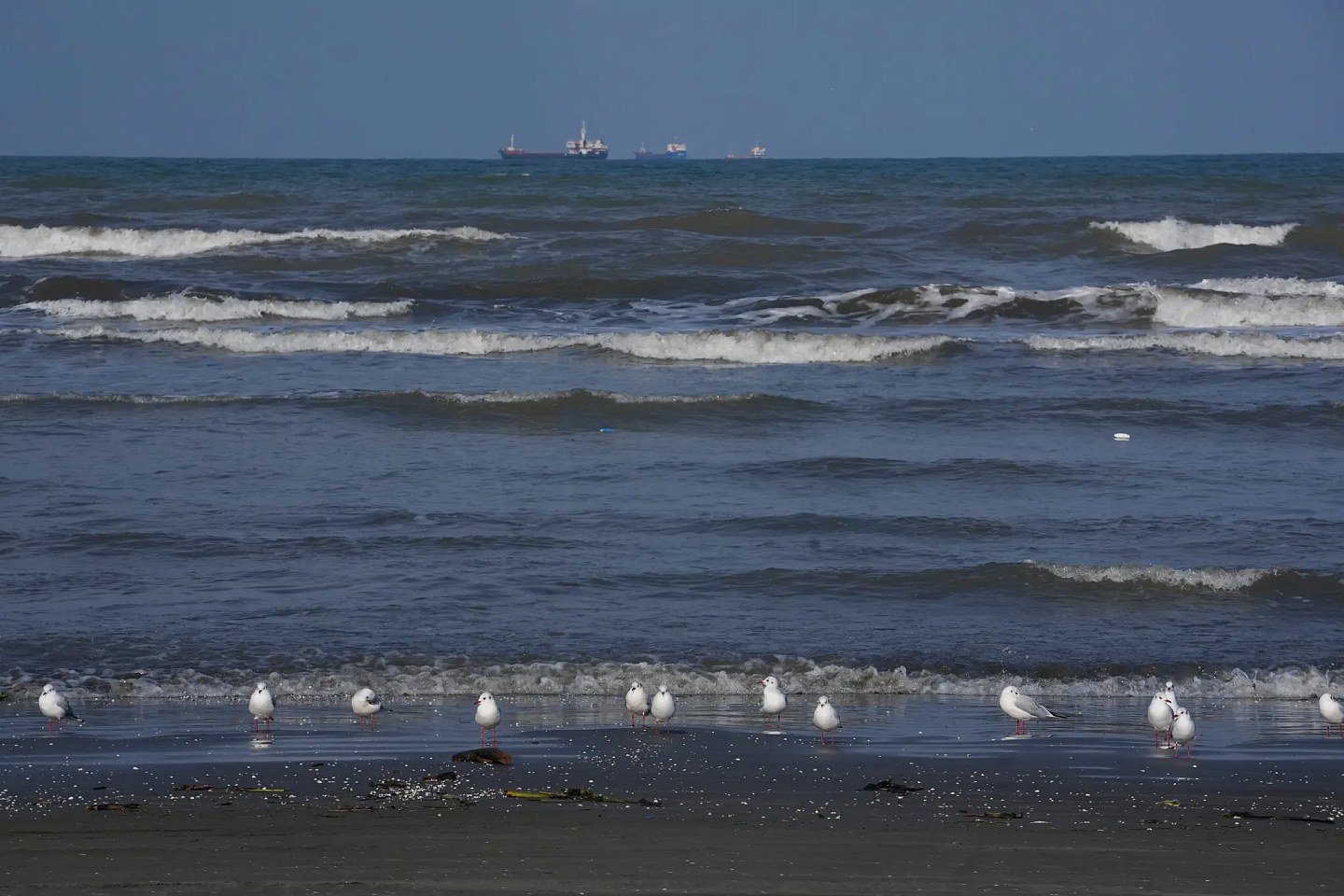
The wars involving Ukraine and Iran, until then fought in different regions, began to intersect more directly in the Caspian Sea. An attack attributed to Ukrainian forces hit an Iranian vessel sailing between Russia and Iran, killing one crew member and leaving another injured.
The episode triggered a harsh reaction from the Iranian government, which accused Ukraine of deliberately attacking a commercial ship and threatened to respond. Kyiv, for its part, has stated that its operations in the Caspian Sea are aimed at disrupting the transport of military equipment between Moscow and Tehran.
The confrontation further expands the scope of the war that began with the Russian invasion of Ukraine and demonstrates how military disputes in Europe and the Middle East are increasingly connected.
Attack took place on a strategic route between Russia and Iran
The Iranian vessel was sailing through the Caspian Sea after leaving the Russian port of Astrakhan, an important commercial center located in southern Russia. The destination would be a port in northern Iran.
During the journey, the ship was hit by an explosion. According to Iranian authorities, the bridge suffered damage, one sailor died and at least one other was injured.
The Iranian government declared that the vessel was carrying commercial cargo and classified the attack as an unjustified aggression. Russia also said the ship was carrying civilian goods.
Ukraine presented a different version. President Volodymyr Zelensky reported that Ukrainian forces had achieved important results in long-range strikes in the Caspian Sea. According to him, vessels involved in transporting military cargo related to Iran were hit, as well as a warship.
The Ukrainian Security Service said the targets were taking part in operations aimed at transporting military materials between the Russian and Iranian governments, including goods subject to international sanctions.
So far, it has not been possible to independently verify exactly what cargo was being transported by the Iranian vessel.
Iran promises reaction
Iran's Foreign Minister, Abbas Araqchi, condemned the attack and stated that the action could not go unanswered.
Tehran considers that the offensive violated the United Nations Charter and accused Ukraine of trying to dangerously expand the scope of the war. The Iranian government also summoned the Ukrainian diplomatic representative in the country to provide clarifications.
Araqchi further alleged that Kyiv carried out the operation in the interests of Israel, with the aim of involving European countries more directly in the war in the Middle East. Ukraine does not recognize this accusation.
Parliamentarians and media outlets linked to the Iranian government also published threats against Kyiv. Some statements mentioned the ability of Iranian ballistic missiles to reach Ukrainian territory.
Ukraine accuses Iran of collaborating with Russia
The relationship between Ukraine and Iran deteriorated mainly after the start of the large-scale Russian invasion in February 2022.
Moscow began using attack drones developed in Iran, especially models from the Shahed family, in offensives against Ukrainian cities, plants, power grids and other structures. Iranian technology has also helped Russia develop and expand its own drone production.
Tehran has acknowledged having provided a limited amount of equipment to Russia, but maintains that the deliveries took place before the invasion. Western governments and Ukrainian authorities dispute this version.
For Kyiv, the supply of military technology turned Iran into an indirect participant in the war. For this reason, vessels used to transport drones, missile components, ammunition or other materials destined for Russian forces would be considered legitimate military targets.
Iran, however, rejects the accusation of direct involvement in the conflict and claims that Ukraine has no justification for attacking Iranian ships.
Caspian Sea became military and commercial corridor
The Caspian Sea, considered the largest enclosed body of water in the world, is surrounded by Russia, Iran, Azerbaijan, Kazakhstan and Turkmenistan.
Without a direct connection to the oceans, the region was traditionally seen as relatively protected from major maritime disputes. The war in Ukraine, Western sanctions and the deepening partnership between Russia and Iran have changed this reality.
The sea route between the two countries has become a strategic corridor for goods, oil, industrial equipment and, according to Western governments, weapons and military components.
The Russian port of Astrakhan serves as one of the main points of this connection. After crossing the Caspian Sea, cargo can proceed to Iranian cities and other Asian markets.
The importance of this corridor increased as Russia and Iran began to look for ways to reduce the effects of international sanctions and avoid routes more exposed to Western surveillance.
Scope of Ukrainian attacks is increasing
The attack also highlights the expansion of Ukraine's ability to carry out operations far from its territory.
In recent years, Kyiv has invested in manufacturing long-range drones capable of reaching refineries, fuel depots, military bases, airports and vessels inside Russia.
In December 2025, Ukrainian forces announced attacks against two Russian ships in the Caspian Sea. The vessels, identified as Kompozitor Rakhmaninov and Askar-Sarydzha, were under US sanctions for allegedly transporting military cargo between Russia and Iran.
The new offensives indicate that the Caspian Sea is no longer a safe area for Russian and Iranian logistics. In addition to material damage, the attacks could force both countries to reinforce the protection of ports and vessels used on the route.
Diplomacy tries to prevent further escalation
After exchanging threats, the foreign ministers of Ukraine and Iran spoke by telephone.
Ukrainian Foreign Minister Andrii Sybiha called on Tehran to avoid measures that could escalate the conflict and to stop any support for the Russian-led war.
According to the Iranian government, Sybiha stated that Ukraine did not intend to target civilian vessels or citizens and was not seeking escalation with Iran.
Araqchi responded that Tehran also does not wish to escalate hostilities, but demanded reparation for the losses caused by the attack. The minister stressed that offensives against Iranian citizens and interests are considered unacceptable.
Despite the dialogue, the episode created a new point of tension between the two countries. A possible Iranian retaliation could bring Tehran even closer to Moscow and increase the risk of the conflict going beyond Ukraine's borders.
International conflicts are increasingly connected
The offensive in the Caspian Sea represents more than an isolated attack on a vessel. The episode shows how military alliances, weapons supply, technology sharing and trade routes are bringing together conflicts previously considered separate.
Ukraine accuses Russia of helping Iran with intelligence and satellite images of military facilities in the United States and Gulf countries. Zelensky said Russian satellites had observed bases located in Bahrain, Jordan and Kuwait before and after Iranian attacks. The allegations have not been independently substantiated.
At the same time, Kyiv has offered Middle Eastern countries its experience in combating drones, gained during years of Russian attacks using equipment of Iranian origin.
The Caspian Sea thus comes to occupy a central position in this rapprochement between the wars. What previously functioned as a relatively protected route between Russia and Iran could now turn into yet another front of confrontation, raising the risk of an escalation with consequences for Europe, the Middle East and international security.