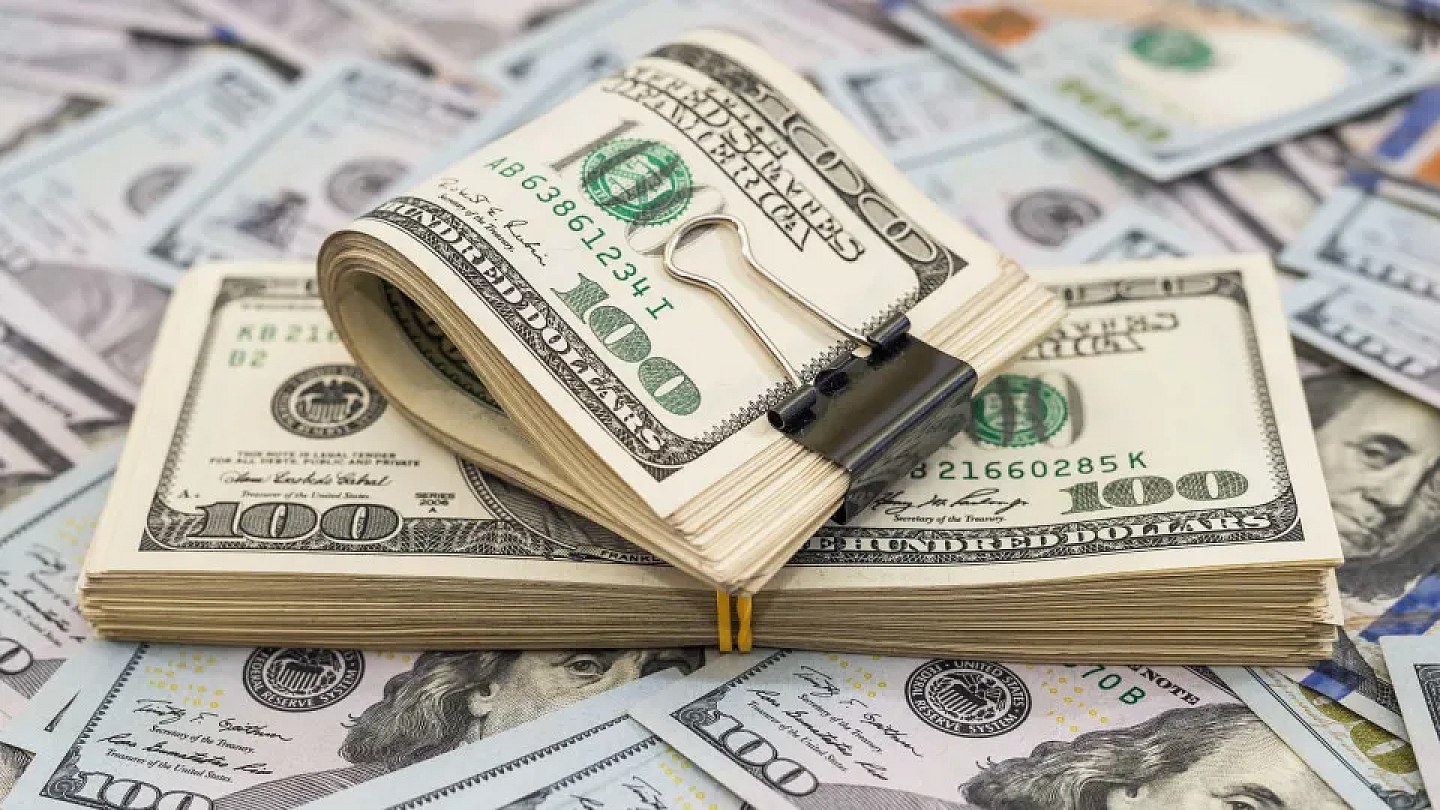
SÃO PAULO, SP (FOLHAPRESS) - The dollar rises this Wednesday (29), with investors waiting for the Fed's (Federal Reserve, the central bank of the United States) interest rate decision, which will be released in the afternoon.
Dollar rises and Stock Exchange falls awaiting Fed decision and with oil on the radar
SÃO PAULO, SP (FOLHAPRESS) - The dollar rises this Wednesday (29), with investors waiting for the Fed's (Federal Reserve, the central bank of the United States) interest rate decision, which will be released in the...
The market also reflects new attacks between the US and Iran in the Middle East. The offensives boost oil prices and increase investor caution.
At around 1:50 pm, the US currency advanced 0.14%, quoted at R$5.129. Abroad, the DXY index, which measures the dollar's performance against six other strong currencies, was stable, with an increase of 0.08%.
At the same time, the Stock Exchange fell 1.02%, to 174,757 points, pressured by the Brazilian banking sector.
According to FedWatch, from the CME Group, the most likely scenario for this Wednesday's decision is the maintenance of the interest rate in the range of 3.50% to 3.75%, with a 64% probability. Another 36% of analysts are betting on an increase of 0.25 percentage points, to a range between 3.75% and 4%.
For Bruno Yamashita, allocation and intelligence coordinator at Avenue, investors are on hold before the North American central bank's decision. "The market will closely monitor what Kevin Walsh, president of the Fed, should signal and, mainly, what tone will be adopted in relation to the next steps of monetary policy", he states.
A tougher tone could reinforce the perception that an interest rate hike is close, even if it does not occur at this meeting.
The maintenance of interest rates in the US should happen amid expectations of a reduction in the Selic rate at the Brazilian Central Bank meeting, scheduled for next week.
Last Tuesday (28), the IBGE (Brazilian Institute of Geography and Statistics) announced that the IPCA-15 slowed to 0.06% in July, after registering an increase of 0.41% in June. In the 12 months, the indicator was 4.52% until July.
The result surprised the market by being well below the median projections of analysts consulted by Bloomberg, of 0.22%.
The IPCA-15 is considered a preview of the IPCA (Broad National Consumer Price Index), an official inflation indicator. Calculated based on an early price collection, it usually signals the trend of the full index.
The metrics are monitored by the Central Bank. The municipality pursues an inflation target of 3%, with a tolerance of 1.5 percentage points downwards and upwards. Despite the truce, the IPCA-15 came in above the target ceiling of 4.5%.
The next meeting of the Central Bank board will be on August 4th and 5th to define the level of the basic interest rate, the Selic, which is 14.25% per year.
For economist Rafael Rondinelli, from Mag Investimentos, the IPCA-15 does not change the view of an inflationary scenario that remains under pressure in the country, but "reinforces the projection of interest cuts by the Copom at next week's meeting".
If confirmed, the cut in the Selic and the maintenance of the US interest rate reduce the attractiveness of the "carry trade" strategy - a strategy in which investors raise funds in economies with low rates, such as the American or Japanese, and apply them here, to make a profit on this percentage difference.
The movement tends to reduce the attractiveness of Brazilian assets, such as the Stock Exchange and the real. "The logic is as follows: with higher interest rates abroad and a reduction in the interest rate differential between Brazil and the United States, Brazilian assets tend to become relatively less attractive to foreign investors. This could reduce the inflow of capital into the country", says Ian Lopes, specialist at Valor Investimentos.
The market also reflects new offensives between the USA and Iran in the Middle East. On Tuesday night, multiple ballistic missiles were launched at American forces in the region in a "surprise attack attempt", according to the Central Command of the American Armed Forces (Centcom).
This Wednesday, the United States retaliated. The country's military, in conjunction with Saudi Arabian Forces, launched attacks against Iranian-backed groups in Iraq. The Iraqi Popular Mobilization Forces, supported by Tehran, said at least 20 of its members were killed and 32 injured in the bombings.
The resumption of attacks impacts oil prices. At around 1:50 pm, the September contract for a Brent barrel, the global benchmark for the commodity, advanced 7.38%, to US$90.30.
The tension in the international conflict also puts pressure on domestic assets. The war interrupts circulation in the Strait of Hormuz, a sea route responsible for 20% of all oil and natural gas produced in the world. With the transport of commodities strangled, investors have feared a global inflation rebound.
Consequently, they also fear the maintenance of interest rates in some of the largest economies in the world at a restrictive level, especially that of the United States.
When interest rates there are high, traders tend to opt for American fixed income, considered a practically risk-free investment. With the expectation of the conflict continuing, riskier assets, such as those from emerging markets, tend to devalue.
Here, the banking sector was the main negative highlight of the day, with Santander leading the losses. The financial institution's shares fell more than 6% after the announcement of a drop in second-quarter profits.
The bank was pressured by customer defaults and recorded a managerial net profit of R$3 billion, a drop of 17.6% compared to the same period in 2025. Analysts consulted by Bloomberg projected a gain of R$3.723 billion.
In the opposite direction, Petrobras was driven by the rise in oil prices. The state-owned company’s shares rose more than 2%.
In the United States, stock markets also registered declines. The S&P 500, the Dow Jones and the Nasdaq fell 1.12%, 1.56% and 0.96%, respectively.
Source: Noticias ao Minuto
Next recommended read
This story was originally published by Noticias ao Minuto. Visit the original publication for further details.
Open original publication