It is 2026 and, if you have a profile on any social network or watch the news, you have already been exposed to the debate about the “Super” El Niño. Nine out of ten experts say that it will sound the trumpets of the apocalypse, bringing with it an endless number of extreme weather events for which Brazil may not be prepared.
Not everything is the fault of “Super” El Niño
It is 2026 and, if you have a profile on any social network or watch the news, you have already been exposed to the debate about the “Super” El Niño. Nine out of ten experts say that it will sound the trumpets of the...

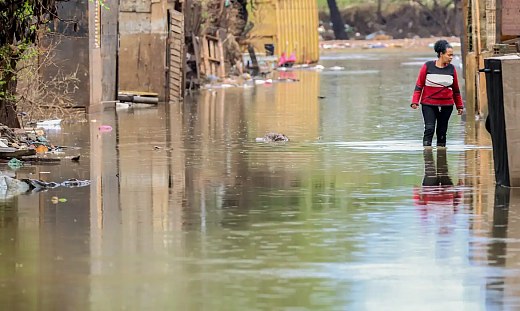
But let's do a memory exercise: in April 2024, Rio Grande do Sul was underwater. More than 90% of the state's territory was affected, with more than 170 deaths, in what became the biggest environmental tragedy in Rio Grande do Sul's history and one of the biggest in Brazil. While people were still dealing with the consequences of extreme rainfall, a climate phenomenon had already been identified as the culprit: El Niño.
But can we bet all our chips on a single source for these floods? Later that year, thirteen scientists (including two Brazilians) published a study that sought to understand what was behind the extreme event. The main conclusions showed that climate change made the event twice as likely, and 6% and 9% more intense; and that El Niño, also analyzed, doubled this probability and left rainfall between 3% and 10% more intense.
Mind you, it wasn't just El Niño; on the contrary, the impacts of the abnormal warming of the surface waters of the Equatorial Pacific Ocean were added to those of global warming, caused by the burning of fossil fuels and deforestation.
So why is El Niño being talked about as the only culprit? Part of the explanation may come from convenience. It's a name that everyone has heard, and it has an explanation that fits in one sentence. Much easier than saying: “well, six or seven different factors interact here, and science is still trying to understand the weight of each one”. Because that's what climate science does; she tries to put together the great puzzle that is the climate, piece by piece, studying how the systems that govern the climate operate around the world and also analyzing the causes behind changes in weather patterns.
One of the most recent areas of climate science, the attribution of extreme events, seeks to answer a very specific question: in a hurricane, in a drought, in a heat wave, how much is due to warming caused by humans and how much to natural phenomena, such as El Niño? Friederike Otto, one of the founders of the World Weather Attribution (WWA) group, explains that scientists compare the world we live in with a simulated version (or hundreds, or thousands) where there is no human interference in the climate. Then, they ask: in this world, how often would such an event happen? And with what intensity?
The question about how the heated waters of the Pacific manage to change the climate elsewhere on the planet finds an answer in so-called teleconnections: patterns of wind, pressure and ocean currents that carry the effect of a regional change to places far away from it. Everything works like a big web that surrounds the Earth. Touch a wire here, and the vibration reaches, with varying strength, very distant wires. This vibration can turn into rain in Rio Grande do Sul and, at the same time, into drought in the Amazon. Now also imagine that there is another force stretching this web, more and more, but it does not come from any natural phenomenon.
Recent studies indicate that climate change is actively influencing natural phenomena such as El Niño, altering its behavior, duration and even the geographic extent of its effects. Researchers crossed decades of data to identify that the risk of heat waves and extreme rainfall has increased across the world, with a strong influence of human activity on meteorological anomalies. Another publication also revealed the possibility that El Niño will no longer be a passing event after 2100, if greenhouse gas emissions continue to grow. In this scenario, the equatorial Pacific would enter a state of permanent warming, causing anomalies in rain and drought patterns, which today are associated with El Niño years, in a constant and uninterrupted manner.
This evidence points to a new understanding of the triggers that trigger extreme weather events. In addition to analyzing the probability of interference from natural phenomena and climate change in a given episode, scientists are now seeking to understand how climate change itself is increasing the frequency and intensity of these phenomena.
In Rio Grande do Sul, the case that opens this text, the two phenomena had an almost identical influence on the episode. In other words, El Niño acted in an already unbalanced climate and on vulnerable territory, resulting in the socio-environmental disaster that we are witnessing.
However, at the same time that the world is experiencing an increase in extreme weather events, resistance to science is also growing. In June 2026, during the UN midterm meeting (which prepares the ground for the COP), a group of countries publicly denounced the “coordinated attacks” on climate science. Some countries, such as Saudi Arabia and India, even directly questioned technical discussions, including the 1.5°C target of the Paris Agreement and the role of the IPCC, highlighting the political challenge in the space that should discuss how to make the best use of science to support decision-making, and not whether it should be taken into account.
Amid wars costing billions in public coffers and strong geopolitical tensions, we are witnessing an active and orchestrated effort to weaken the reputation of climate science, including distorting arguments to link economic losses to environmental commitments. And perhaps the act of throwing everything at El Niño could be part of the same strategy, in a discourse created elsewhere and which, like teleconnections, reverberates so strongly here.
The El Niño that has formed can (and most likely will) bring real consequences for Brazil. This is scientific information
Source: ClimaInfo
Next recommended read
This story was originally published by ClimaInfo. Visit the original publication for further details.
Open original publication