Material was shown at the PL convention that made Flávio Bolsonaro official as a candidate for President; response attempts to remove suspicion of non-compliance with the measures imposed on the former president
Bolsonaro's defense says the former president did not authorize AI video
Material was shown at the PL convention that made Flávio Bolsonaro official as a candidate for President; response attempts to remove suspicion of non-compliance with the measures imposed on the former president Jair...
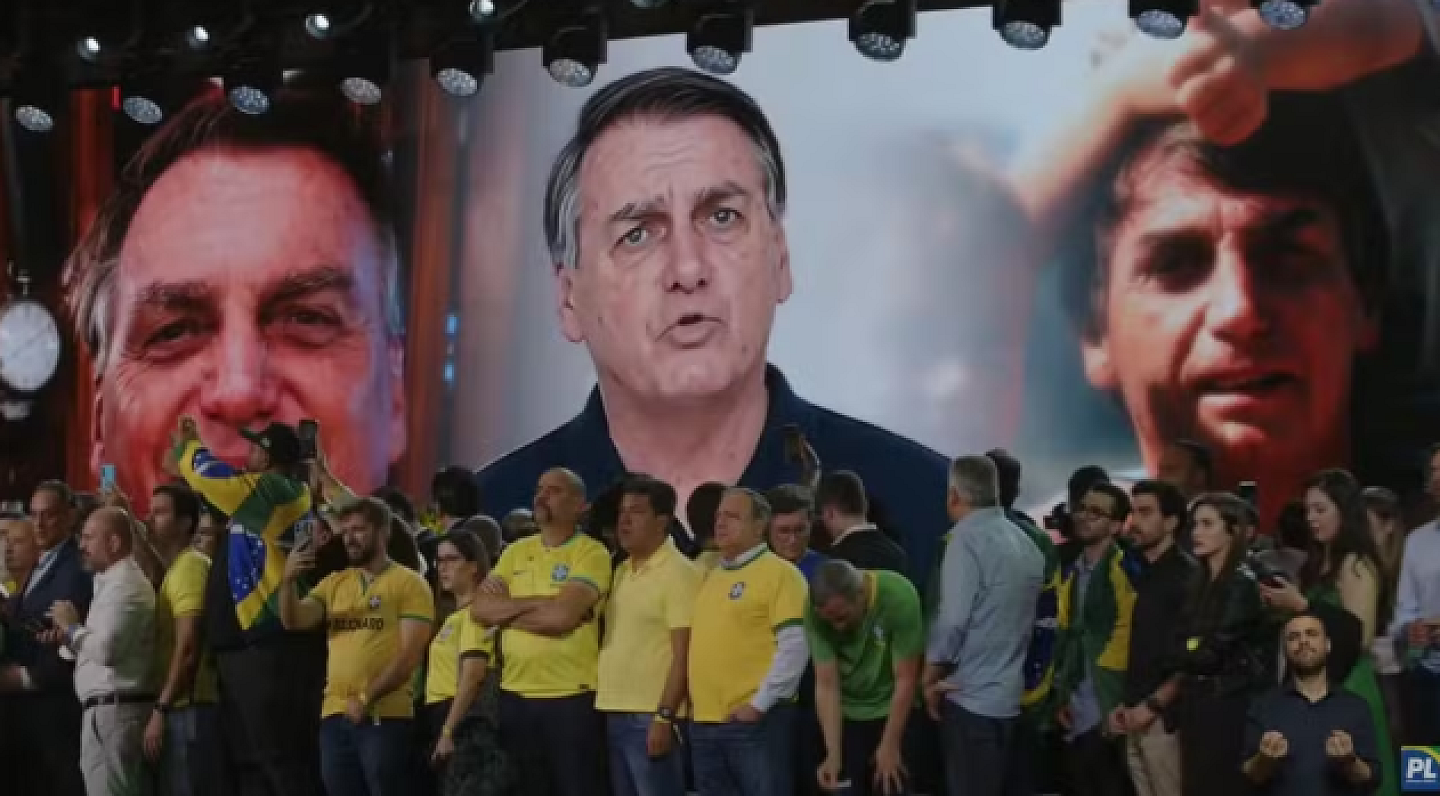
Jair Bolsonaro's defense informed the Federal Supreme Court (STF) that the former president did not authorize the use of his image and voice in a video produced with artificial intelligence. The content was presented during the Liberal Party's national convention, held last Saturday (25), which made Senator Flávio Bolsonaro's candidacy for the Presidency of the Republic official.
The manifestation was forwarded to Minister Alexandre de Moraes this Wednesday (29). The judge had granted 48 hours for the lawyers to clarify whether Bolsonaro was aware of or had consented to the production and dissemination of the material.
In the video, a digital version of Jair Bolsonaro simulates a political speech. The content initially states that it is a representation created by artificial intelligence, but presents statements of support for Flávio's candidacy. The character also mentions the former president's legal situation and asks supporters to welcome his son as the one chosen to represent him in the 2026 elections.
According to the defense, Bolsonaro did not participate in the preparation of the message nor did he grant specific authorization for his voice and image to be reproduced by technology.
The lawyers further argued that the restrictions currently imposed on the former president would make any contact related to production difficult. Bolsonaro would be prohibited from receiving visitors for 30 days and from meeting Flávio Bolsonaro for 90 days, a circumstance presented by the defense as yet another element to demonstrate that there was no authorization.
Defense cites previous use of Bolsonaro’s image by his children
In the document sent to the STF, the lawyers stated that Jair Bolsonaro's children have used their father's public image for years in political and party activities.
According to the demonstration, photographs, interviews, speeches, recordings and public statements by the former president were already reproduced by his children even before the current judicial restrictions. The defense maintains that this practice would never have faced opposition from Bolsonaro and would be a consequence of the relationship of trust that exists between father and children.
The strategy seeks to establish a difference between the habitual use of the former president's public records and an express authorization to create a new statement with artificial intelligence.
Authorization could represent non-compliance with a court order
The clarification is considered important because Jair Bolsonaro is subject to measures that restrict political demonstrations, including those carried out through third parties or published on social media.
In the decision in which he requested explanations, Alexandre de Moraes stated that any authorization for the production of the video could be interpreted as a new and serious breach of the conditions established for the maintenance of humanitarian house arrest.
In this scenario, the episode could trigger a reassessment of the benefit and even result in the former president's return to the closed regime. By denying that Bolsonaro participated in or authorized the play, the lawyers try to rule out this possibility.
Negative could open discussion about electoral deepfake
The absence of authorization, however, creates another legal issue. Moraes highlighted that, if the former president's image and voice were used without consent, Flávio Bolsonaro and the PL could be investigated for possible irregular use of synthetic content for electoral purposes.
Electoral rules prohibit the use of artificial intelligence to artificially associate a person's image, voice or expressions with candidates, parties or political causes without authorization.
Flávio Bolsonaro's defense argued before the Superior Electoral Court that the video was not intended to deceive voters, as the content itself warned that the image presented had been created by artificial intelligence. The lawyers also denied that the message constituted early election propaganda or presented an explicit request for votes.
The case should be analyzed by the STF and could also generate developments in the Electoral Court. To date, there is no definitive decision on the legality of the video or on the possible responsibility of Bolsonaro, Flávio or the Liberal Party.