TAMARA NASSIFSÃO PAULO, SP (FOLHAPRESS) - The tariff imposed on Brazil by the United States could be responded to by the Lula government (PT) with the implementation of the Economic Reciprocity Law, as suggested by members of the Executive and the president himself this week.
Understand in 5 points the Reciprocity Law, a government instrument against tariffs
TAMARA NASSIFSÃO PAULO, SP (FOLHAPRESS) - The tariff imposed on Brazil by the United States could be responded to by the Lula government (PT) with the implementation of the Economic Reciprocity Law, as suggested by...
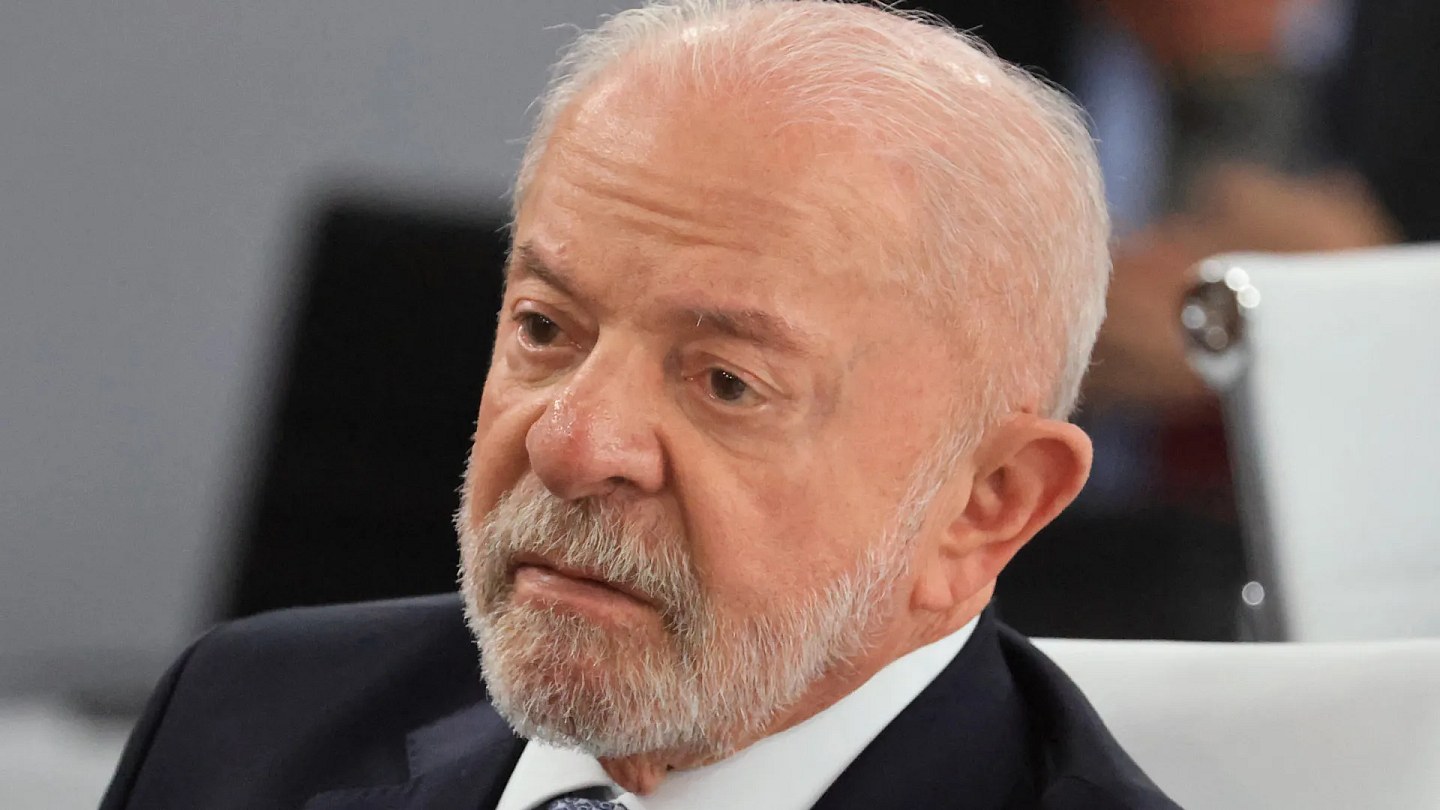
The device allows the country to respond quickly if it is subjected to protectionist measures that impact international trade.
Understand in five points what the Law of Reciprocity is and the possible consequences of its implementation.
UNDERSTAND THE LAW OF ECONOMIC RECIPROCITY IN FIVE POINTS
HOW DID THE LAW OF RECIPROCITY APPEAR?
Proposed at the beginning of last year, the Reciprocity Law initially emerged as a device that dealt with environmental issues. The objective, according to the original text by senator Zequinha Marinho (Podemos-PA), was to create mechanisms to respond to restrictions imposed by the European Union on Brazilian products, in the context of the EU-Mercosur negotiations.
What emerged in reaction to the European anti-deforestation law gained more commercial contours in February, when preliminary measures announced by President Donald Trump generated uncertainty in global trade.
Up until that point, Trump had threatened to place barriers on products from countries that he said adopted unfair trade practices toward the United States. The most targeted partners were Mexico, Canada and China, but when the republican cited the Brics as a possible target, the Brazilian government was urged to create instruments that would allow for speed in possible retaliation.
As Folha showed at the time, Brazil had a limited set of legal standards to respond to measures of this type. Faced with uncertainty, a turbocharged version of Zequinha Marinho's project was presented by senator Tereza Cristina (PP-MS), expanding the scope of the text to commercial retaliation in general.
The text was processed quickly in the National Congress, with the support of ruralists and government supporters. In July, the same week that Trump announced 50% surcharges on Brazilian products, President Lula sanctioned the decree regulating the Reciprocity Law, opening a legal window to respond to a possible tariff, confirmed on Wednesday night (15).
WHAT DOES THE LAW OF RECIPROCITY SAY?
The Reciprocity Law allows Brazil to adopt proportional commercial and diplomatic countermeasures when countries or economic blocs impose unjustified barriers to Brazilian products.
The foreseen mechanisms can only be adopted when there is an impact on Brazilian international competitiveness or direct interference in sovereignty. For each case, a Strategic Council will be created at Camex (Chamber of Foreign Trade) - a body linked to the Presidency and the Mdic (Ministry of Development, Industry, Commerce and Services) that will play a central role in the application of measures. This, according to the government, guarantees a more technical approach that is less susceptible to political distortions.
Instead of automatic barriers, the text also provides for diplomatic consultations coordinated by the Ministry of Foreign Affairs, making it possible to resolve conflicts in a negotiated manner before applying countermeasures. The government can also turn to multilateral organizations, such as the WTO (World Trade Organization), to avoid applying the law.
HOW DOES THE LAW OF RECIPROCITY APPLY?
The text provides that reciprocity occurs through limiting imports of goods and services, through direct retaliation through tariffs, through the reassessment of obligations in intellectual property agreements and through the suspension of commercial and investment concessions.
The law establishes that these countermeasures must, as far as possible, be proportionate to the economic impact caused by the foreign measure. Furthermore, the application must seek to minimize damage to domestic economic activity and avoid excessive administrative costs.
According to President Lula's decree at the time of regulation, two distinct rites are foreseen for the application of the law.
In the ordinary procedure, for situations that are not urgent, cases will be referred to Camex. These processes will be longer and will include public consultations with associations and interested parties. There will also be an express procedure, which can be used in exceptional cases to apply measures considered more urgent. The processes will be evaluated by an interministerial committee chaired by the Ministry of Development, with the participation of Finance, Itamaraty and the Civil House.
WHAT ARE THE POSSIBLE CONSEQUENCES OF THE APPLICATION OF THE LAW OF RECIPROCITY?
Experts have warned that, although the Reciprocity Law is a legitimate instrument for defending national sovereignty, it could trigger an escalation of sanctions and a "boomerang effect" for the economy.
"The year that has passed since the announcement of the tariff on Brazil illustrates well the government's style of trying its best to reach a negotiated solution. But, by insisting on points that are not negotiable, such as STF decisions last year or Pix, the American government is reducing the space for negotiation", says Adriana Dupita, chief economist for emerging markets at Bloomberg Economics.
"As giving in on these issues is not an option, the government will have to choose between accepting the new tariffs without further reaction or facing the costs to the country itself of retaliation. Retaliating may make sense as a response, but it could make American products more expensive in Brazil at a time of already pressured inflation, as well as it could lead to an undesirable escalation on the other side."
Brazil imports mostly machinery, electronic equipment, inputs, chemicals and fuels from the United States. Increasing the tariff on these products makes domestic production more expensive and puts pressure on the IPCA (Broad Consumer Price Index), the country's official inflation indicator. The pressure on inflation, already under the effect of the conflict in the Middle East and El Niño, could lead to
Source: Noticias ao Minuto - Ultima Hora
This story was originally published by Noticias ao Minuto - Ultima Hora. Visit the original publication for further details.
Open original publication