"We're going to hit them very hard because now it's our turn. They know this is going to happen," Trump told reporters in the Oval Office of the White House, after Iran's Islamic Revolutionary Guard Corps (IRGC) claimed a ballistic missile attack on a US air base in Jordan.
Trump promises to respond "very forcefully" to new Iranian attacks
"We're going to hit them very hard because now it's our turn. They know this is going to happen," Trump told reporters in the Oval Office of the White House, after Iran's Islamic Revolutionary Guard Corps (IRGC) claimed...
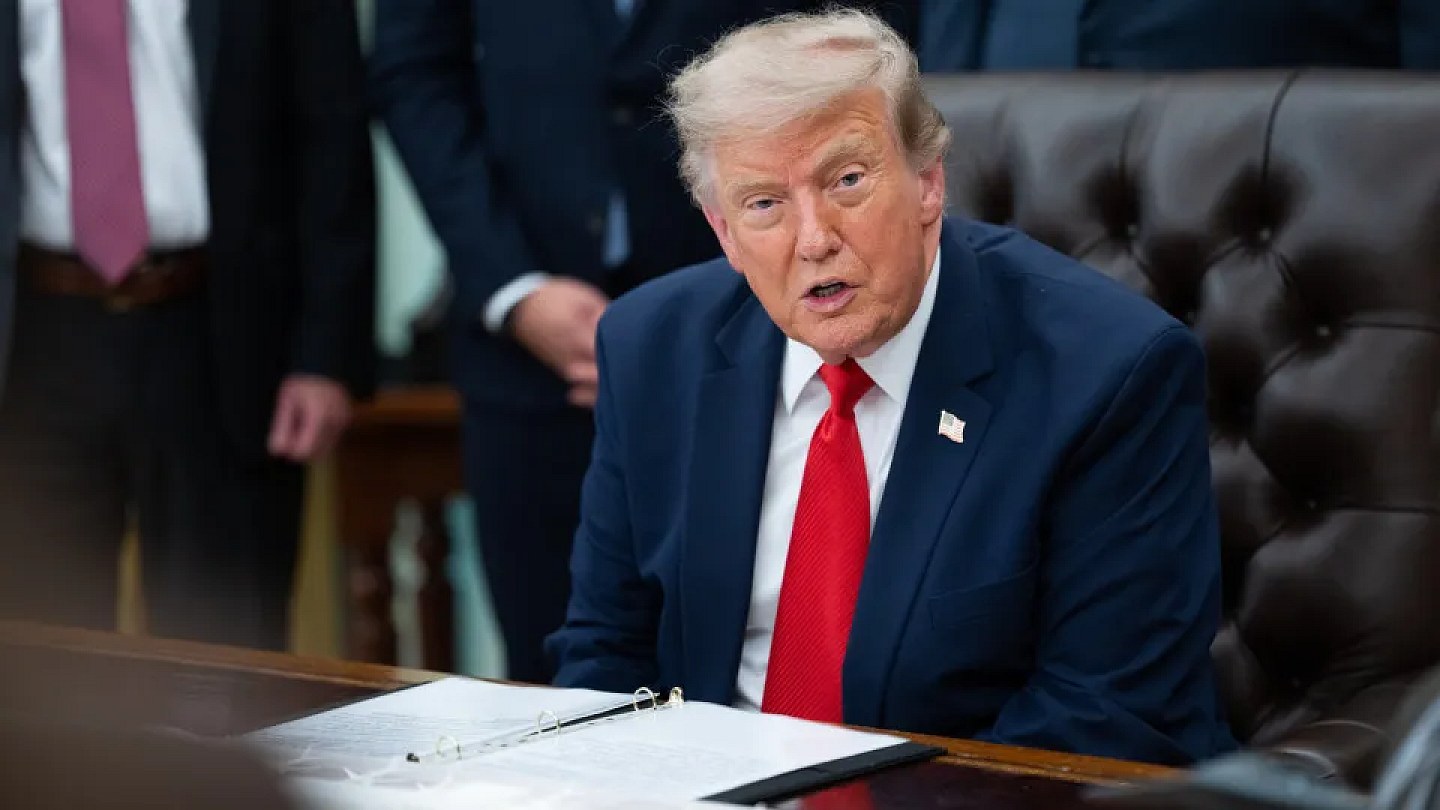
"They fired. Now it's our turn, and we'll see if we can reach an agreement at some point. But we're going to hit them very hard," he said.
Washington believes Iran may also be behind a drone attack on a US ship carrying liquefied natural gas to Egypt.
"I've received information about this. It's more of the same, but it will be resolved. It will be resolved," Trump added.
The president of the United States said he was receiving requests, allegedly from Iran and Washington's allies in the region, to reduce tension, but assured that he would respond to the most recent attack.
The IRGC said the attack was a "response to the aggressive actions of the US Army" against Iran.
"As long as the threats against Iran and the illegal actions of US forces against our interests continue, the resistance will continue", highlighted the IRGC, cited by the Fars agency.
According to the United States Central Command (CENTCOM), all Iranian missiles were intercepted.
The United States and Saudi Arabia on Tuesday carried out strikes against the positions of Iran-aligned terrorist groups in eastern Iraq, in response to more than 30 IRGC-coordinated drone strikes against US forces and Saudi energy infrastructure in the last 72 hours, according to CENTCOM.
The attacks destroyed several logistics centers and weapons depots, according to CENTCOM, which warned the IRGC and its allies to halt the attacks in order to avoid a new military response from the United States.
Iran and the United States had suspended fighting over the weekend after nearly two weeks of daily attacks.
On Thursday, the United States carried out the latest wave of bombings against the Islamic Republic, in the 13th consecutive day of attacks since the collapse of the ceasefire accepted by the parties in June, which aimed to stop hostilities and open space for negotiations on a definitive peace agreement.
The talks are focused on lifting the military blockade imposed by Iran on commercial maritime traffic in the Strait of Hormuz and Iran's nuclear program.
According to Axios, the negotiations are being led primarily by Iran and Oman, but Qatar, Pakistan, Egypt and White House envoys Steve Witkoff and Jared Kushner are also actively participating.
Trump said on Monday that negotiations with Iran have a "good chance" of producing results, after several consecutive days without attacks against the Islamic Republic.
Iran, however, has stated that it is not involved in any negotiations with the United States, despite the recent cessation of hostilities between the two countries and reports of contacts between Middle Eastern mediating countries and Tehran's diplomacy.
On the other hand, the American president dismissed concerns about a possible ammunition shortage after several months of attacks against Iran since the start of the Israeli-American offensive on February 28.
According to The New York Times, which cites two sources close to the matter, the United States government is concerned about the reduction in stocks of Patriot missile systems and other anti-aircraft defense equipment that protect countries in the Gulf region.
Meanwhile, Oman's foreign minister confirmed he had held talks with his counterparts from Iran, Qatar, Kuwait, Saudi Arabia and Egypt to discuss a "fair deal" on navigation in the Strait of Hormuz.
At the end of June, Oman created, with the support of the United States, a temporary duty-free maritime corridor to facilitate passage through the strait.
Iran responded with attacks on vessels using this route, which led Washington to intensify bombings on Iranian territory.
Source: Noticias ao Minuto
Next recommended read
This story was originally published by Noticias ao Minuto. Visit the original publication for further details.
Open original publication