IGOR GIELOWSÃO PAULO, SP (FOLHAPRESS) - The conflict in the Middle East gained a new and unpredictable component this Monday (13), when forces supported by Saudi Arabia attacked the airport in Sanaa, the capital of Yemen occupied since 2014 by Houthi rebels supported by Iran. They retaliated by launching missiles at Saudi territory.
Houthis attack Saudi Arabia and threaten to close the Red Sea after bombing
IGOR GIELOWSÃO PAULO, SP (FOLHAPRESS) - The conflict in the Middle East gained a new and unpredictable component this Monday (13), when forces supported by Saudi Arabia attacked the airport in Sanaa, the capital of...
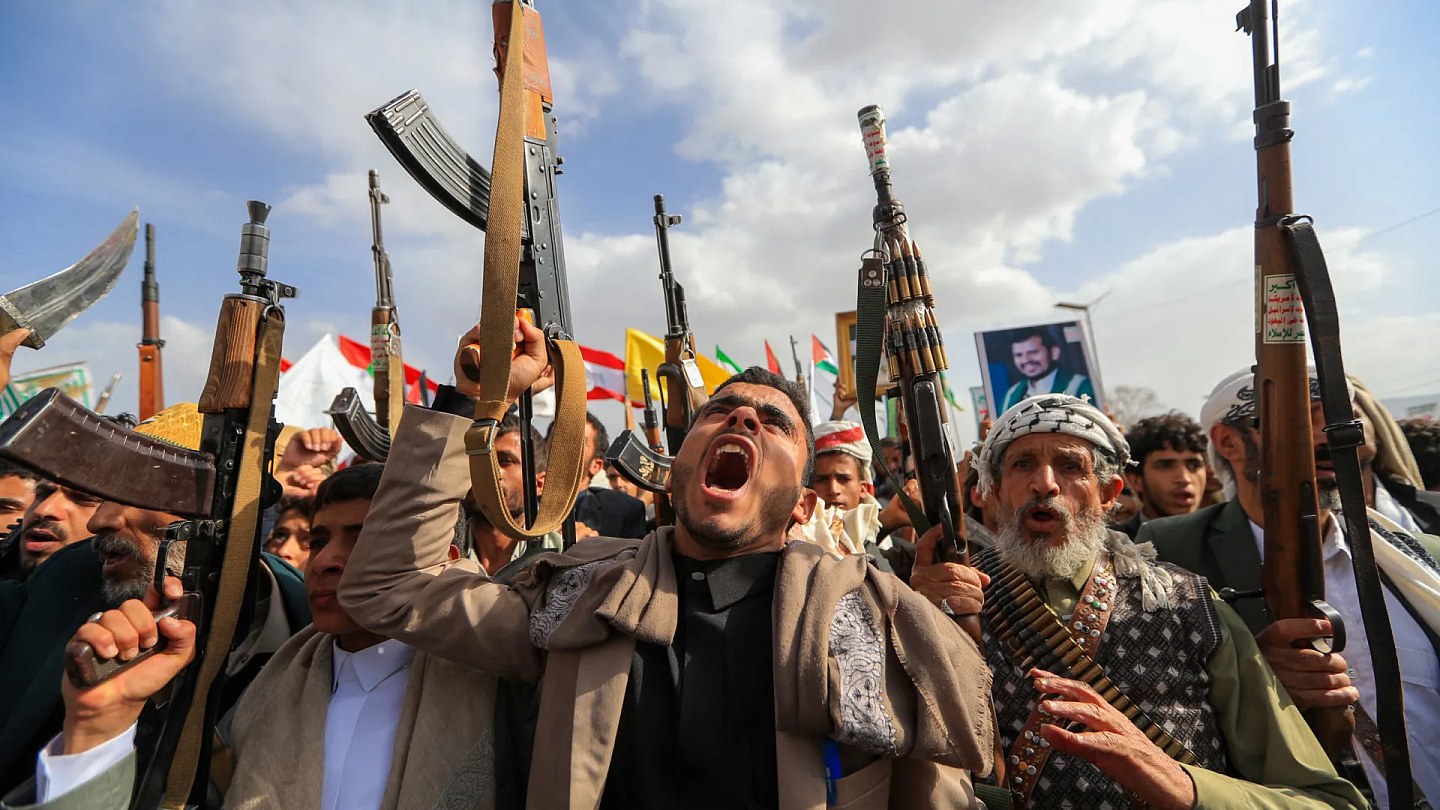

The Shiite rebels armed by Tehran told Iranian state media that they could also close the strategic strait that connects the Red Sea to the Indian Ocean, seeking to take a barrel of oil from the current US$80 to US$200. The threat came after Donald Trump reinstated the blockade on Iran in the Strait of Hormuz, on the other side of the Arabian peninsula.
This Monday's bombing was announced by the Yemeni government expelled from the west of the country during the civil war that began in 2014, which was frozen after the end of a UN-mediated ceasefire in 2022. The Houthis directly accused the Saudis of the action.
It makes military sense, given that several fighter jets have been seen flying over Sanaa and the deposed government has no operational Air Force. During the height of the civil war, from 2015 to 2022, the Saudis and Emiratis were responsible for air operations against the Houthis.
A few hours after the attack, Riyadh said it had shot down Houthi missiles fired at its territory, without detailing or commenting on the bombing of the airport. According to the rebels' military spokesman, Yahya Saree, the action put an end to the de-escalation phase of the civil war and Riyadh will suffer retaliation for the bombing.
The deposed government said it wanted to prevent an Iranian plane from landing in the capital with a Yemeni delegation that attended the funeral of the theocracy's supreme leader, Ali Khamenei, who was killed in a US and Israeli attack in February.
The reason would be the group's refusal to board an aircraft from the government-controlled Yemenia company, which seems fragile enough to justify a bombing. In any case, the Airbus A340-300 of the Iranian airline Mahan Air that was about to land had to divert to the port city of Hodeidah.
According to the deposed government, which is internationally recognized, the country's airports will be closed indefinitely, but it denied the return of large-scale hostilities against the Houthis. The A340 tried to return to Sanaa, but, unable to land, headed back to Iran.
Shortly after the incident, the British maritime traffic organization UKMTO issued an attack warning against an oil tanker about 90 km off the coast of the Houthi-controlled region. Six small boats threatened the vessel, which managed to drive them away by firing shots.
Although the scenario of what happened is unclear, the risks are clear: the war between the United States and Iran could escalate into a more widespread conflict in the Middle East, reaching the west coast of the Arabian peninsula.
Faced with the closure of the Strait of Hormuz, through which 20% of the world's oil and liquefied natural gas passed before Donald Trump and Binyamin Netanyahu attacked the theocracy in February, the Saudis sought to increase the capacity to flow oil through the Yanbu terminal, in the Red Sea.
It is connected to the kingdom's oil production centers by a pipeline built in 1981 to overcome instability in the Persian Gulf resulting from the Iran-Iraq war.
The problem is that the oil tankers arriving to supply there and take the product to Asian markets need to pass through the Bab al-Mandab strait ("gate of tears", in Arabic), which connects the Indian Ocean to the Red Sea, and whose east coast is dominated by the Houthis.
During the war with Iran, even the United States avoided the region and the Houthis' arsenal of drones and missiles, making, for example, the aircraft carrier USS George H. W. Bush go around Africa to reach the theater of operations.
Despite commanding an impoverished and disputed territory, the Houthis have a great capacity for disruption. When they supported the terrorist group Hamas in the war against Israel, in 2023 and 2025, they began attacking merchant ships considered linked to the Jewish State or the USA.
As a result, they caused enormous confusion in international trade - 15% of the planet's maritime traffic transited through the Red Sea. Seeking alternative routes and counting on support from military missions, carriers saw freight prices increase fivefold in some periods.
The benchmark FBX index, which calculates the cost of transporting 40-foot (12-meter) containers on 12 main world routes, is now at almost US$4,000, four times more than before the current round of instability in the Middle East, which began when Hamas attacked Israel on October 7, 2023.
If Yemen does act in its straits, it will add even more economic tension to the political crisis in the region. On previous occasions, the Houthis had also promised to help Iran if necessary.
Read Also: Former Iranian president placed under house arrest, says newspaper
Source:
Noticias ao Minuto - Ultima Hora