BRASÍLIA, DF (FOLHAPRESS) - The minister of the STF (Supreme Federal Court) Flávio Dino ordered the blocking of R$ 6.1 million from former deputy Eduardo Cunha (Republicanos-MG).
Dino orders R$6.1 million blocked from Eduardo Cunha in investigation into amendments
BRASÍLIA, DF (FOLHAPRESS) - The minister of the STF (Supreme Federal Court) Flávio Dino ordered the blocking of R$ 6.1 million from former deputy Eduardo Cunha (Republicanos-MG). The decision is an offshoot of Operation...
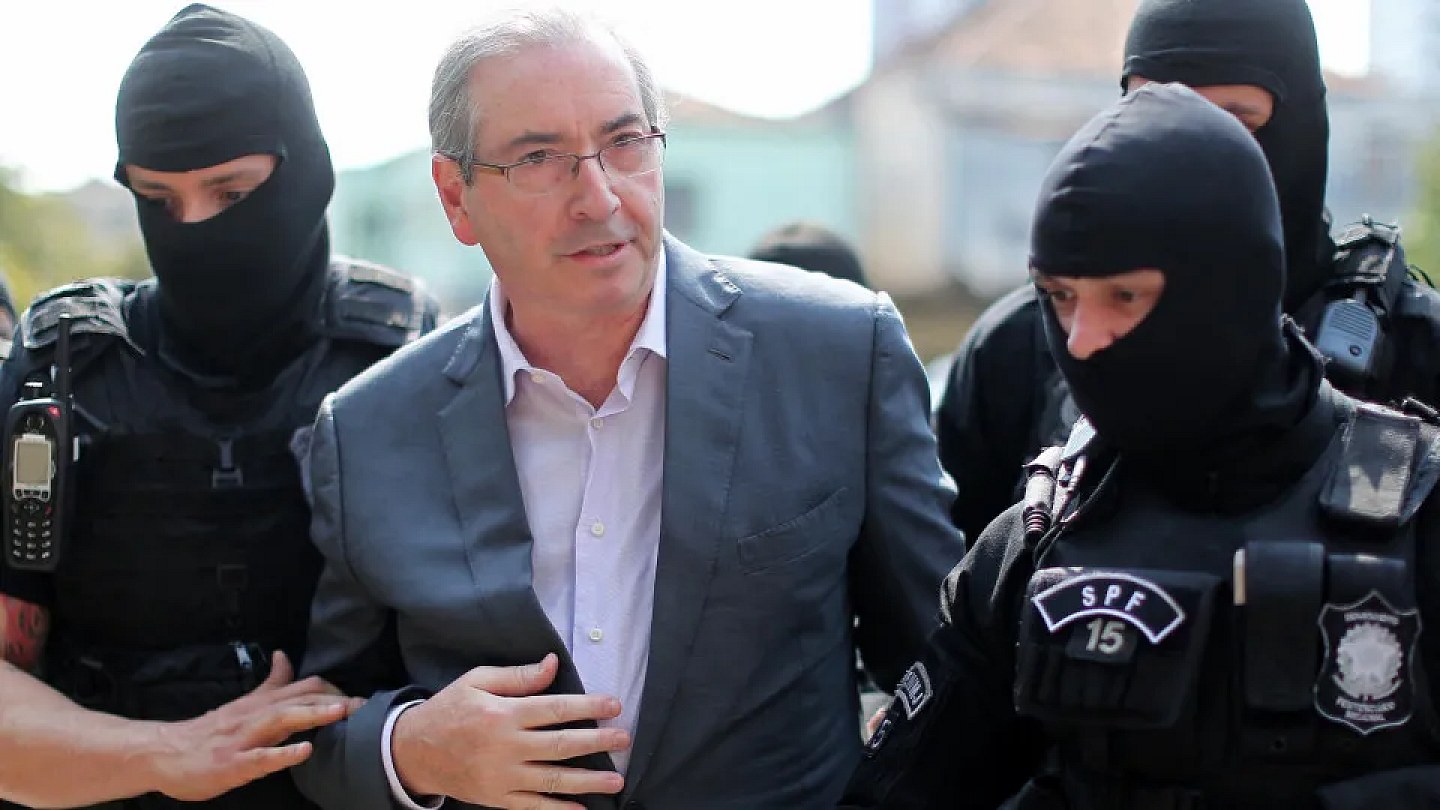
The decision is an offshoot of Operation Transparency, which investigates Cunha's possible illicit interference in the allocation of public funds, even without holding a parliamentary mandate since 2016.
The blocking order was made on Monday (6), but became public this Sunday (12).
The magistrate's order repeats the tone of the decision that blocked assets, last week, of the PL president, Valdemar Costa Neto, also on suspicion of directing amendments without having a parliamentary mandate. The blocking order against the party leader was worth R$ 119 million and refers to suspected embezzlement of resources.
The president of the Chamber, Hugo Motta (Republicanos-PB), came to Valdemar's defense on Saturday (11) and spoke of undue "judicial intervention".
Eduardo Cunha's defense said, in a statement, that he learned of the decision through the press and that he was not summoned or asked to provide clarifications before the asset freeze was decreed.
He maintained that Cunha does not hold a mandate and, therefore, did not present, sign or formalize any of the amendments mentioned in the reports. "The defense rejects the attempt to automatically equate legitimate political dialogue with the clandestine exercise of parliamentary mandate," he said in a statement.
According to the note, the R$6.15 million refers to the global value of the amendments, without imputation of Cunha receiving an advantage. The defense states that he is unaware of irregularities in the processing of the appeals and informs that he will seek access to the files to exercise his right to defense.
The Federal Police claims to have evidence that he acted as a "relevant vector" in defining and relocating amendments, using the Chamber of Deputies employee Mariângela Fialek, known as Tuca. The investigators also say that "everything indicates" that she had "full approval from the presidency of the House to promote deviations of amendments in favor of Eduardo Cunha, intensifying a very high degree of promiscuity in the deliberation of the so-called secret budget".
Despite referring to the "president of the House", the PF document does not mention the name of deputy Hugo Motta.
In the representation taken to Minister Flávio Dino, the PF also states that Cunha, who is from Rio, "never maintained political ties" with Minas Gerais. The police document says that messages from the former deputy show "little appreciation" for the state and "for the mayors with whom he maintained dialogue."
In the same document, the PF points out that the former parliamentarian had said to Mariângela: "Good afternoon, I'm sorry but I can't stand these messed-up miners anymore. Swap Governador Valadares for this one, as they also created a case there asking for office, etc. It's easier to change."
According to investigations, Tuca operated as Cunha's right-hand man within the Legislative House, ignoring formal flows to materialize the former deputy's decisions.
In a note, Mariângela's defense states that she acted in a "strictly technical, non-partisan and impersonal way".
"It is worth mentioning that all of Mariângela Fialek's work material is public, and that all information contained therein, regarding indications for amendments, is forwarded to the Secretariat of Institutional Relations of the Presidency of the Republic, where it can also be found, in addition to being published on the Transparency Portal, as determined by the Supreme Court", says the defense.
Analysis of telematic messages revealed that Cunha directly coordinated the allocation of at least 29 amendments from the Health Commission, totaling R$6.15 million.
The decision points out that Cunha operated as a private agent with "political powers equivalent to or even superior to those of sitting parliamentarians", managing to interfere in the direction of federal resources without any institutional authorization.
"The set of elements already allows us to conclude that Eduardo Cunha operates as a private agent with political powers equivalent to or even superior to those of sitting parliamentarians, interfering in the direction of federal resources without any institutional authorization," said Dino, in the decision.
The case involves municipalities in Minas Gerais, a state that Cunha uses as a new political base to try to return to the Chamber in the next elections.
"In several passages, the former deputy revealed that he had an informal quota of values, which was directed according to the guidelines and political interests in the state of Minas. There were several exchanges of municipalities and indications, all according to guidelines passed on directly by the former deputy", says the minister, in the decision.
The minister also suspended the execution of all public expenses linked to the identified amendments, whether they are in the commitment, settlement or payment phase.
The Chamber of Deputies was ordered to provide, within ten days, all internal processing documents for the amendments mentioned in the investigation.
Dino stated that the lack of transparency and traceability in the transfer of amendments violates the constitutional principles of public administration.
The minister highlighted that the conduct constitutes, in theory, the crime of embezzlement-embezzlement, since Cunha, a private agent without institutional authorization, interfered in the allocation of federal resources for personal and electoral purposes.
In January, a Folha report showed that the former president of the Chamber sent an amendment worth R$1 million to the city of João Pinheiro (MG) signed by deputy Gilberto Abramo (Republicanos-MG).
Cunha spent more than three years in prison as a result of an investigation into Operation Lava Jato and later managed to have his convictions annulled. He was the architect of the impeachment of Dilma Rousseff (PT), in 2016, when he presided over the Chamber.
CONVERSATIONS BETWEEN EDUARDO CUNHA AND TUCA
- According to the investigation, the first dialogue took place in September 2025 - That month, Cunha reported a problem with amendments in the municipality of Manhuaçu, mentioning that the local group was an opponent and allocated the funds to deputy Nikolas Ferreira. He requests that Tuca obtain a letter from deputy Gilberto Abramo to confirm the authorship of the amendment.- In November, Cunha sent a spreadsheet entitled Minas list 2, containing a list of Minas Gerais municipalities and amounts allocated to the Ministry of Health that totaled R$5 million. Subsequently, it gets in touch to deal with errors in the spreadsheet registration. - The PF points out the months of October to December as the period in which at least 29 parliamentary amendments were diverted to the benefit of Cunha's political interests, totaling a loss of R$ 6.15 million
Read Also: Dino claims that Valdemar embezzled R$119 million from the secret budget and asks for asset blocking
Source: Noticias ao Minuto - Ultima Hora
This story was originally published by Noticias ao Minuto - Ultima Hora. Visit the original publication for further details.
Open original publication