SÃO PAULO, SP (FOLHAPRESS) - Warnings of deforestation in the Amazon forest in the first half of this year reached the lowest level of the decade. Between January and June, 1,295km² of native vegetation were lost in the biome, the lowest rate in the historical series of the Deter system, from Inpe (National Institute for Space Research), started in 2016.
Amazon has lowest deforestation rate for the 1st half of a decade
SÃO PAULO, SP (FOLHAPRESS) - Warnings of deforestation in the Amazon forest in the first half of this year reached the lowest level of the decade. Between January and June, 1,295km² of native vegetation were lost in the...
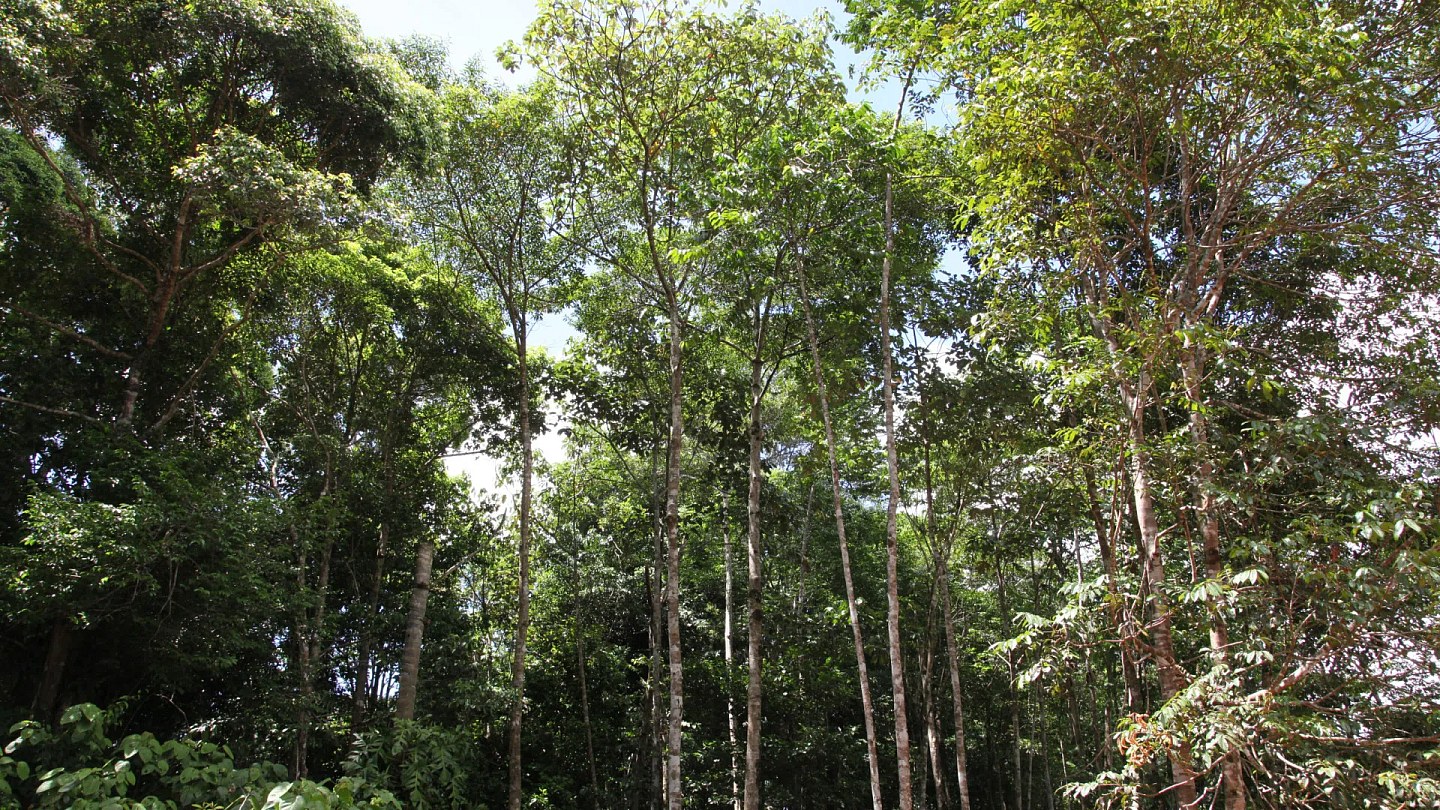
In the Cerrado, the area under alert for deforestation was 3,142 km² in the first six months of the year, the lowest since 2021. The number represents a drop of 6% compared to the same period in 2025 - in the Amazon, the reduction was 38%.
The data was released this Friday (10). Deter issues deforestation alerts to guide inspection actions. The official numbers are from another institute system, Prodes, which is more precise and released annually.
The biomes are the largest in the country and together represent three quarters of the national territory (49% concentrated in the Amazon and 24% in the Cerrado). The vegetation area under deforestation alert in both regions this year reaches 4,437 km², equivalent to almost three times that of the city of São Paulo.
Considering only the month of June, the Amazon lost 297 km² and the Cerrado, 482 km², which represents, respectively, a reduction of 35% and 5% compared to 2025.
The Minister of Environment and Climate Change, João Paulo Capobianco, highlights that, in both cases, this year's rates follow a downward trend in deforestation.
"The numbers are showing that this reduction process is being cumulative, reduction upon reduction. So, we are on a positive trajectory, both in the Amazon and in the Cerrado", he tells Folha.
In both regions, the beginning of the year has lower deforestation rates due to the rainy season, which makes deforestation difficult, and also the greater presence of clouds, which can impair obtaining satellite images.
The peak of deforestation typically occurs between May and September, when rainfall decreases.
Due to this seasonal dynamic, Inpe considers, for monitoring purposes, the 12-month period that runs from August of one year to July of the following year.
According to this metric, since August 2025, the area under deforestation alert in the Amazon is 2,486 km², a reduction of 37% compared to the previous period (3,960 km²). In the Cerrado, the rate is 4,686 km², which represents a drop of 8% compared to the period from August 2024 to June 2025.
Capobianco -who was Marina Silva's right-hand man and took over the role when she left office to run as a candidate in this year's elections- says that the current results were achieved through constant action by the federal government together with governors and mayors.
"It's a result of the Brazilian State: there are several policies, from several bodies, from different federative instances that are operating", he highlights, adding that this model of building public policy makes it more resilient to possible changes in government.
"Instruments are being built that provide more structuring policies and that point to a more interesting perspective of continuity, regardless of who would be, say, in charge or coordinating this", says the environmentalist.
The arrival of El Niño raises warnings for a possible intense drought in the second half of the year, which could lead to both more deforestation and more forest fires. The phenomenon will test the National Integrated Fire Management Policy, approved in 2024, after the major fires of that cycle.
El Niño normally causes drought in the North, Northeast and Central-West regions, a condition that facilitates the spread of flames - caused by human action, such as bushfires and arson and accidental fires.
The states of Mato Grosso (489 km²), Pará (391 km²) and Amazonas (184 km²) have led the deforestation of the Amazon this year, so far. In the cerrado, the biggest deforesters were Maranhão (839 km²), Tocantins (825 km²) and Piauí (368 km²).
The dynamics of deforestation are different in the two biomes. While in the Amazon it is concentrated in undesignated public areas and invaded protected areas, in the Cerrado it is concentrated in private areas.
It is worth remembering that environmental legislation is more permissive for the cerrado. According to the Forest Code, in the biome it is possible to deforest up to 80% of the property area (or up to 65% in some locations, when they are in transition regions to the Amazon forest). In the Amazon, the limit is 20%.
Authorizations for deforestation are granted by state government environmental agencies. Therefore, it is essential that local governments act to prevent the destruction of the biome, especially given the loosening of environmental licensing promoted by the new general law of this provision.
Deforestation is the main source of greenhouse gas emissions in Brazil. In 2024, the last year analyzed, it accounted for 42% of the total carbon emitted by the country, according to data from Seeg (Greenhouse Gas Emissions and Removals Estimation System). The goal of zero deforestation is essential to fulfilling the national climate plan assumed by the federal government under the Paris Agreement.
Read Also: Anvisa updates Covid vaccines to monitor variants in circulation
Source: Noticias ao Minuto - Ultima Hora
This story was originally published by Noticias ao Minuto - Ultima Hora. Visit the original publication for further details.
Open original publication