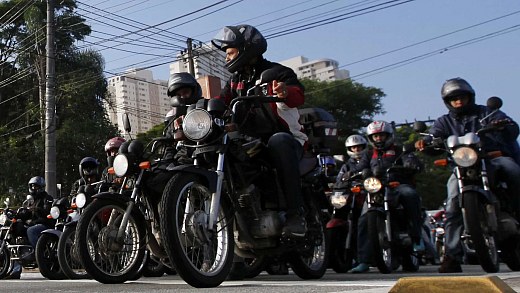
Votes from the second round of the presidential election in Colombia are counted in Bogotá, on Sunday (17) Diana Sanchez/AFP Even in healthy democracies, with robust institutions, it is natural to think that the government leaders will come out ahead in any presidential election. The government, after all, naturally occupies the news, has more visibility and capacity to guide the debate, in addition to presenting concrete results. ? Follow the g1 international news channel on WhatsApp South America, however, defies this political maxim: according to a survey carried out by g1, in the Latin American countries on the continent that held recognized elections, the government leaders only won three of the last 20 elections. Since 2018, only Paraguay and Ecuador have seen government victories. The first is experiencing a period of Colorado Party hegemony, and is the only one to record two consecutive victories for the party in power during the period. The two most recent elections took place in Colombia and Peru, and ended with the victory of those who were not in the government. Keiko Fujimori secures victory in Peru's presidential elections In the first case, Abelardo de la Espriella, representative of the right, defeated Iván Cepeda, candidate of the left and the current president, Gustavo Petro, by a small margin of votes. In Peru, the situation is more complicated. Keiko Fujimori, also on the right, will receive the sash from José María Balcázar, chosen by Congress to serve a buffer term, after the dismissal of Dina Boluarte. In practice, there was no government candidate in the dispute. In many cases, since 2018 – the beginning of the survey –, government leaders have ended the electoral cycle with low popularity, or involved in scandals, and have not presented candidates. The government's defeat does not always necessarily mean an alternation between left and right. The survey only compiled independent Latin American countries in South America. Venezuela was not included in the count because it did not have elections considered fair by the international community. Alternation of power in South America: government supporters only won 3 of the last 20 elections Bruna Azevedo/g1 See the performance of the continent's government in the last elections: 2018 - Paraguay: government victory Horacio Cartes handed over power to Mario Abdo Benítez, both from the right-wing Colorado Party. 2018 - Colombia: government does not win Juan Manuel Santos (considered centrist) handed over power to Iván Duque, from the Democratic Center (right). Duque opposed the peace agreement that Santos reached with the FARC guerrillas and allied himself with Álvaro Uribe, with whom Santos had broken years before. 2018 - Brazil: governmentism does not win Michel Temer (MDB) passed the belt to Bolsonaro (then in the PSL). The MDB candidate, Henrique Meirelles, had just 1.20% of the valid votes in the first round, and the party freed its members to support whoever they wanted in the second round. 2019 - Argentina: government does not win Mauricio Macri, a non-Peronist liberal, lost re-election to Alberto Fernández, a left-wing Peronist, supported by Cristina Kirchner. The then president of Argentina, Alberto Fernández, participates in a session at the National Congress, in Buenos Aires, on March 1, 2023 REUTERS/Tomas Cuesta 2019 - Uruguay: governmentism does not win Tabaré Vázquez, from the left, lost to Luis Lacalle Pou, from the liberal right. 2020 - Bolivia: governmentism does not win Jeanine Áñez, right-wing, was interim president and was serving a buffer mandate after the fall of Evo Morales. She passed the banner to Luis Arce, then an ally of Morales. 2021 - Ecuador: governmentism does not win The then president Lenín Moreno had distanced himself from the "correísta" left of his former ally, Rafael Correa and became a center-right politician during his term. Unpopular, Moreno did not have a government representative in the elections. Guillermo Lasso beat the "root" correismo of his rival, Andrés Arauz. 2021 - Peru - government does not win Francisco Sagasti, chosen president by Congress because the position was vacant after years of political instability, was from the centrist Morado Party. He was succeeded by Pedro Castillo, representative of the conservative left. Pedro Castillo, then president of Peru Reuters 2021 - Chile: governmentism does not win Gabriel Boric, leftist, was elected successor to Sebastián Piñera, rightist. 2022 - Colombia: government does not win Iván Duque, right-wing, was succeeded by the left-wing Gustavo Petro, who had already been his rival in the previous election. 2022 - Brazil: government doesn't win Jair Bolsonaro (PL) tried for re-election, but lost to Luiz Inácio Lula da Silva (PT) in a close vote. 2023 - Paraguay: government victory Mario Abdo Benítez passes the ticket to Santiago Peña, both from the right-wing Colorado Party. 2023 - Ecuador: governmentism does not win Guillermo Lasso called early elections after losing support due to scandals in his administration. He did not support any candidate and his party did not present a candidacy either. The winner of the election, Daniel Noboa, is from the same political spectrum. 2023 - Argentina: governmentism does not win Kirchnerism (left-wing Peronism), in power with Alberto Fernández, launches Sergio Massa as a candidate, but he loses to Javier Milei, on the right. The president of Argentina, Javier Milei, on April 2, 2026 REUTERS/Agustin Marcarian 2024 - Uruguay: governmentism does not win Yamandú Orsi, from the left, beats the candidate from the right and supported by Lacalle Pou, Álvaro Delgado. 2025 - Bolivia: government does not win Luis Arce loses the elections to Rodrigo Paz, on the right, and ends a 20-year cycle of electoral victories for the left in the country. 2025 - Ecuador: government victory Daniel Noboa is re-elected, this time for a full term. 2025 - Chile: government doesn't win Gabriel Boric fails to elect his supporter Jeannette Jara, and José Antonio Kast, who had lost the previous dispute, takes the right again to the Palacio de la Moneda. 2026 - Peru: government doesn't win In yet another period of extreme political instability, Keiko Fujimori is elected to succeed José Maria Balcázar, congressman chosen to fill a buffer mandate. 2026 - Colombia: government doesn't win Gustavo Petro supports Iván Cepeda in the elections, but he loses the second round to Abelardo de la Espriella, candidate on the right of the political spectrum. Abelardo de la Espriella, president-elect of Colombia JAIME SALDARRIAGA / AFP Left x right in South America Editoria de Arte/g1
Advantage or disadvantage? In the last 20 elections in South America, government candidates only won three times; see MAP
Votes from the second round of the presidential election in Colombia are counted in Bogotá, on Sunday (17) Diana Sanchez/AFP Even in healthy democracies, with robust institutions, it is natural to think that the...

Source: G1 Mundo
This story was originally published by G1 Mundo. Visit the original publication for further details.
Open original publication