SÃO PAULO, SP (FOLHAPRESS) - Surprisingly, President Donald Trump said this Thursday (23) that the nuclear agreement with Saudi Arabia is conditional on peace between the Middle Eastern country and Israel. Furthermore, he denied that the arrangement will allow uranium enrichment in the desert kingdom.
Trump demands peace with Israel in nuclear deal with Saudi Arabia
SÃO PAULO, SP (FOLHAPRESS) - Surprisingly, President Donald Trump said this Thursday (23) that the nuclear agreement with Saudi Arabia is conditional on peace between the Middle Eastern country and Israel. Furthermore,...
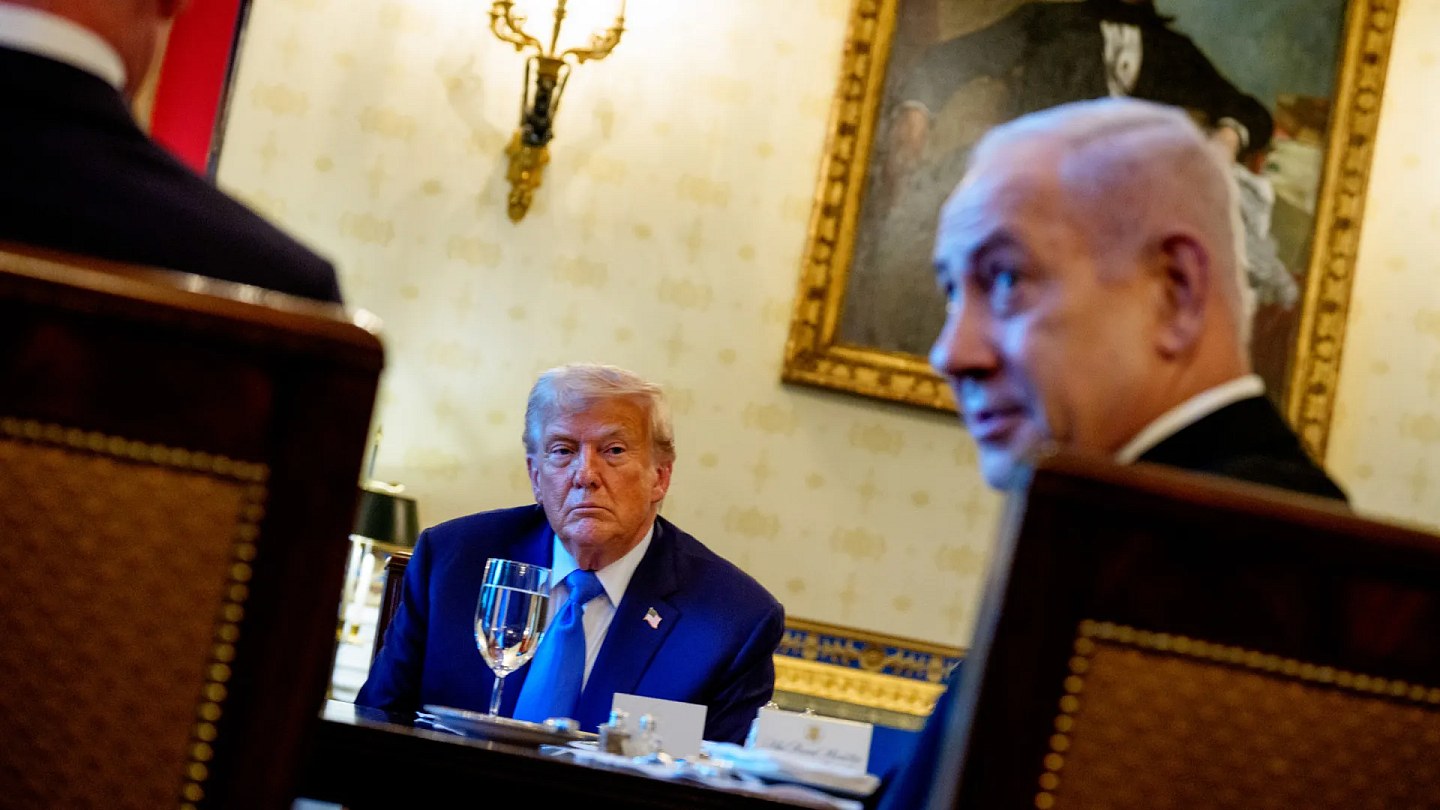
The announcement was made on the Truth Social network one day after Washington and Riyadh confirmed the agreement, which still has to be submitted to the American Congress.
"The civil nuclear agreement (No Enrichment!) is fully subject to Saudi Arabia's adherence to the highly respected and successful Abraham Accords," he wrote.
He was referring to the arrangements promoted in his first term, named after the biblical patriarch Abraham, considered a common origin of Judaism, Christianity and Islam.
As of 2020, the United Arab Emirates, Bahrain, Morocco and Sudan normalized relations with Tel Aviv in exchange for commercial promises, which were fulfilled in some cases, such as that of the Emiratis.
Strategically, the idea was to isolate Iran, the center of the Shiite Islamic minority, from its Arab neighbors who adhere to the majority Sunnism in the Middle East. The next objective was to reach Riyadh, the main nation in the region, but the wars resulting from the terrorist attack by the Palestinian group Hamas on Israel stopped the negotiation.
The Saudis conditioned any peace with the Jewish State on the creation of Palestine as an autonomous nation, something that the refusal of Binyamin Netanyahu's government and the obliteration of the Gaza Strip have now made unfeasible.
Trump's demand had not been mentioned in the reports that revealed the nuclear agreement, on Tuesday (21), nor in the announcement of sending the proposal to Congress, on Wednesday (22). It now remains to be seen whether Riyadh was already aware of this and, of course, whether the monarchy is willing to make peace with Israel.
It was also assumed that the agreement would allow uranium enrichment in Saudi territory with American technology without the usual constraints, which led to criticism and questions both in Israel, the only US ally in the war launched in February against Iran, and in other countries.
In 2009, the Americans signed an agreement with the Emirates that is considered the standard for this type of arrangement. In it, uranium enriched to serve as fuel in nuclear plants is brought from the USA to the Arab country, and everything is subject to additional inspections by the IAEA (International Atomic Energy Agency).
In his post, Trump suggested that the Saudi deal will have the same format. Faced with this uncertainty, until now the global monitoring body for the peaceful use of nuclear energy, linked to the UN, has not commented on the case.
Another concern regarding the installation of enrichment capacity for uranium, the raw material used to generate electricity in nuclear power plants, is that the same centrifuge used for civilian purposes could be used to make atomic bombs.
This occurs by increasing the degree of enrichment, a process in which uranium atoms are separated. In nuclear plants, the usual rate is 3% to 5%, while a high-efficiency pump needs the element at 90%.
The IAEA's so-called additional protocols, applied to States already adhering to the NPT (Nuclear Non-Proliferation Treaty), make it possible to verify the enrichment process in more detail.
Ironically, one of the alleged reasons for Trump's war against Iran was precisely the theocracy's nuclear program, seen as a search for the bomb. This year, the IAEA approved a resolution demanding the return of inspections in the country, which is a member of the NPT.
Until Trump's post, what was known about the agreement with the Saudis was that there would be no participation by the UN agency in the deal. That has heightened regional concerns over the ambitions of the government led by Crown Prince Mohammed bin Salman and fears of an atomic arms race in the volatile Middle East.
Today, only Israel has the bomb in the region, with an arsenal of an estimated 90 warheads. Last year, Saudi Arabia had already become an indirect nuclear power by signing a mutual defense agreement with Pakistan, which owns 170 atomic weapons.
In theory, in the event of a devastating attack against the kingdom, the Islamic republic of South Asia could come to its aid with its warheads. The Pakistanis moved soldiers and even fighter planes to a Saudi base.
The agreement has not yet been put to the test in the current context, with attacks launched by Iran on US-linked facilities on Saudi territory and the resumption of hostilities between Riyadh and rebels supported by the rival theocracy in Yemen.
Read Also: Google receives billion-dollar fine for favoring its own services
Source: Noticias ao Minuto - Mundo
This story was originally published by Noticias ao Minuto - Mundo. Visit the original publication for further details.
Open original publication