IGOR GIELOWSÃO PAULO, SP (FOLHAPRESS) - Amid the renewed exchange of attacks with Iran around the Strait of Hormuz, President Donald Trump stated this Monday (13) that the United States will resume blocking Iranian ships in the sea and that he intends to charge a toll to maintain traffic in the region.
Trump announces new blockade on Iran and toll in Hormuz
IGOR GIELOWSÃO PAULO, SP (FOLHAPRESS) - Amid the renewed exchange of attacks with Iran around the Strait of Hormuz, President Donald Trump stated this Monday (13) that the United States will resume blocking Iranian...
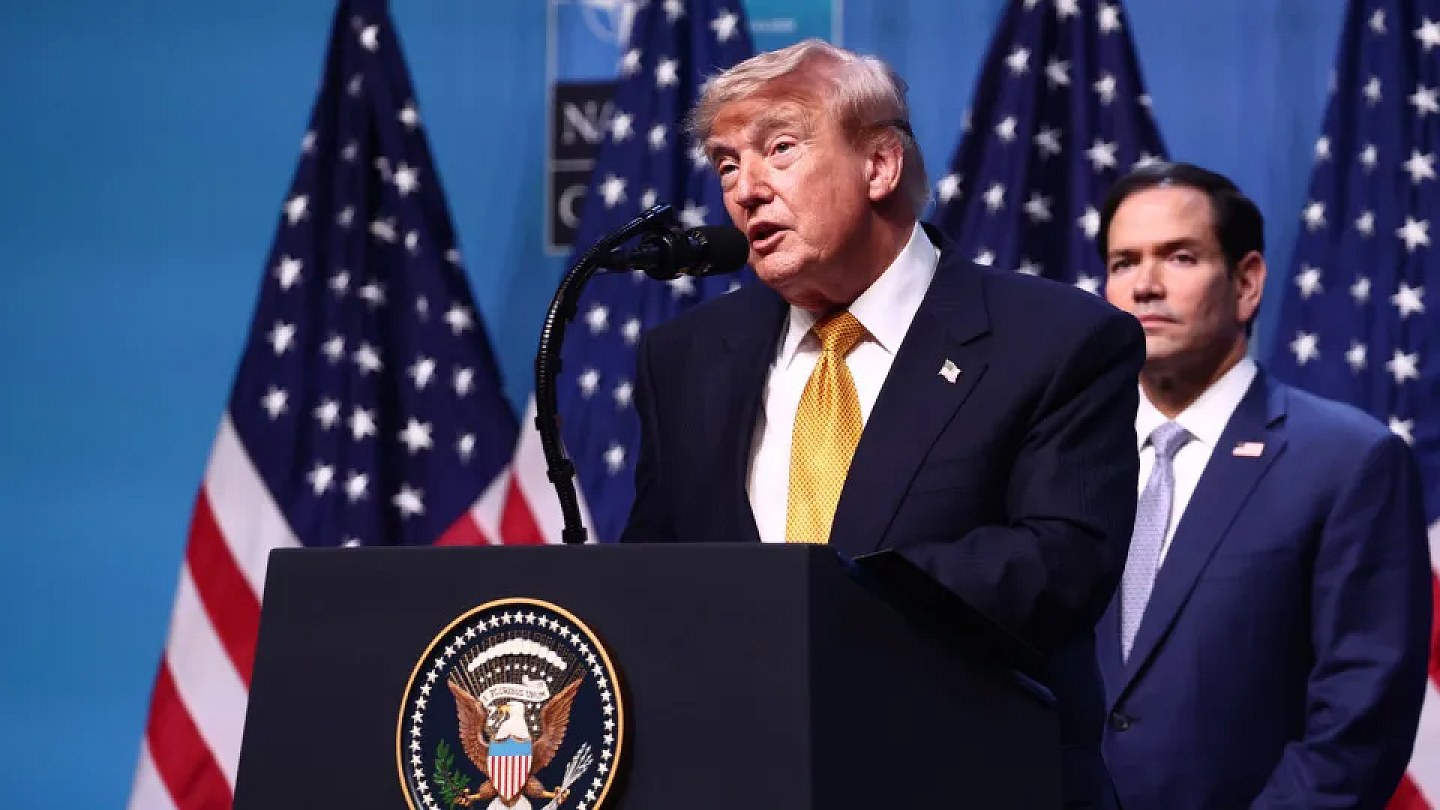

"We will maintain control of the strait and probably manage it. We will be the guardians of the strait. Maybe the guardian angel of the strait. And we should be reimbursed for that," the Republican told Fox News.
Then, on social media, he said he would like to charge 20% on all cargo transported there. Egypt charges at least 37% of the value transported by oil tankers in the Suez Canal, but the Arab country controls both its banks - the waters of Hormuz are only Omani and Iranian.
"We are reinstating the Iranian blockade, so called because it will only stop Iranian ships or customers from entering or leaving. All other countries will have open and free use of the strait. In the interest of fairness, we will be reimbursed, at a rate of 20% of all cargo transported, for any costs necessary to do the job of providing security in this very volatile area of the world," he wrote.
The American Navy said that the blockade will come into effect from 5 pm (Brasília time) this Tuesday (14).
Iran, in turn, responded in a statement from its joint military command. He stated that he will not allow the US to act in the region. He said he will attack any vessel that does not have his authorization to pass through designated routes, and warned neighbors that helping the US will bring retaliation - support will be seen as "an act of war."
Trump had already made mention of controlling maritime traffic on the route through which a fifth of the world's oil and natural gas passed before the start of the war launched by the US and Israel against the theocracy, on February 28.
In his most recent speech, at the end of June, he had said that there should not be tolls for the transit of ships in the region, as Iran wants, but that if there were, they should be paid by the countries to the USA.
There is currently not enough American military force in the region to create a passage corridor proof against Iranian attacks, but before the June 17 ceasefire, the US had already imposed a naval blockade on theocracy's vessels. He was quite successful in putting pressure on Tehran.
The scenario is now even more complex. Trump declared the truce with Iran dead last week, and the rivals began to systematically attack each other. This Monday, there was another round of exchange of fire.
For the first time in the conflict, the US deployed water drones similar to those used by Ukraine in the Black Sea against an Iranian ship and submarine repair facility in Bandar Abbas, the main Iranian city in the strait.
After attacks that began on Sunday night (12) against Iranian positions, Tehran targeted American installations in Bahrain, Kuwait, Jordan and again in neutral Oman, a sultanate that is negotiating a scheme to control Hormuz with the theocracy.
The Arab country controls the southern coast of the pass, while the Persians occupy the north. The other oil-producing nations of the Persian Gulf and the United States reject the idea of ??control, and today there are two theoretical routes for ships, one passing through Iranian waters and the other through Omani waters.
But the return of hostilities has dropped traffic to its lowest level since the June truce. On Sunday, only 14 ships with active communication systems passed through the region, according to consultancy Kpler. The day before, Iran had targeted 2 of the 22 vessels that had transited Hormuz.
Before the war, around 140 oil tankers and other ships sailed those waters. With the war, Iran fulfilled its promise to close the strait, and during the most active five-week phase of the conflict, traffic was essentially zero. Under the terms of the ceasefire, Iran was supposed to allow traffic for 60 days of negotiations. There was no provision preventing toll collection, a strategic asset that Tehran discovered throughout the conflict. Thus, the Persians sought to secure their position.
They did this by specifically attacking oil tankers, which angered Trump. Now, with the occasional attacks, the conflict is in a dangerous backwater phase, at risk of further escalations that are of no interest to either Iran or the United States, where the president will face a tough legislative election in November and the war is unpopular.
The new round of attacks has raised the price of oil, another headache for Trump. This Monday, the benchmark barrel of Brent futures contracts was traded close to US$80, an increase of 5%.
Read Also: Anti-terrorism police take on case of murdered former British minister
Source:
Noticias ao Minuto - Ultima Hora