(FOLHAPRESS) - University student Ana Luiza Souza Ferreira, 20, had an unforeseen event in the last elections and had to leave Governador Valadares (MG). She paid the Electoral Court fine to keep her title in good standing.
Growing abstention challenges mandatory voting and enters the candidate calculation
(FOLHAPRESS) - University student Ana Luiza Souza Ferreira, 20, had an unforeseen event in the last elections and had to leave Governador Valadares (MG). She paid the Electoral Court fine to keep her title in good...
With no travel plans for this year, she intends to increase abstention statistics again. "Promises only appear at election time. Afterwards, nothing happens. I'd rather pay a fine."
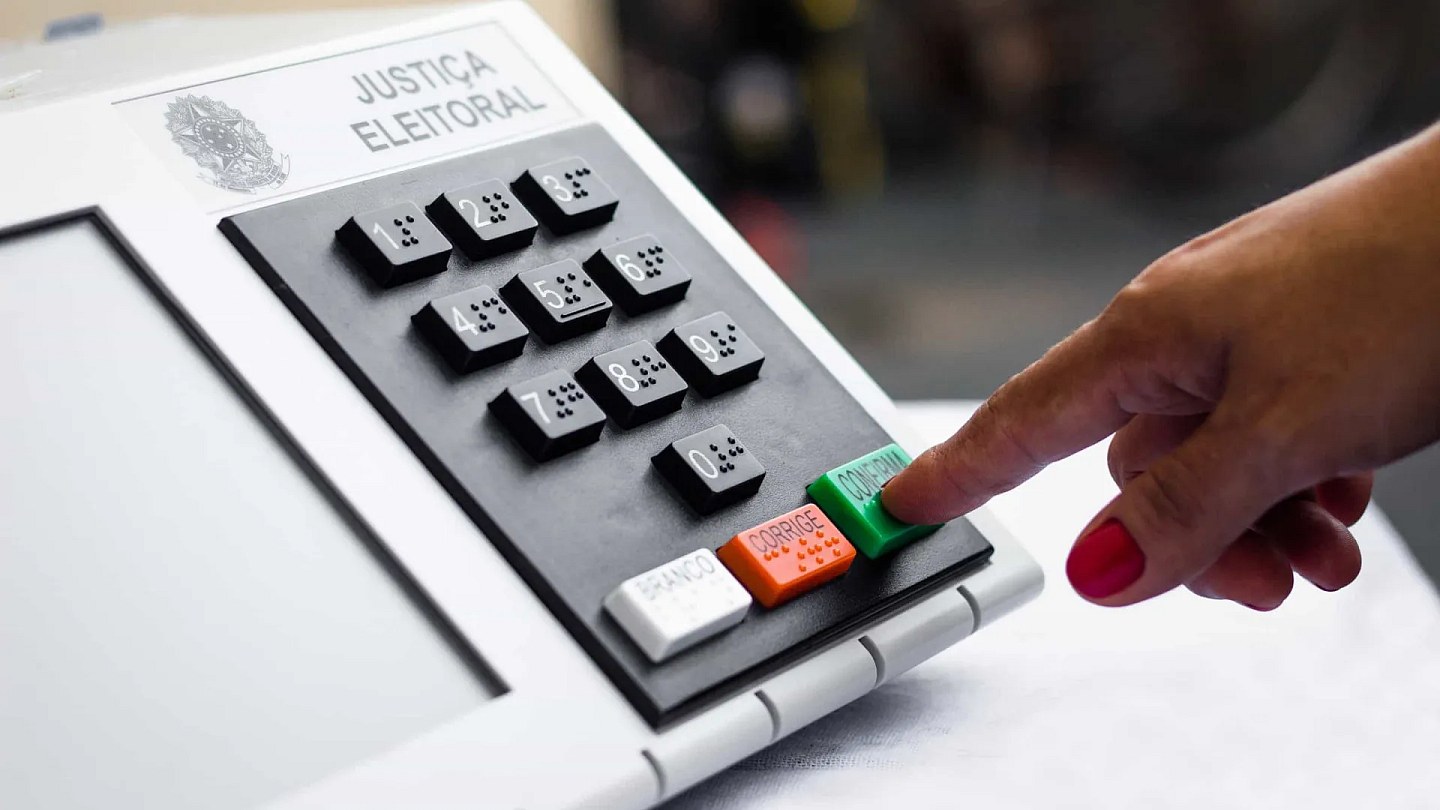
Increasing electoral abstention became a challenge for the TSE (Superior Electoral Court) and entered the calculation of candidacies in a scenario of fierce competition for the Presidency of the Republic.
Experts point out that the biggest loser from not turning out at the polls this year must be President Lula (PT), who is seeking re-election. Data from the Electoral Court and voting intention surveys indicate that the profile of voters who abstain is more similar to those of PT members.
At the same time, greater female electoral engagement benefits Lula, the sector most refractory to the candidacy of Senator Flávio Bolsonaro (PL), according to research.
Abstention has been growing since 2002, the first general election entirely carried out using electronic voting machines. That year, when Lula was elected President for the first time, 17.7% of voters did not go to the polls in the first round, and 20.4% in the second.
The percentage rose year after year until 2022, when 20.9% did not participate in the first round. For the first time in the period, abstention fell in the second round, reaching 20.5%. Experts link the movement to the fierce dispute between Lula and former president Jair Bolsonaro (PL).
The municipality with the highest abstention in the second round of 2022 was Maraã (AM), in the heart of the Amazon where 45.5% of voters were absent. Governor Valadares (MG) had 27.5% abstention, the highest among cities with more than 200 thousand voters - municipalities in which there is a second round in municipal elections.
Residents gave different reasons for not going to the polls. Lawyer Késia Cristina Ferreira, 34, was away from the city to fulfill professional commitments. "I thought that my vote wouldn't make that much of a difference to the moment we were living in."
Administrator Neuber Santos, 42, missed the last election because he had a leisure trip, but says he intends to attend. "You have to vote, right?"
Political scientists say there is no research that offers a diagnosis of the phenomenon. They describe, however, a sum of hypotheses for the discreet but constant increase in abstention in each general election of this century.
The reasons can range from difficulty accessing voting locations, more common in the Amazon region and small cities, lack of interest in the dispute and even outdated voter registration. All possibilities, experts point out, are fueled by the almost symbolic punishment for non-compliance with the mandatory vote.
"If you don't submit your Income Tax declaration on the day, you know what the implications of this are for your life. Now, if you don't vote and miss three successive elections, you are removed from the [TSE] register. For voters who aren't going to travel internationally, aren't going to take part in the contest, missing doesn't have such a big personal implication", says political scientist Jairo Nicolau, professor at FGV (Fundação Getúlio Vargas).
Voting is mandatory for everyone between 18 and 70 years old, with the exception of illiterate people. Voters can justify their absence through the TSE's e-Título application, without the need for supporting documents. If you do not do so within the deadline, you will pay a fine of R$3.51 per shift in which you did not show up. The title is canceled after three absences.
In 2025, 5 million people would have their title canceled after missing the last three elections.
"If you really wanted to increase participation, you would increase the fine to R$70. There is a section of the Electoral Court that is in favor of optional voting. This is not said. It was not a decision by the Legislature. It is an administrative [decision] of the Electoral Court to facilitate the justification of absence and apply a fine that has not been readjusted for 30 years", says Nicolau.
Political scientist Felipe Nunes, CEO of Quaest, assesses that the rise in abstention, combined with the drop in invalid votes (null and blank) recorded in 2022 for all positions, indicates that "people are understanding how the system works".
"If you don't want to vote for someone and the punishment of not going is too small, it's better not to go than to go and press a null or blank button. Abstention has become electoral behavior," says Nunes.
Political scientist Antônio Alkmin also points to a contingent of people who did not even obtain a voter registration card.
"In 1989 we had 10% of the population that could potentially have a voter registration card and didn't. Today, according to estimates, it reaches 5%. It seems small, but in an electorate of 160 million, we are talking about 8 million people", he points out.
Data from the TSE show that abstention in 2022 was higher among those with lower education, voters more aligned to the left, according to surveys. On the other hand, women, whose voting intention was mostly for Lula, had a lower abstention rate -19.96% compared to 21.98% of men in the first round.
"Abstention is unequal across the territory and in social terms. [...] The women's vote was fundamental to Lula's victory. A high level of female abstention is very harmful to the left. There would have been a stronger victory for Bolsonaro in 2018 and a narrower victory or possibly even a defeat in 2022. So abstention makes a difference, yes, because it is unequal", says Nicolau.
Electoral Justice figures show that the drop in abstention between the first and second rounds was more intense among those with less education.
Federal deputy Jilmar Tatto (PT-SP), coordinator of the PT's Electoral Tactics Group, states that the issue is on the party's radar.
"It is a cause for concern due to the low profile of abstentions
Source: Noticias ao Minuto - Ultima Hora
This story was originally published by Noticias ao Minuto - Ultima Hora. Visit the original publication for further details.
Open original publication