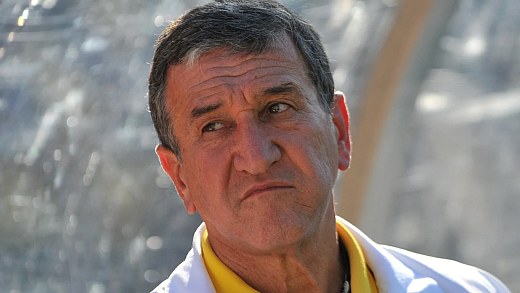
BUENOS AIRES, ARGENTINA (FOLHAPRESS) - It took four elections, but Alberto Fujimori's daughter convinced Peruvians, 26 years after the country got rid of her father's dictatorship, that she should be president.
Fujimori's daughter is made official as the new president of Peru 26 years after the end of her father's dictatorship
BUENOS AIRES, ARGENTINA (FOLHAPRESS) - It took four elections, but Alberto Fujimori's daughter convinced Peruvians, 26 years after the country got rid of her father's dictatorship, that she should be president. Keiko...
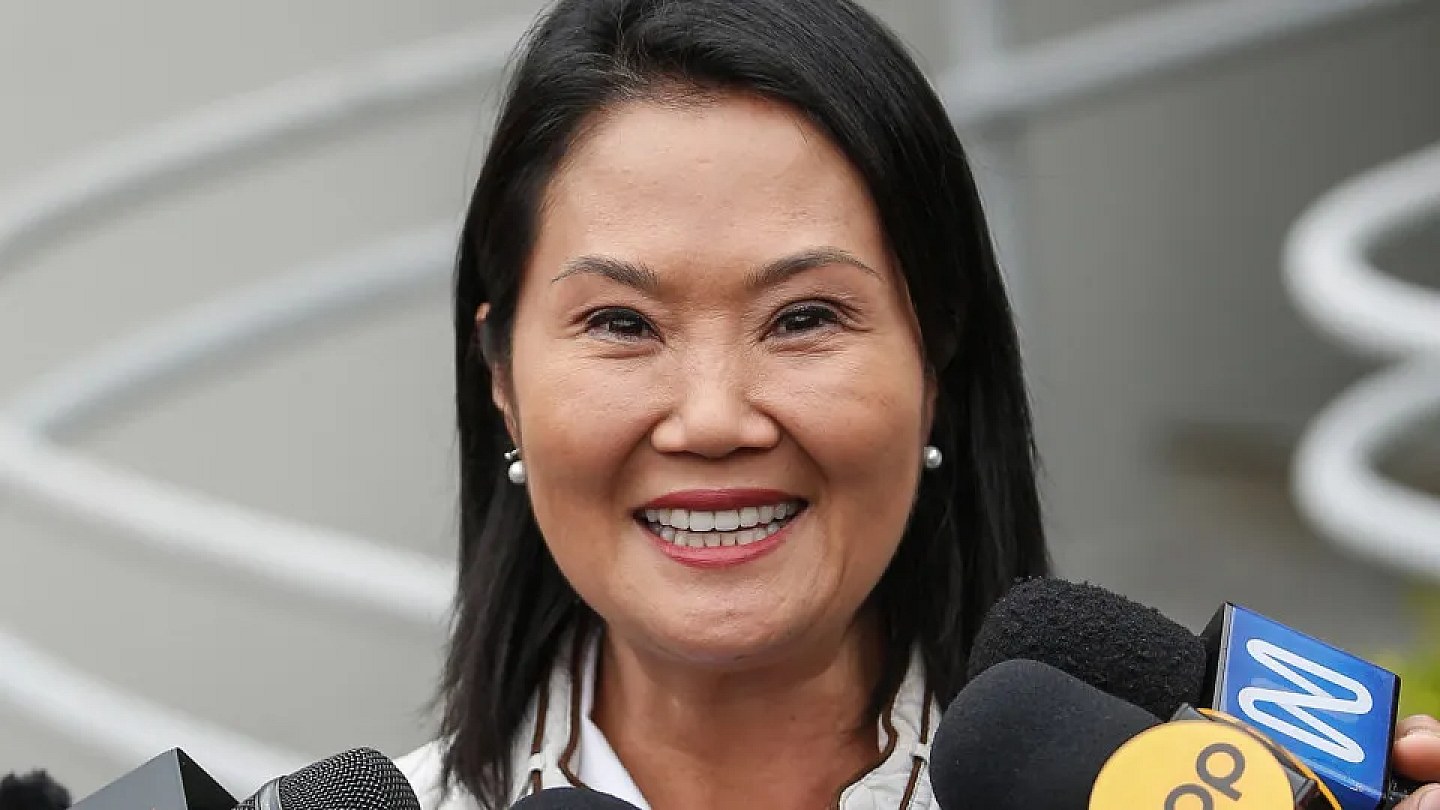
Keiko Fujimori won the second round of Peru's presidential elections, on June 7, by a margin of almost 50 thousand votes, according to Onpe (National Office of Electoral Processes). There were 50.135% of votes for the now elected president, compared to 49.865% for her opponent, Roberto Sánchez.
The result was announced almost a month after the first round due to the delay in counting, the tiny difference between the two candidates and the judicialization of the count. Just like Keiko, in 2021, Sánchez tried to cancel thousands of votes, especially those from abroad, which guaranteed the victory of the now elected president.
The soap opera doesn't seem to be over. Sánchez has called for demonstrations and, on Wednesday (1st), presented an appeal to the IACHR (Inter-American Commission on Human Rights) questioning Keiko's victory.
The left-wing deputy was the fourth politician to face the right-wing populist in a second round - a mark that earned Keiko the nickname of eternal candidate. She inaugurated this now-broken tradition in 2011, when she competed against the last Peruvian leader who managed to fulfill his mandate, Ollanta Humala.
That year, he lost by less than three percentage points, a phenomenon that was also repeated in subsequent elections. In 2016, he achieved 49.9% of the votes, against 50.1% for Pedro Pablo Kuczynski, the PPK; in 2021, the numbers were repeated with Pedro Castillo, godfather of this year's loser.
What always left her out was anti-fujimorism, one of the main political forces in a country with practically disposable parties and a political system made up of weak institutions.
The rejection has an explanation. Fujimori governed Peru from 1990 to 2000 with an iron fist and remained in power thanks to a self-coup in 1992 - precisely responsible for dismantling the political system of the time, resulting in the current fragmentation and informality of the nation's politics.
The hallmark of his regime was the fight against the Sendero Luminoso and Movimento Revolucionário Túpac Amaru guerrillas, known for the violence with which they operated, especially in the poorest areas of the country. Fujimori's repression, in turn, included at least two massacres involving civilians. The dictator was serving a 25-year prison sentence for crimes against humanity and corruption when he died in 2024, at his daughter Keiko's home.
Interestingly, the now elected president had to embrace her father's legacy to win, showing that Fujimorism is also one of the strongest ideological currents in Peru.
Under the motto "Fujimori returns, order returns", Keiko positioned himself as an updated version of his father. The now-elected president was helped by the security crisis the country is going through and which made tens of thousands of Peruvians take to the streets last year, in a cycle of protests that ended up toppling then-president Dina Boluarte.
In the first round, on April 12, she chose to start voting day under the dictator's tomb. "I would like the person speaking here today to be my father," she said hours later, at the typical breakfast with voters and journalists that candidates have on voting days, a tradition started by Fujimori in 1990.
On the eve of the first round, he told Canal N that "it is the Peruvians who most want a hard-line policy" like the one his father implemented. "Time is putting things in their place and, today, when Peru is bleeding from criminals and extortionists, what they are asking for is a Fujimori. Here I am!", he continued, in the same tone, to the AFP news agency.
The more specific proposals involve reviving the policy of courts with "faceless judges", a measure that guarantees anonymity to magistrates in certain types of trials and which was widely used by his father in the 1990s. The tool, however, is criticized by human rights organizations for having led to the arrest of hundreds of innocent people. She also promised to build four maximum security mega-prisons and, like her father, leave the Inter-American Court of Human Rights.
Less extravagant plans in the area of security involve strengthening the police with new cameras and vehicles and creating interconnected command centers between all regions of the country that would work with the help of artificial intelligence to prevent crimes.
Keiko has also absorbed the anti-immigration agenda, reimagining her father's radicalism for the 21st century ultra-right. "We will expel undocumented citizens," she said. The Venezuelan community in Peru, the largest in the country, has 1.6 million people - 14% without authorized residence.
In the field of economics, the pillar of his campaign was the defense of his father's economic legacy, which stabilized Peru's economy through the independence of the Central Bank and a rigid legal framework that guarantees the balance of public accounts.
In this sense, he made a point of making a difference with Sánchez, although the defeated candidate moderated his economic speech when he went to the second round. The president wants to reduce Peru's fiscal deficit to 1% of GDP by 2031 - the one in 2025 had already been 2.2%, one of the lowest in Latin America.
To resolve the high informality rate, which exceeds 70%, the policy wants to attract between US$5 and 7 billion in investments by 2031 and create 3 million jobs.
It helped Keiko that her opponent had two tasks, not one, like her: make himself known to voters and convince them that he was the best option. This is with Castillo as his godfather, currently in prison for attempting a self-coup a year and a half after taking power.
During the 15 years in which he did not win the elections, Keiko occupied himself with dominating Congress, a body that gained disproportionate prominence among the Powers of Peru. One of the main responsible for the political instability that the country is going through, the Legislature was responsible for removing four presidents in the last ten years.
Since 2011, Força Popular has been at least the second largest group in Congress, reaching an impressive 73 seats out of 130 in the 2016 election. Now, Keiko moves to the other part of the group, but in a slightly more favorable situation than her predecessors - her party dominates Congress with 41 of the 130 seats in the Chamber of Deputies and 22 out of 60 in the Senate, recreated in 2024.
Força Popular's degree of dominance over institutions makes the opposition's situation delicate. Even so, experts say that she will still need to negotiate, now with two Houses, to get her government moving.
Read Also: Trump acquired US$2.2 billion in income during his term in the US
Source: Noticias ao Minuto - Mundo
This story was originally published by Noticias ao Minuto - Mundo. Visit the original publication for further details.
Open original publication