SÃO PAULO, SP (FOLHAPRESS) - The dollar closed in a firm fall this Thursday (30), with a decrease of 0.91%, quoted at R$ 5.061. The movement reflected an improvement in risk appetite in global markets and the release of economic indicators in the United States, which increased expectations that the Fed (Federal Reserve, North American central bank) may adopt a less restrictive monetary policy in the coming months.
Dollar closes sharply and Stock Exchange rises with data from the US and Fed on the radar
SÃO PAULO, SP (FOLHAPRESS) - The dollar closed in a firm fall this Thursday (30), with a decrease of 0.91%, quoted at R$ 5.061. The movement reflected an improvement in risk appetite in global markets and the release of...
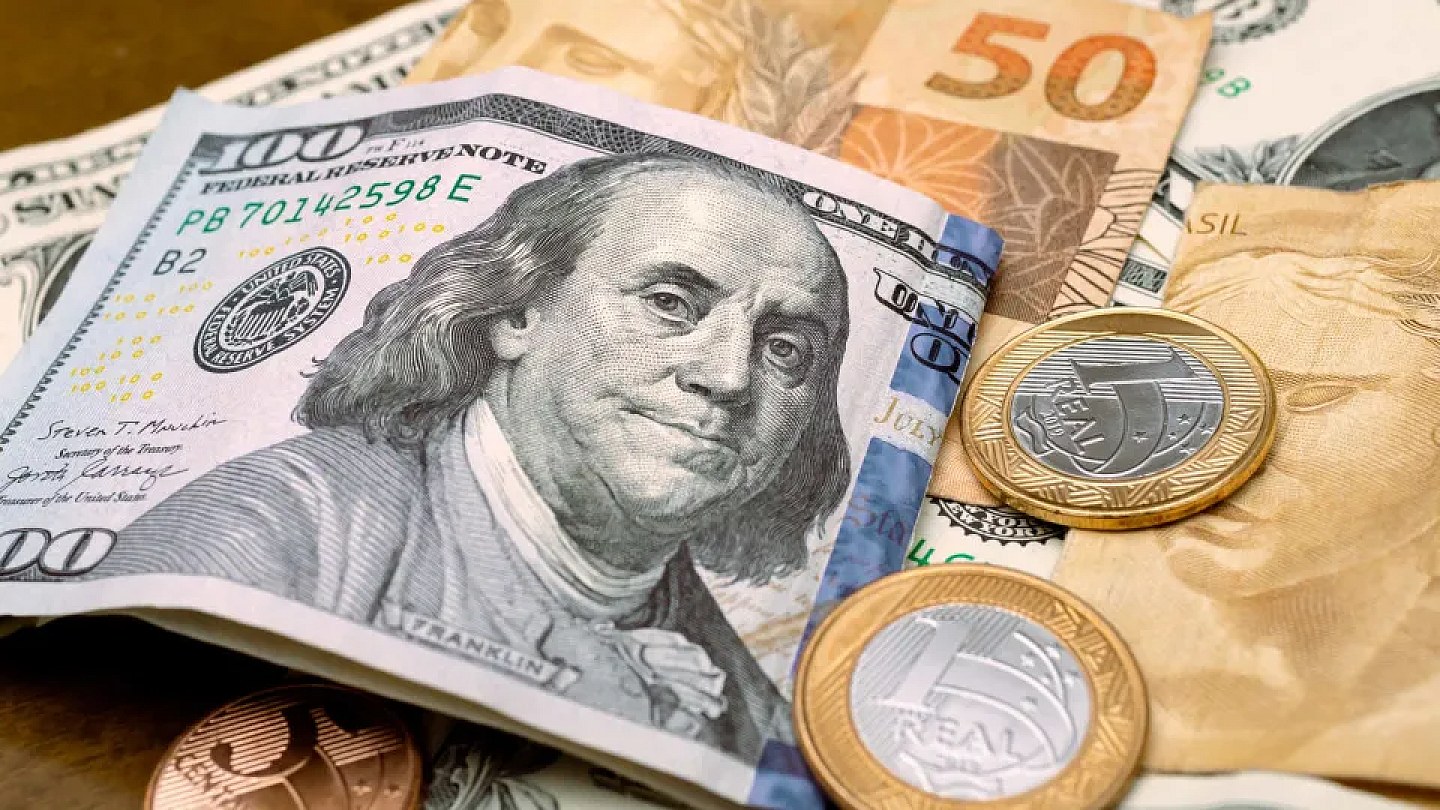
At the day's high, the North American currency reached R$5.106. At its lowest point, it fell to R$5.061. Abroad, the DXY index, which measures the dollar's performance against a basket of six strong currencies, closed down 0.93%.
According to Rebecca Nossig, stock strategist at Nomad, the devaluation of the American currency reflected, on the one hand, the release of weaker data from the US economy, such as the 1.5% growth in GDP (Gross Domestic Product) in the second quarter, below expectations of 2.1%, and a more moderate result for the PCE, the Fed's preferred inflation indicator.
The index accumulated an increase of 3.7% in the 12 months ended in June, above the monetary authority's target of 2%, but registered deflation of 0.1% compared to May.
According to Juliana Benvenuto, allocation and intelligence coordinator at Avenue, the market reacted negatively not only to the Fed's decision to maintain interest rates between 3.5% and 3.75%, but also to the fact that the institution's president, Kevin Warsh, avoided signaling the next steps of monetary policy - the so-called forward guidance.
Given this scenario, Benvenuto states that banks such as J.P. Morgan and Bank of America began to consider a rise in interest rates at the September or December meetings more likely, contrary to the prevailing expectation before the decision.
Nicolas Gomes, foreign exchange specialist at Manchester Investimentos, assesses that the economic indicators released this Thursday mitigated part of this movement by reinforcing a more "dovish" reading of the market. According to him, although the Fed's decision highlighted differences among leaders, with some voting in favor of raising interest rates, the data increased the perception that the central bank could maintain the rate or begin a cycle of cuts sooner than expected.
Furthermore, according to Rebecca Nossig, suspicions of intervention by the Japanese government in the foreign exchange market emerged this Thursday, with a likely sale of dollars to contain the devaluation of the yen. In the strategist's assessment, the movement increased the weakness of the American currency and favored currencies from emerging countries.
The Ibovespa ended the session with an increase of 1.88%, at 177,158 points. According to Marcos Vinícius Oliveira, economist at ZIIN Investimentos, the Stock Exchange's performance was favored by domestic economic indicators.
Among the highlights is the IGP-M, which registered deflation of 1.16% in July, more intense than market expectations, a drop of 1.09%. The unemployment rate remained at 5.4%, in line with projections.
The real was also favored by the fall in oil prices, after days of rise caused by tensions in the Middle East. At the end of the session, a barrel of Brent oil fell 1.75%, quoted at US$89.
American stock markets were also boosted by US economic indicators released this Thursday. The Dow Jones rose 1.19%, the S&P 500 advanced 1.67% and the Nasdaq gained 2.78%.
Oliveira also highlights the performance of the technology sector in the United States. According to the economist, Microsoft positively surprised the market by publishing results above expectations, driven by growth in revenue from cloud computing and investments in artificial intelligence. The company reported revenue of US$90 billion in the second quarter, an increase of 18% compared to the same period of the previous year and above analysts' projection of US$87.7 billion.
On the other hand, the expert states that Meta put pressure on the sector after signaling a significant increase in investments in artificial intelligence, which put pressure on the company's shares. "It's a summary of how the market is treating artificial intelligence now. It rewards those who already show returns and punishes those who only show expenses", says Juliana Benvenuto.
Last Wednesday (29), the Fed maintained the interest rate in the range of 3.5% to 3.75% for the fifth consecutive meeting. In an interview after the decision, Kevin Warsh, president of the Fed, once again defended the 2% inflation target and admitted discomfort with the still high prices in the USA. "There is no softer implicit target. There is only one target, and it is 2%," he said.
However, Warsh did not detail what conditions could lead the central bank to raise interest rates again and reiterated that future monetary policy decisions will continue to be based on economic data.
As inflation measured by the PCE remains above the Fed's target, the market still attributes a relevant probability of an interest rate hike at the September meeting. According to CME Group's FedWatch, 63.2% of investors project that the rate will be raised to the range of 3.75% to 4%, while 36.8% expect interest rates to be maintained at the current level.
In Brazil, investors are also paying close attention to the next meeting of the Central Bank's Copom (Monetary Policy Committee), scheduled for August 4th and 5th, when the basic interest rate, the Selic, will be defined, currently at 14.25% per year.
Last Tuesday (28), IBGE announced that the IPCA-15, considered a preview of the country's official inflation, slowed to 0.06% in July, below market expectations of 0.22%. In 12 months, the index accumulated an increase of 4.52%.
For Rafael Rondinelli, economist at MAG Investimentos, the result "reinforces the Copom's interest rate cut projection at next week's meeting."
If the Selic cut is confirmed, the attractiveness of the "carry trade" strategy will fall - in which investors raise funds in economies with low rates, such as the American or Japanese, to invest them in markets with higher interest rates, such as Brazil, if b
Source: Noticias ao Minuto
Next recommended read
This story was originally published by Noticias ao Minuto. Visit the original publication for further details.
Open original publication