The Euclid telescope discovered 31 of the oldest quasars, including two that date back to when the Universe was just 5% of its current age, the European Space Agency (ESA) announced today, which sent the device into space in 2023. A quasar is an extremely luminous and distant nucleus of a galaxy, powered by a supermassive black hole in the center of the galaxy, and is considered the brightest celestial object in the Universe.
Euclid Telescope finds quasars among the oldest in the Universe
The Euclid telescope discovered 31 of the oldest quasars, including two that date back to when the Universe was just 5% of its current age, the European Space Agency (ESA) announced today, which sent the device into...
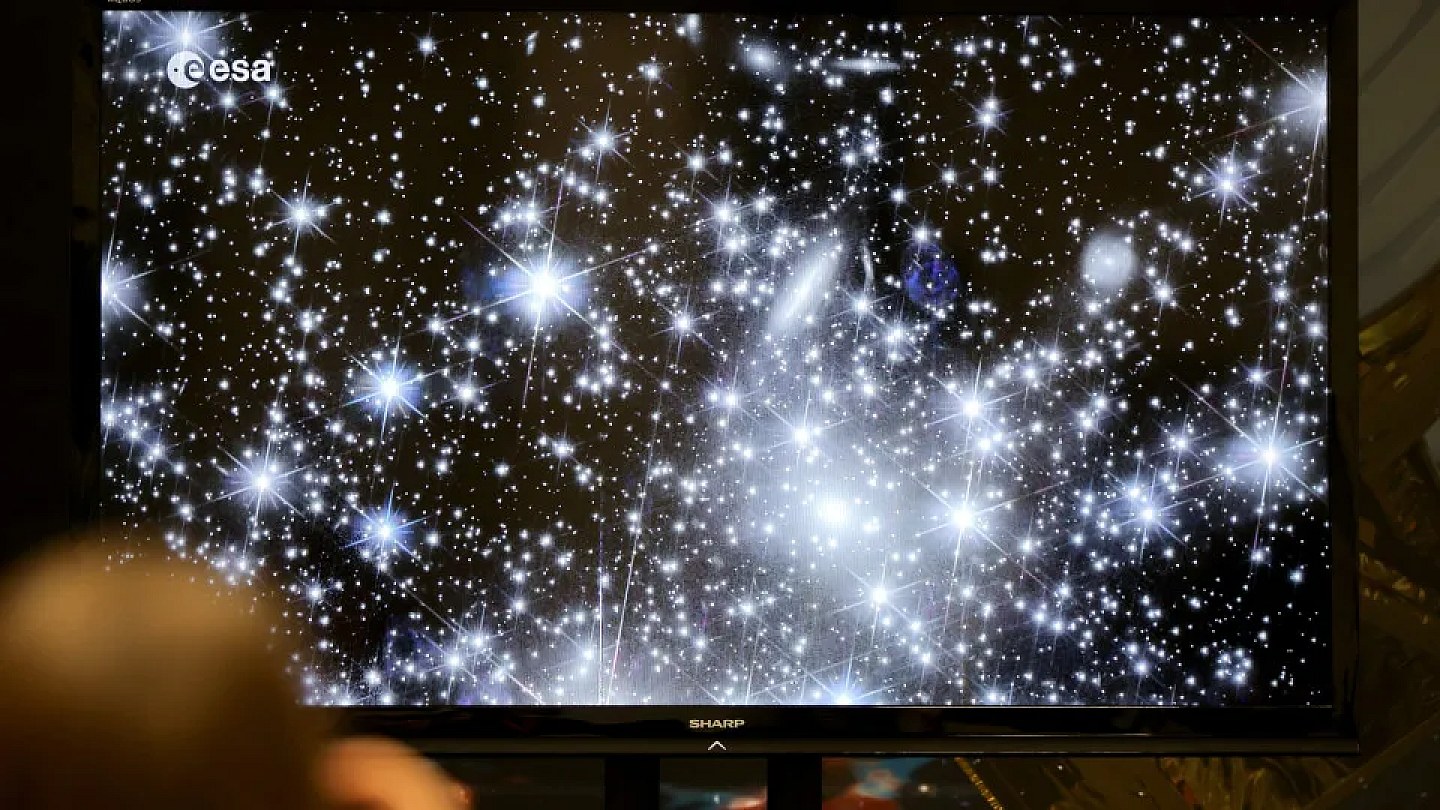
During this brief phase of the galaxy's life, large amounts of matter swirl into the black hole, releasing enormous amounts of energy.
Two of the quasars captured by the Euclid space telescope, the oldest ever observed, according to an ESA statement, emerged when the Universe was 670 million years old (the estimated age of the Universe is 13.8 billion years).
NASA astronauts publish images of southern auroras
NASA astronauts today published images of a series of aurora australis captured from the International Space Station (ISS), visible last weekend in the extreme south of the planet from a SpaceX Dragon capsule.
Quoted in the statement, Valeria Pettorino, scientist on the Euclid mission, pointed out that quasars like these are "rare discoveries" and authentic "time machines", which allow "exploring the early Universe and understanding how the first generation of galaxies emerged".
Quasars this old are difficult to detect not only because few galaxies have had time to grow large enough, but their light is faint and easily confused with that of less distant stars.
One of the two oldest quasars is embedded in a galaxy full of gas and dust that is forming new stars.
The results of the discovery are described in an article published in the specialist journal Astronomy & Astrophysics.
Launched in July 2023, the Euclid space telescope began scientific observations in February 2024.
Portugal, an ESA member state since 2000, participated in the manufacture of the device's components and in planning the observations, which will be around 50,000 during the mission's six-year duration.
The telescope was designed to observe in detail, 1.5 million kilometers from Earth, billions of galaxies, including the most distant ones, on which dark matter and energy generate effects on their structure, shape, distribution, movement and evolution.
Amazon advances to launch Starlink rival in 2026
After putting another 29 satellites into orbit, Amazon Leo already has more than 390 pieces of equipment and is expected to start its satellite internet service in some regions before seeking global coverage.
Source: Noticias ao Minuto - Tech
This story was originally published by Noticias ao Minuto - Tech. Visit the original publication for further details.
Open original publication