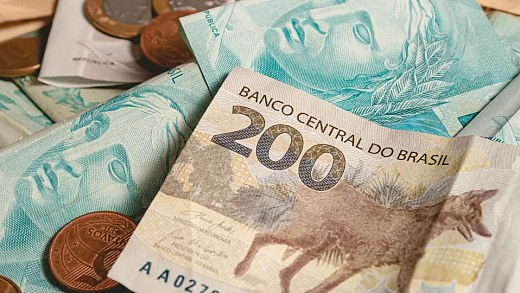
Aerial view of the White House, on May 2, 2026 REUTERS/Ken Cedeno Major American companies have sent letters to the Office of the United States Trade Representative (USTR) requesting that products imported from Brazil be left out of the imposition of additional tariffs under the Section 301 investigation. The statements from giants such as Tesla, Nestlé, Coca-Cola and eBay, sent on July 1, warn of the negative impacts on competitiveness, supply chains and the wallets of US consumers if barriers are adopted. ? This Monday (6), public hearings began on the pricing proposed by the American government on Brazilian products. ?The USTR is the body responsible for formulating US trade policy. It also conducts investigations into practices considered harmful to American commerce and can recommend measures, such as the imposition of tariffs. In addition to the 12.5% ??tariff, the agency proposes another 25% tax on Brazilian products, alleging that the government adopts practices that "encumber or restrict" trade with North Americans. The business mobilization occurs in parallel with a moment of strong diplomatic tension. Documents sent by Foreign Minister Mauro Vieira show that Itamaraty sees a "risk" of Donald Trump's government using "military force" against Brazilian territory after the US unilaterally classified the criminal factions Primeiro Comando da Capital (PCC) and Comando Vermelho (CV) as international terrorist organizations. Last week, the US Treasury Department already froze the assets of two Brazilians and four companies for alleged links with the PCC. Despite the conflicted political scenario, American corporations argue that commercially punishing Brazilian inputs will bring immediate domestic losses to the US economy.
Tesla, Coca-Cola, Nestlé and eBay ask the US not to tax products from Brazil
Aerial view of the White House, on May 2, 2026 REUTERS/Ken Cedeno Major American companies have sent letters to the Office of the United States Trade Representative (USTR) requesting that products imported from Brazil...

See below what each company is asking for: Tesla The manufacturer of electric vehicles and energy systems asked the USTR to exempt industrial inputs coming from Brazil. Billionaire Elon Musk's company says it is investing billions of dollars to nationalize and diversify its supply chain in the Americas. However, the transition takes time and certain key inputs for advanced sectors (such as electric vehicles, robotics and batteries) cannot yet be produced in the US at the necessary scale and quality. Tesla argues that applying taxes faster than the internal market's ability to adapt will harm American workers and consumers. READ ALSO: Brazil calls the US investigation 'arbitrary' and says the 12.5% ??tariff violates WTO rules Nestlé The multinational food sector requested the expansion of the list of those exempted and the inclusion of two specific products imported from Brazil: unflavored instant coffee (soluble coffee) and bovine collagen. Nestlé points out that coffee beans cannot be grown on a commercial scale in the continental USA, and that Brazil is the main global exporter of bovine collagen, whose American chain does not meet the demand for health and well-being products. The company highlights that 96.7% of its primary commodity supply chains have already been assessed as deforestation-free by the end of 2025, rebutting environmental concerns. Coca-Cola The beverage manufacturer requested that the US government maintain the exemption already proposed for orange juice of Brazilian origin and add lemon (and derivatives) to the list of tariff-free products or grant a transition period. The company reported that orange production in Florida has plummeted dramatically from 242 million boxes in the 2003/04 harvest to an estimated just 12 million in 2025/26 due to climate-related diseases and pests. Brazil has become a vital supplementary supplier to guarantee breakfast for American families, the document says. Changing citrus suppliers requires time for food safety testing, and new tariffs would only increase production costs internally, according to the company. eBay The global e-commerce platform recommended that the USTR modify the proposed action to create a categorical exemption for secondhand, used and pre-owned products. eBay explains that the tariffs were designed as a price signal aimed at Brazil's industrial and agricultural production. A used product, however, would have already completed its life cycle. The original manufacturer has already been paid and the fee would only penalize the reseller and low-income consumer looking to save money, the platform argued. Furthermore, the company points out that it is unfeasible to require accurate country of origin declarations for used items (around 30% of clothes arrive for resale without tags), which would generate disproportionate bureaucratic and operational costs for customs and small businesses. READ ALSO Brazil goes to the US to try to stop Trump's tariffs; see the arguments from industry and agriculture
This story was originally published by G1 Economia. Visit the original publication for further details.
Open original publication