Only Maranhão, Paraíba and Rio Grande do Sul have ten-year plans to combat child labor in force. In the other 24 units of the federation, these documents are out of date, in the process of being prepared or updated, awaiting publication or do not yet exist.
Only three states have a current plan against child labor
Only Maranhão, Paraíba and Rio Grande do Sul have ten-year plans to combat child labor in force. In the other 24 units of the federation, these documents are out of date, in the process of being prepared or updated,...
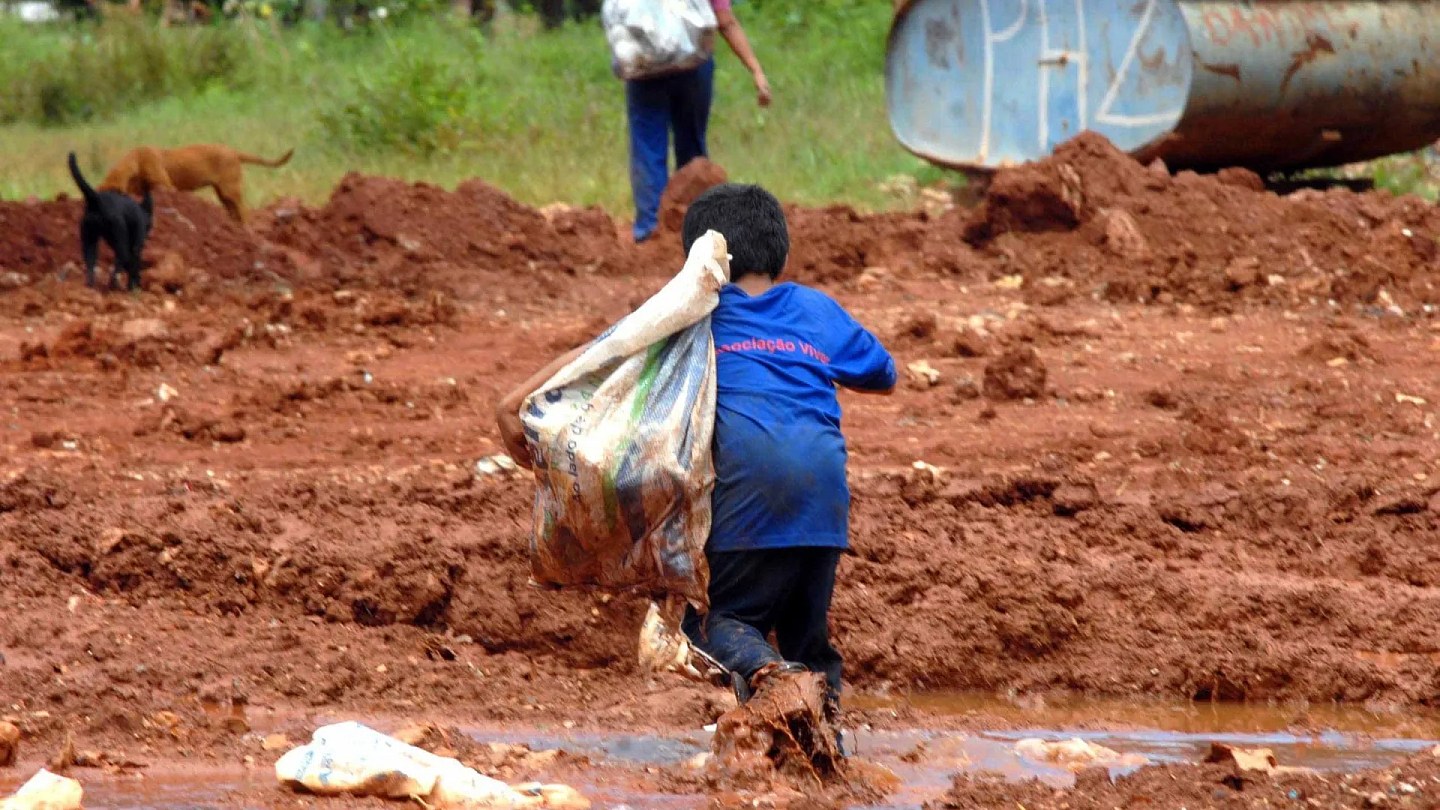
The data was presented this Wednesday (22) by the National Forum for the Prevention and Eradication of Child Labor and Protection of Adolescents at Work (FNPETI), in the unprecedented study Mapping of State and District Plans for the Prevention and Eradication of Child Labor and Protection of Adolescents at Work.
State plans define public authorities' responsibilities, establish goals and play a strategic role in articulating areas to promote and guarantee the rights of children and adolescents.
The executive secretary of FNPETI, Katerina Volcov, highlighted that, in the three units of the federation that developed the current plans to combat child labor, there was a convergence of political will on the part of the State and the political action and influence of civil society.
Katerina Volcov also detailed, in an interview with Agência Brasil, that, among the factors that lead to the omission of other states and the Federal District, are political barriers at the state level, marked by the low political priority attributed to the topic, the low coordination and intersectorality of state secretariats and the reduction in government support.
She also cites the weakening of organized civil society and the periods of paralysis of state forums that, in turn, carry out social control of the plans.
According to FNPETI, the study “highlights weaknesses in the implementation, monitoring and continuity of these public policies in the states and the Federal District”.
The representative of the national forum highlights that the lack of a current plan impacts children and adolescents most directly in three ways: invisibility and continuous lack of protection, isolated and inefficient actions and inability to respond.
“Without continuous planning and monitoring, initiatives cannot be evaluated, nor can their results be measured, in addition to reducing the capacity to respond to the different forms of child labor present in the regions of the state or Federal District”, said the executive secretary of FNPETI, Katerina Volcov.only
Lack of monitoring
The publication also draws attention to the fact that 76.9% of the 27 state forums report that they are unable to regularly monitor whether the few existing actions are yielding results.
The survey concludes that the lack of monitoring is still one of the main challenges in this area. And, without continuous planning and monitoring, difficulties increase in updating plans, defining indicators, keeping records of actions developed and institutionalizing continuous evaluation processes.
Furthermore, initiatives tend to disperse, become more vulnerable to management changes and lose the ability to respond to different forms of child labor.
Challenges
The study highlights structural challenges in the public sector itself in combating child labor. Among them are:
lack of planning;
administrative discontinuity;
insufficient financial and human resources;
team turnover;
difficulties in articulation between different bodies;
lack of permanent monitoring and evaluation mechanisms.
The representative of the national forum understands that it is possible to protect policies to combat child labor from discontinuity through legal and budgetary guarantees.
Katerina Volcov defends that the issue be transformed into State policy, through laws, decrees and long-term plans, with the guarantee of a public budget that ensures the continuity of initiatives, actions and programs, regardless of management or political party. She also mentions integrated work and social control.
"It is essential to strengthen bodies, secretariats and rights councils and the integration of different areas, such as education, health, work and income generation, the Justice system and supervision, which can and should work in a coordinated and intersectoral manner. Finally, the action of organized civil society is fundamental for the social control of these policies and, therefore, can and should influence the monitoring, evaluation and continuity of policies".
Exploration in digital environments
The Mapping of State and District Plans for the Prevention and Eradication of Child Labor and Protection of Adolescents at Work still notices the naturalization of child labor throughout the country and the emergence of new forms of exploitation of children and adolescents, especially in digital environments, such as social networks.
In order to protect children and adolescents in the digital environment, Brazilian legislation updated the Child and Adolescent Statute (ECA), through the Digital ECA, in force since March this year. Among the measures envisaged, it establishes rules for the artistic activity of children and adolescents.
In addition to ECA Digital, Resolution No. 687/2026, of the National Council of Justice (CNJ), established the National Bank of Permits for the Artistic Activity of Children and Adolescents (BNAC).
As an advocate for the protection of children and adolescents at work, Katerina Volcov explains that child labor in the digital environment is a recent challenge that requires urgent attention and articulated debate.
Solution proposals
The mapping proposes the application of the IV National Plan for the Prevention and Eradication of Child Labor and Protection of Adolescents at Work, prepared by the National Commission for the Eradication of Child Labor (Conaeti), as a complete model, with goals, indicators and strategies, to help states and the Federal District create or update their own state plans.
The national document must be adapted to the specific reality of each federation unit, with specificities such as agricultural work, begging or activity
Source: Noticias ao Minuto - Brasil
This story was originally published by Noticias ao Minuto - Brasil. Visit the original publication for further details.
Open original publication