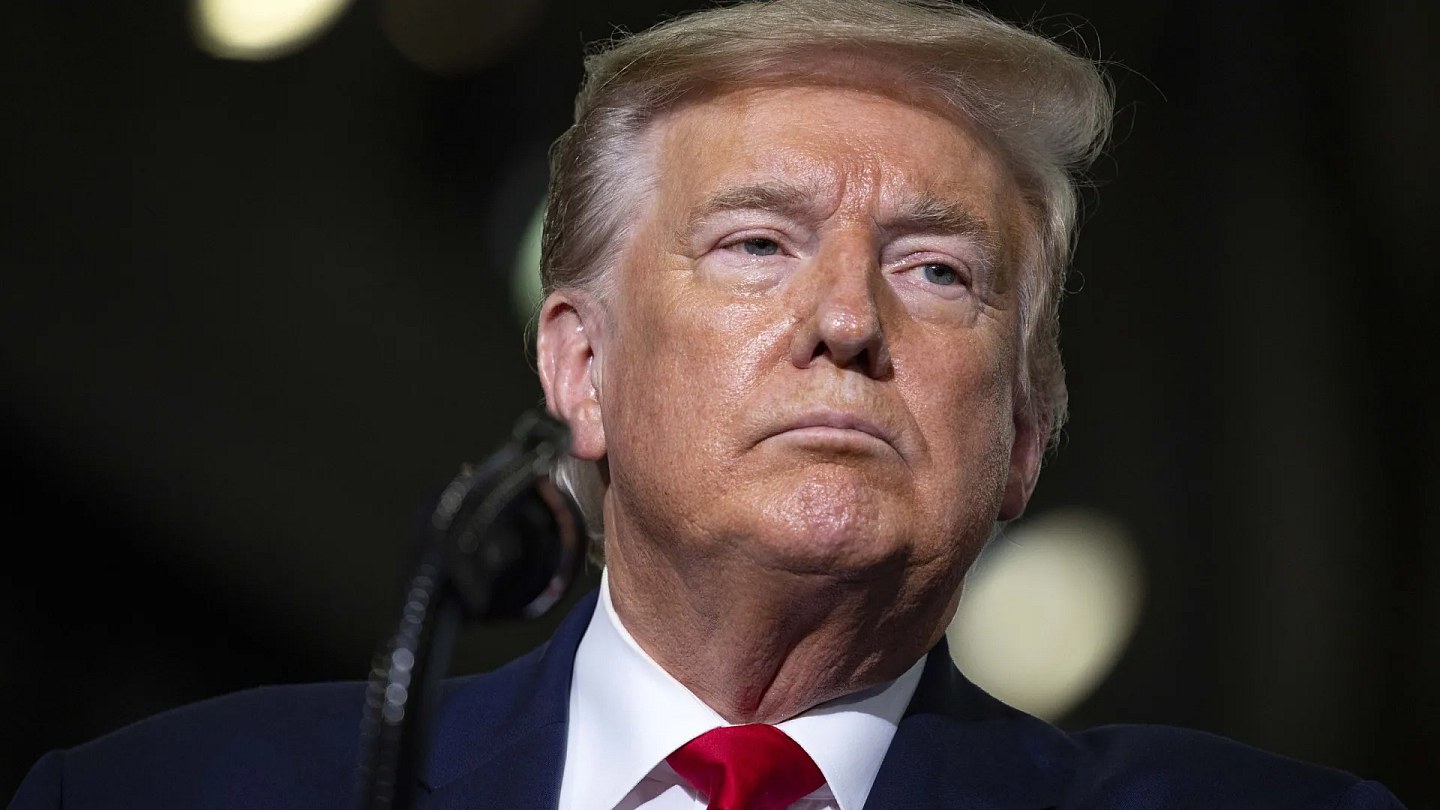
(FOLHAPRESS) The President of the United States, Donald Trump, accepted the recommendation of the USTR (Office of the US Trade Representative) to tariff Brazilian products by 25%. The decision was released on Wednesday night (15) and ends the investigation under Section 301 of the US Trade Law, which began in July last year.
USA decides to tax Brazilian products by 25% after commercial investigation into Pix and ethanol
(FOLHAPRESS) The President of the United States, Donald Trump, accepted the recommendation of the USTR (Office of the US Trade Representative) to tariff Brazilian products by 25%. The decision was released on Wednesday...
However, as was announced in June, there is a list of exceptions with around 2,100 items, which include meat, coffee, oranges, orange juice and parts for the manufacture of aircraft, important products for Brazilian exports.
After analyzing comments from companies and associations in last week's hearings, the American government expanded the list of Brazilian products that will be free from the tariff.
The justification is that these items are important inputs for American industry, have little domestic supply or are difficult to replace by suppliers from other countries. In this way, the surcharge could cause increased costs and disorganize production chains in the USA.
Among the products incorporated into the list of exceptions are pig iron, soluble coffee without added flavor, organic honey, aluminum hydroxide, iron and steel scrap, certain seafood, leather, some wooden products, medicines and pharmaceutical inputs, as well as antiques, works of art and used clothing.
Not all exemption requests, however, were accepted. The American government rejected requests submitted by sectors such as agricultural machinery, industrial machinery, clothing, footwear, electrical equipment, gardening tools, paper, organic sugar and various manufactured products.
Although companies alleged increased costs and difficulty in replacing Brazilian suppliers, the USTR concluded that these goods can be obtained in other markets or that the economic consequences do not justify an exception to the tariff.
The agency also removed high-purity cellulose from the exempt list, after receiving statements that Brazilian producers of the input would benefit from practices linked to illegal deforestation.
The USTR investigated topics that have been a source of friction with the US for years, such as Brazilian tariffs on ethanol imports, to more recent complaints, such as Pix. American credit card companies claim that the Central Bank grants preferential treatment to the instant payment system, which the Lula (PT) government denies.
The rates should come into effect on July 22nd. According to an American official, the channels are still open for negotiation. There are, however, complaints that the US government tried for a year to negotiate with Brazil, but was unsuccessful.
This same authority states that, among the reasons that led the US to impose tariffs on Brazil, is the fact that Brazilian courts have issued confidential orders ordering American technology companies to remove certain political content.
Furthermore, according to the authority, companies now face high daily fines if they fail to comply with these decisions and, in certain circumstances, may even be forced to interrupt their operations in Brazil.
In the case of electronic payment services, the investigation concluded that Brazil harmed competing American companies by favoring its national payment system, Pix, operated by the Central Bank. The senior official recognizes that countries can have their own payment systems, but claims that Pix was created in an environment of unfair competition through the state system.
The Americans also claim that Brazil grants preferential tariff treatment to India and Mexico in several tariff lines, but does not do the same with American producers. Therefore, in the Trump administration's assessment, this practice would violate international obligations and harm US workers and companies.
The Brazilian government must wait for the application of the new tariff stage to decide how it will react to the United States' decision and whether it will be the case to mobilize the Reciprocity Law. In force since last year, the legislation establishes the criteria that can be used by Brazil to respond, with retaliatory measures, to economic sanctions applied by another country.
According to the senior American official, if Brazil decides to retaliate against the USA, the American government will review the actions against the country. There were also complaints about topics such as corruption, which, according to the Trump administration, Brazil does not combat effectively.
Furthermore, Brazil remains on the watch list of the United States Special 301 reports, which means that it continues to present deficiencies in the protection of intellectual property and fair market access for holders of these rights.
The investigation into the process, which seeks to deal with commercial practices considered unfair by the Trump administration, was initiated in July 2025 as one of the measures announced by the Republican in reaction to what he classified as a “witch hunt” against former president Jair Bolsonaro (PL).
The White House Trade Representative, Jamieson Greer, had signaled to the Brazilian government that the recommendation for a new tariff on the country's products would be maintained.
This is another chapter in the rupture in relations between Brazil and the United States, which had already been deteriorating since the designation of the PCC (Primeiro Comando da Capital) and the CV (Comando Vermelho) as terrorist organizations.
As Folha showed, the Brazilian government had the perception that there was no room for negotiation and that the US would not give up on taxing the country. The low expectation was shared by the private sector, which expected more segments to be spared in light of what had been announced at the beginning of June.
The tariff threatens an important part of Brazilian exports to the USA, putting production and employment in sectors with a high degree of dependence on the American market at risk.
On Tuesday (14), representatives of sectors such as pig iron, processed wood and footwear projected a negative scenario if the tariffs were applied, with a forecast of reduced production and job cuts.
With the new tariff, Brazil becomes the second country most charged by the US in the world, behind only China, as shown in a BBC News report based on data from the Global Trade Alert initiative. Before this new round of tariffs, Brazil occupied 13th place in the ranking.
The increase in tariffs could force the PT government to maintain support programs for the productive sector, such as Brasil Soberano, created last year to assist exporters affected by tariffs and later expanded to serve companies harmed by the closure of the Strait of Hormuz.
Minister Márcio Elias Rosa, from Mdic (Ministry of Development, Industry, Commerce and Services), had already anticipated, in an interview, that the expectation of an agreement did not exist, both due to the deadline and the points raised by the USA.
"Pix is an example. Another is ethanol, without reviewing the tariffs applied to Brazilian sugar. These are points that separate us today. But they can and should expand the list of exceptions", he said.
The Mdic calculated, at the beginning of June, that the new tariffs could affect 21% of Brazilian exports to the United States.
The Brazilian government promoted at least five meetings between Minister Rosa and the US Trade Representative. Other meetings also took place between the technical teams of the two countries.
The last meeting took place this Tuesday (14). In a note published on the Mdic website, the ministry stated that the possibility of any surcharge “seems unfair and is not the way for us to formulate a mutually adequate bilateral agreement”.
These meetings began to take place after the meeting between Trump and Lula, in May, when the PT member proposed the formation of a bilateral working group so that the teams could meet over the course of a month and discuss the topics under investigation in the USA.
However, the conclusion of the investigation was announced before the end of this period, at the beginning of June. Last week, hearings on the topic were held in Washington. The Brazilian government did not participate and argued that it already held regular meetings with the Americans and that the hearings were aimed at the private sector.
At the hearings, representatives from sectors in Brazil and the USA tried to argue that the tariffs would have a negative effect on the American economy. Among them was Mark Bitting, from the company Gehring Montgomery, which distributes Brazilian carnauba wax to different segments of the USA. According to him, the new tariff would become a new tax “on the American consumer”, since the product would only be economically viable in Brazil.
Unlike the Brazilian government, which only sent listeners, senator and pre-candidate Flávio Bolsonaro was present in Washington, asked the US not to punish Brazil and stated that the tariffs, if applied, would arrive at the “worst time” and could favor President Lula.
According to the American government, in addition to participating in the hearing, the senator did not meet with USTR officials, such as representative Jamieson Greer.
In reaction, the PT administration released a note rejecting what it classified as Flávio's interference in the ongoing negotiations.
Flávio has suffered political exhaustion with the issue in the face of Lula's offensive around the flag of national sovereignty and has sought to take a public stance against possible taxation. With reservations, the senator's allies already admitted that the possibility of reversing the tariff was low and tried to reach President Donald Trump with the argument that the new sanction could help Lula.
In February, the US Supreme Court found illegal the use of IEEPA (International Emergency Economic Powers Act) to justify sweeping tariffs against US trading partners. In reaction to the court decision, the Republican imposed a global tariff of 10%, which expires at the end of July.
In addition to the investigation opened in 2025, Brazil was targeted by another USTR action, initiated this year, to analyze whether products manufactured with forced labor are entering the American market. In the preliminary conclusion, a new tariff of 12.5% ??was proposed. There is, therefore, the possibility of tariffs being added, increasing taxation on Brazil to 37.5%.
This process evaluates practices in around 60 countries and was launched a few weeks after the Supreme Court decision that overturned the tariff. According to experts, the US objective is to target trade with China's partners.
The Trump administration's plan is to expedite this second process, with the USTR's conclusions published in a shorter period of time than is traditional.
'Government will not leave Brazilians in the lurch', says Durigan about tariffs
Durigan stated that the government will evaluate the impacts of a possible taxation on Brazilian products and will adopt measures to minimize the effects on farmers, businesspeople and families
Source: Noticias ao Minuto - Ultima Hora
This story was originally published by Noticias ao Minuto - Ultima Hora. Visit the original publication for further details.
Open original publication