SÃO PAULO, SP (UOL/FOLHAPRESS) - Argentina's victory over England in the semi-final of the 2026 World Cup reopened an old diplomatic wound after the players displayed the banner "Las Malvinas son argentinas". Amid the repercussion, President Javier Milei once again commented on the issue, on which he has adopted more moderate positions than those of his predecessors.
'We will not seek conflict': what Javier Milei has already said about the Falklands
SÃO PAULO, SP (UOL/FOLHAPRESS) - Argentina's victory over England in the semi-final of the 2026 World Cup reopened an old diplomatic wound after the players displayed the banner "Las Malvinas son argentinas". Amid the...
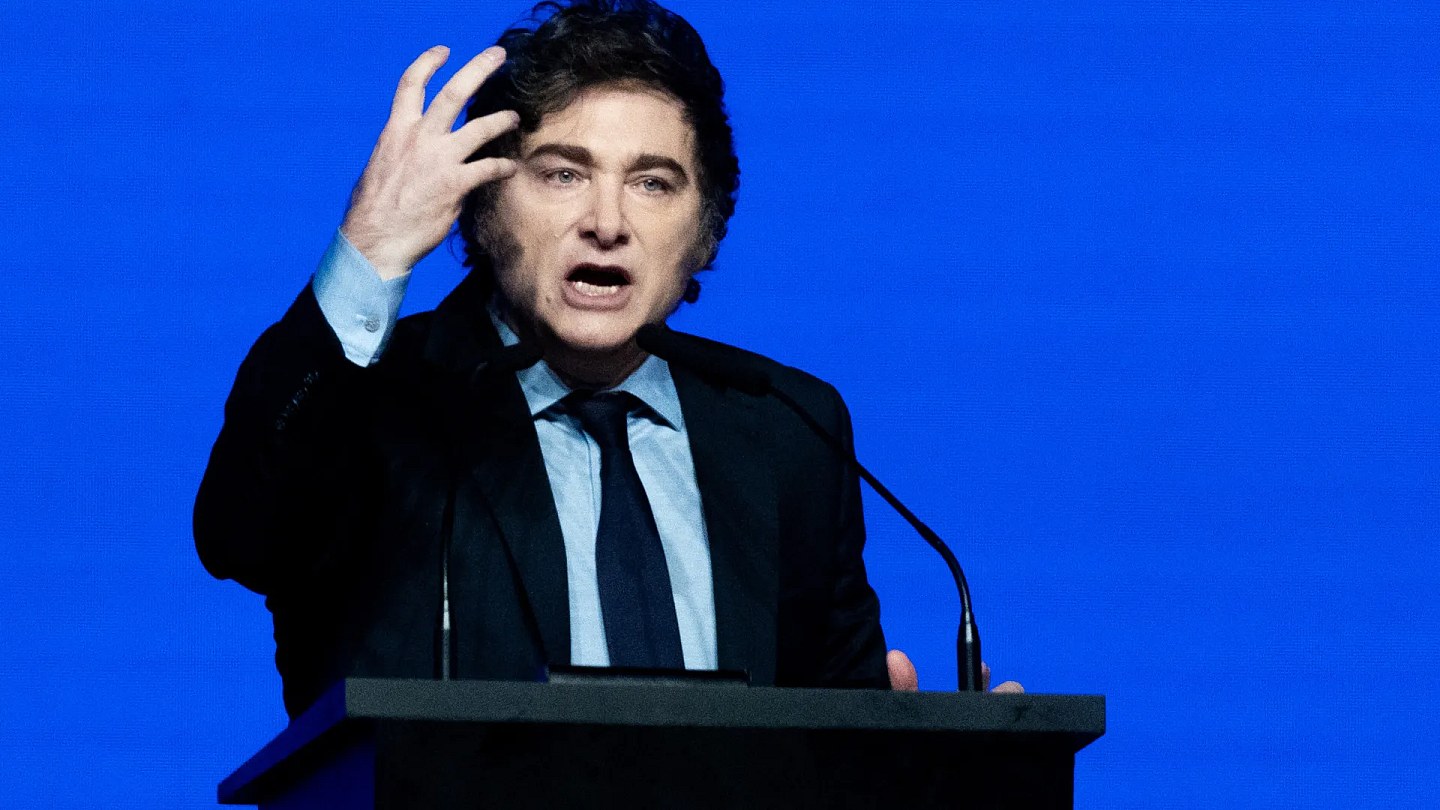
Milei never abandoned Argentina's claim to the Falklands. Since the presidential campaign in 2023, the libertarian has maintained that the islands belong to Argentina, but maintains that their recovery must occur exclusively through diplomatic means. Shortly after winning the election, he declared that the 1982 war was lost and that the country should make "every effort to recover the islands through diplomatic channels."
The speech was maintained after assuming the presidency. In April 2024, during a ceremony honoring the dead of the Falklands War, Milei classified Argentina's claim to sovereignty as "unshakable". At the time, he stated that his government would make a "real and sincere demand", instead of just repeating speeches in international forums.
Prosperity became part of the strategy. In the same statement, Milei began to relate the territorial dispute to the country's economic performance. "There is no sovereignty without economic prosperity and there is no economic prosperity without freedom," he stated, arguing that a stronger Argentina would be better able to sustain its position vis-à-vis the United Kingdom.
The president adopted a more pragmatic tone in interviews. In May 2024, in an interview with the BBC, Milei acknowledged that the Falklands are currently "in the hands of the United Kingdom" and admitted that "there is no instant solution" to recover them. According to him, an eventual negotiation could take decades.
Milei took a stand against a direct confrontation. "We will not give up our sovereignty, nor will we seek conflict with the United Kingdom," he said. In the same interview, he said he believes that London may agree to negotiate in the future, even if it does not show willingness in the present.
The position contrasted with previous governments. Although he maintained his territorial claim, Milei abandoned the more combative tone adopted by Kirchnerist administrations, which often summarized their position in the slogan that the Falklands "were, are and will be Argentine". His statements also provoked criticism from nationalist sectors, especially for recognizing the current situation of the archipelago under British administration.
Admiration for Margaret Thatcher increased criticism. Even before assuming the Presidency, Milei had already declared that she considered the former British Prime Minister one of the greatest political leaders in the world. As Thatcher commanded the United Kingdom during the Falklands War, the position provoked strong rejection among former Argentine fighters, who began to question the president's consistency in defending the sovereignty of the islands.
Milei started to defend a kind of “conquest by example”. In April 2025, during the commemorations of the anniversary of the war, the president stated that he wants to transform Argentina into a power so that the inhabitants of the Falklands themselves "prefer to be Argentines". According to him, the objective is for one day the residents of the archipelago to "vote with their feet" for Argentina.
Declaration opened a new controversy. The speech was seen by the opposition as an approximation of the principle of self-determination defended by the United Kingdom. The official Argentine position, however, maintains that this principle does not apply to the Falklands because the original population would have been expelled after the British occupation of 1833.
The discourse tightened again in 2026. In April this year, after the United States threatened to review its position on the archipelago amid diplomatic friction with the United Kingdom, Milei published on social media that the Falklands "were, are and will always be Argentine". Argentine analysts interpreted the change as a toughening of rhetoric at a time of the government's declining popularity.
The players' demonstration received support from the president. After the 2-1 victory over England in the World Cup semi-final, Milei minimized the display of the track "Las Malvinas son argentinas" and stated that the attitude was a consequence of the emotion of the moment. According to him, a possible punishment from FIFA would only be a sporting issue.
"What happens on the field with the players is not a matter for diplomacy. In the worst case scenario, Argentina will receive a fine of US$30,000," said Javier Milei in an interview with El Observador.
At the same time, Milei sought to separate football and diplomacy. The president stated that it is "perfectly valid" for the players to express a feeling shared by Argentines, but said that a football game should not be confused with the country's foreign policy. He also once again defended that the recovery of the Falklands will occur "at the diplomatic level and with intelligence in acting".
The speech also served to criticize his vice president's nationalism. Without directly quoting Victoria Villarruel, who had linked the match to the Falklands War and called the British "usurping pirates", Milei stated that one should not fall for "cheap, populist and outdated nationalist slogans".
Read Also: Iran admits negotiating after returning US attacks
Source: Noticias ao Minuto - Mundo
This story was originally published by Noticias ao Minuto - Mundo. Visit the original publication for further details.
Open original publication