SÃO PAULO, SP (FOLHAPRESS) - The United States and Iran signaled this Monday (20) that they would be willing to resume negotiations after more than a week of exchanging attacks across the Middle East, which buried the ceasefire signed last month and raised fears of a large-scale conflict.
US and Iran signal willingness to negotiate after attacks, and mediators propose truce
SÃO PAULO, SP (FOLHAPRESS) - The United States and Iran signaled this Monday (20) that they would be willing to resume negotiations after more than a week of exchanging attacks across the Middle East, which buried the...
A high-ranking Iranian official told Reuters that conflict mediators presented Tehran with a proposal to contain the escalation of the conflict with the US. The plan provides for a ten-day ceasefire so that the parties can try to resume the provisional agreement reached last month.
Iranian Foreign Ministry spokesman Esmaeil Baghaei told reporters on Monday that the country had received proposals to reduce tensions, but did not provide details. President Masoud Pezeshkian said the country is in a "full-scale war" with the US.
According to the AFP agency, Iran's Interior Minister, Eskandar Momeni, is expected to travel this Monday to the capital of Pakistan, the country that acts as a mediator in the conflict.
Donald Trump's administration has also signaled a cautious willingness to begin new negotiations. Washington's head of diplomacy, Marco Rubio, told reporters on Sunday night (19) that "if that door opens, we will be happy to see it open." However, he added that Iran's "behavior needs to change for ours to change as well."
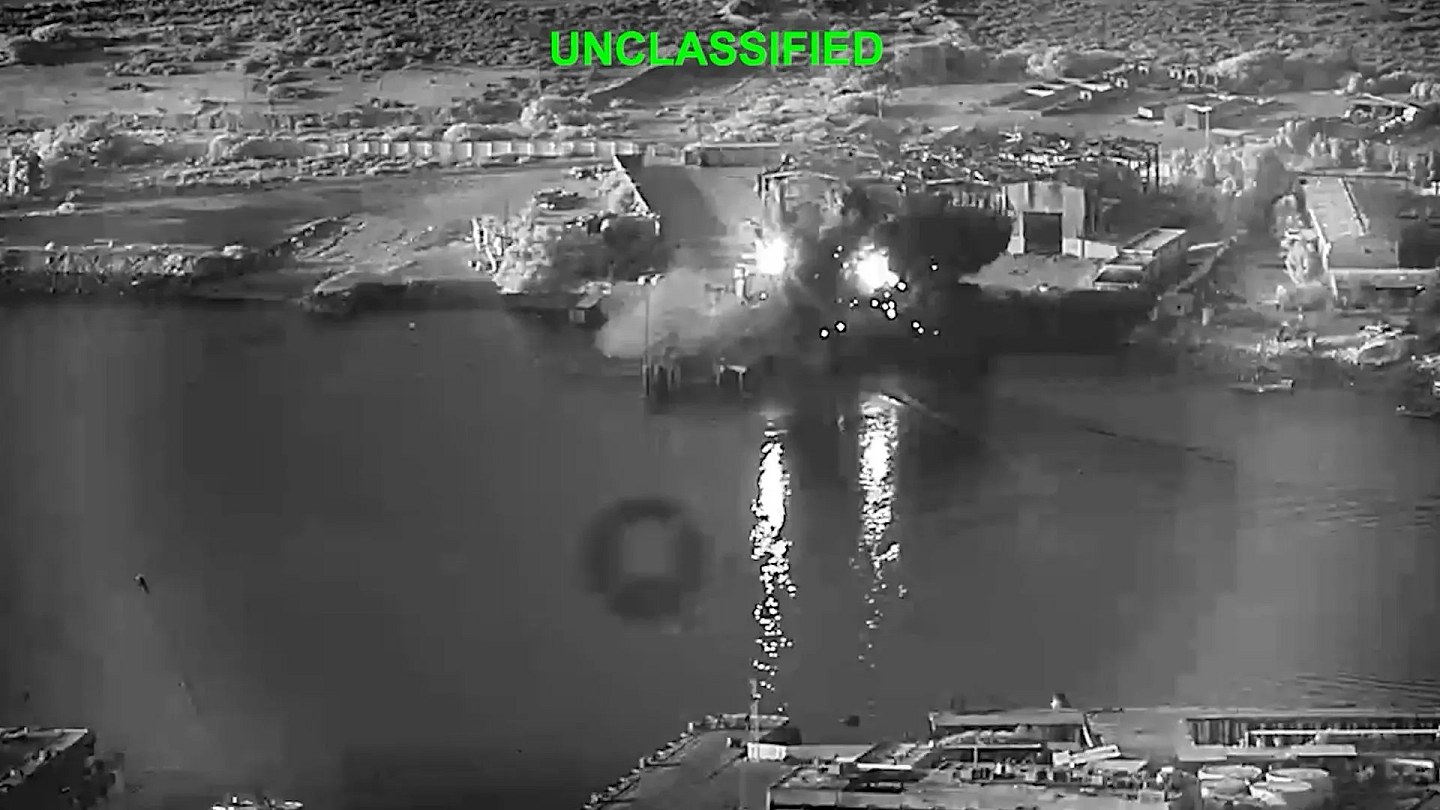
Hours later, on Monday night, the American Armed Forces launched a new series of attacks against Iranian territory. According to the corporation, the operations "aim to further degrade Iran's military capabilities used to attack commercial vessels in the Strait of Hormuz."
In another increase in tension in the region, Yemen's Iran-aligned Houthis said on Monday that they were imposing a naval blockade on Saudi Arabia, a measure that opens a new front in the war against the US and expands the threat to global energy supplies and trade beyond the Gulf region.
Iran had pressured the Houthis to close the Bab el-Mandeb crossing, which provides access to the Red Sea, if the US continued attacking Iranian strategic infrastructure.
In a statement, the Houthi armed forces said they were declaring "a maritime embargo against the criminal enemy Saudi, based on the principle of 'eye for an eye', with immediate effect." There was no immediate response from Saudi Arabia.
Iran's Revolutionary Guard said on Monday it had struck American military targets across the Middle East, after another night of bombings by Washington against Iranian cities, marking the ninth consecutive day of attacks.
Trump, under growing domestic pressure over rising gasoline prices due to the conflict, has defended the latest offensive against the Persian country as retaliation for the deaths of three American service members in recent Iranian attacks.
Two were killed by Iranian missiles fired at a base in Jordan housing US troops, while the third died during the controlled detonation of an Iranian attack drone, according to the US military.
The conflict has also worsened with attacks on desalination facilities, raising the prospect of water shortages in parts of the Gulf and opening a new front in a war that increasingly threatens civilian infrastructure.
The Bahrain Civil Aviation Authority reported on Monday that Iran attacked the kingdom's civil air navigation systems, but that operations and air traffic continued normally.
The Islamic Revolutionary Guard Corps said two oil tankers "exploded" and were adrift after trying to cross the strait via a route deemed "unsafe." On Sunday, the Guard had reported that two vessels were involved in an "accident" in the same region. It is not yet clear whether the two episodes are related.
Reuters was unable to immediately verify the incident. The statement did not provide details about the vessels or say whether there were any casualties. Separately, a vessel was hit by a projectile of unknown origin off the coast of Oman in the Strait of Hormuz, British maritime security service UKMTO said. According to the agency, the vessel remains adrift, but the crew is safe.
In a statement, the United States Central Command (CENTCOM) said that its ninth consecutive night of attacks against Iran aimed to "reduce" the country's ability to attack commercial vessels in the strait's shipping lanes.
The semi-official Iranian agency Tasnim reported that American missiles hit several Iranian cities in the early hours of Monday. Explosions were recorded in Tabriz, Chabahar, Konarak, Bandar Mahshahr and Bandar Imam Khomeini. According to the state agency IRNA, one person died and several were injured southwest of Tabriz.
The Revolutionary Guard said it attacked American aircraft at Jordan's Aqaba airport with ballistic missiles, as well as military targets at Al-Adiri camp and Ali Al Salem air base in Kuwait, as well as positions in Syria. Sirens sounded in Bahrain on Monday morning as the Kuwaiti Army reported intercepting drones during an Iranian attack.
Iran on Monday urged the International Atomic Energy Agency (IAEA), linked to the UN, to condemn the American bombings that, according to Tehran, hit a nuclear plant under construction in Darkhovin, in the southwest of the country, on Sunday.
Read Also: Meloni outlines political future away from Trump after months of tensions and provocations
Source: Noticias ao Minuto - Ultima Hora
This story was originally published by Noticias ao Minuto - Ultima Hora. Visit the original publication for further details.
Open original publication