The first round of the 2026 General Elections will be held on October 4th, with a possible second round scheduled for October 25th. According to the Superior Electoral Court (TSE), more than 158.7 million Brazilians will go to the polls to choose representatives for five positions: federal deputy, state deputy, senator, governor and president of the Republic. This year, each voter must vote for two candidates for the Senate.
Understand how the 2026 elections will work and what each position in dispute does
The first round of the 2026 General Elections will be held on October 4th, with a possible second round scheduled for October 25th. According to the Superior Electoral Court (TSE), more than 158.7 million Brazilians...
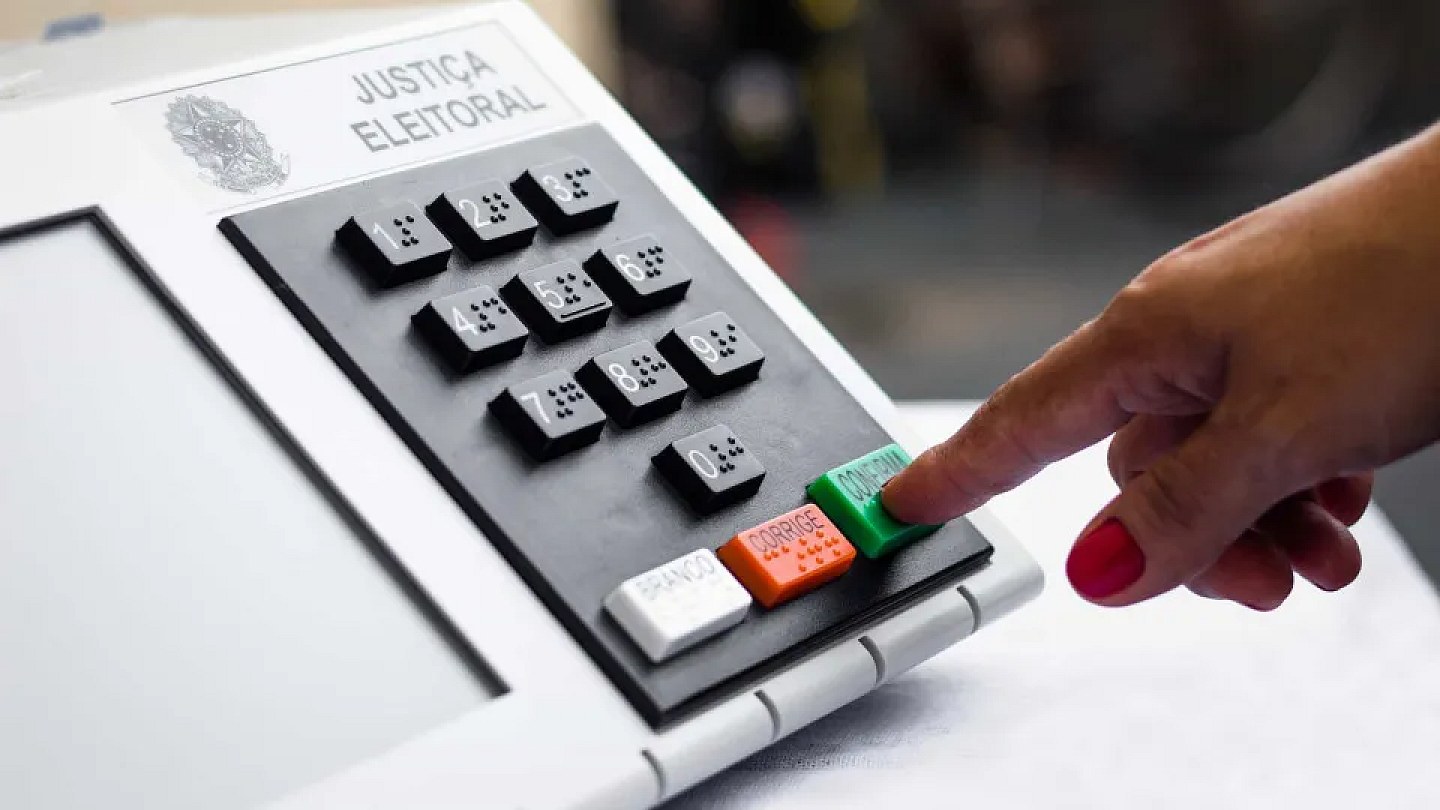
The entire process is coordinated, supervised and organized by the Electoral Court, which has the TSE as the highest body at the federal level and the Regional Electoral Courts (TREs) in each state.
To contest the elections, the candidate must meet requirements such as having Brazilian nationality, having a voter registration card, being up to date with electoral and military obligations, being literate, maintaining party affiliation for at least six months and being chosen at a convention.
Currently, the country has 30 parties registered with the TSE and another 19 in formation. Elections combine two models: the majority and proportional systems.
The majority system is applied to disputes for president, governor and senator. In Executive positions, the candidate must obtain an absolute majority of valid votes to win in the first round. If no competitor reaches this percentage, the two most voted will compete in the second round.
For the Senate, which will renew two-thirds of the seats in 2026, the two candidates with the most votes in each state and the Federal District are elected.
Federal and state deputies are chosen using the proportional system, in which voters can vote directly for a candidate or just for the party. Seats belong to parties and federations and are distributed according to the total number of valid votes and the number of available seats.
The vacancies are allocated to the candidates with the most votes from the parties that reach the electoral quotient, as long as they also meet the minimum nominal vote provided for by legislation. The remaining seats are distributed according to party average rules.
Federal deputy
The first vote will be allocated to the position of federal deputy, for which a minimum age of 21 is required. The parliamentarian represents the population at the federal level. In total, 513 seats are up for grabs in the Chamber of Deputies, in Brasília.
As the most populous state in the country, São Paulo elects the largest bench, with 70 parliamentarians. Among the duties of federal deputies are discussing, proposing and voting on bills, in addition to analyzing and reviewing standards in thematic committees.
The Chamber also has the power to authorize the opening of impeachment proceedings against the president and vice-president of the Republic. The measure requires the support of two-thirds of deputies.
Parliamentarians still participate in the approval of the Union Budget, present amendments, supervise the Executive Branch and analyze the federal government's accounts.
State deputy
Next, the voter votes for state deputy, a position that also requires a minimum age of 21. These parliamentarians serve in legislative assemblies and represent the interests of the population of their respective states.
In São Paulo, 94 state deputies are elected. It is up to them to propose, discuss, create, amend or revoke laws within state jurisdiction.
Parliamentarians are part of technical committees, promote public hearings and can install Parliamentary Commissions of Inquiry (CPIs) to investigate specific facts.
They also supervise the acts of the state Executive Branch, analyze the government's annual accounts and evaluate possible crimes of responsibility committed by the governor.
Senator
The third and fourth votes will be allocated to the Federal Senate. The term of office is eight years, and the minimum age to run for office is 35 years old.
Each of the 26 states and the Federal District has three senators, totaling 81 members. In 2026, 54 seats will be up for grabs, equivalent to two-thirds of the House.
At the ballot box, the voter must choose two different candidates. Each candidate for the Senate contests the election accompanied by two previously defined substitutes.
The Senate acts as a reviewing House and has exclusive powers. It is up to senators to prosecute and judge the President of the Republic, the Vice President and Ministers of State for crimes of responsibility, after authorization from two thirds of the Chamber.
When the process involves ministers of the Federal Supreme Court (STF), the Attorney General of the Republic or commanders of the Armed Forces, the trial takes place directly in the Senate, without the need for authorization from deputies.
The House also analyzes nominations made by the Presidency of the Republic for positions such as minister of the STF, attorney general of the Republic and director of the Central Bank. Before voting in plenary, the nominees undergo a hearing at the Constitution and Justice Commission (CCJ).
Senators also decide on debt limits and financial operations of states and municipalities, in addition to participating in the drafting of laws together with the Chamber.
Governor
The fifth vote defines the state governor, a position that requires a minimum age of 30. The candidate contests the election on a ticket formed with the vice-governor, and the two are elected jointly.
In total, 27 candidates will be chosen: one in each of the 26 states and another in the Federal District.
The governor heads the state Executive Branch and is responsible for the political, legal and financial administration of the state. To carry out its functions, it works together with the Legislative Assembly, mayors and the federal bench.
In the Federal District, the governor also accumulates duties normally exercised by mayors, since the Constitution prohibits the division of the territory into municipalities.
Among its responsibilities are budget management and the formulation of public policies in the areas of health, education, housing, infrastructure and security.
The governor also commands the Civil and Military police and administers the state penitentiary system.
President of the Republic
Source: Noticias ao Minuto
Next recommended read
This story was originally published by Noticias ao Minuto. Visit the original publication for further details.
Open original publication