(FOLHAPRESS) - A politician and her husband celebrate the birth of their son fathered by a surrogate mother. The problem? He was the leader of the parliamentary group representing Christian democracy in a country where the method is prohibited. A veto that, as a politician, he worked to maintain even when the pregnancy was already underway.
Surrogacy scandal brings down Christian party leader in Germany
(FOLHAPRESS) - A politician and her husband celebrate the birth of their son fathered by a surrogate mother. The problem? He was the leader of the parliamentary group representing Christian democracy in a country where...
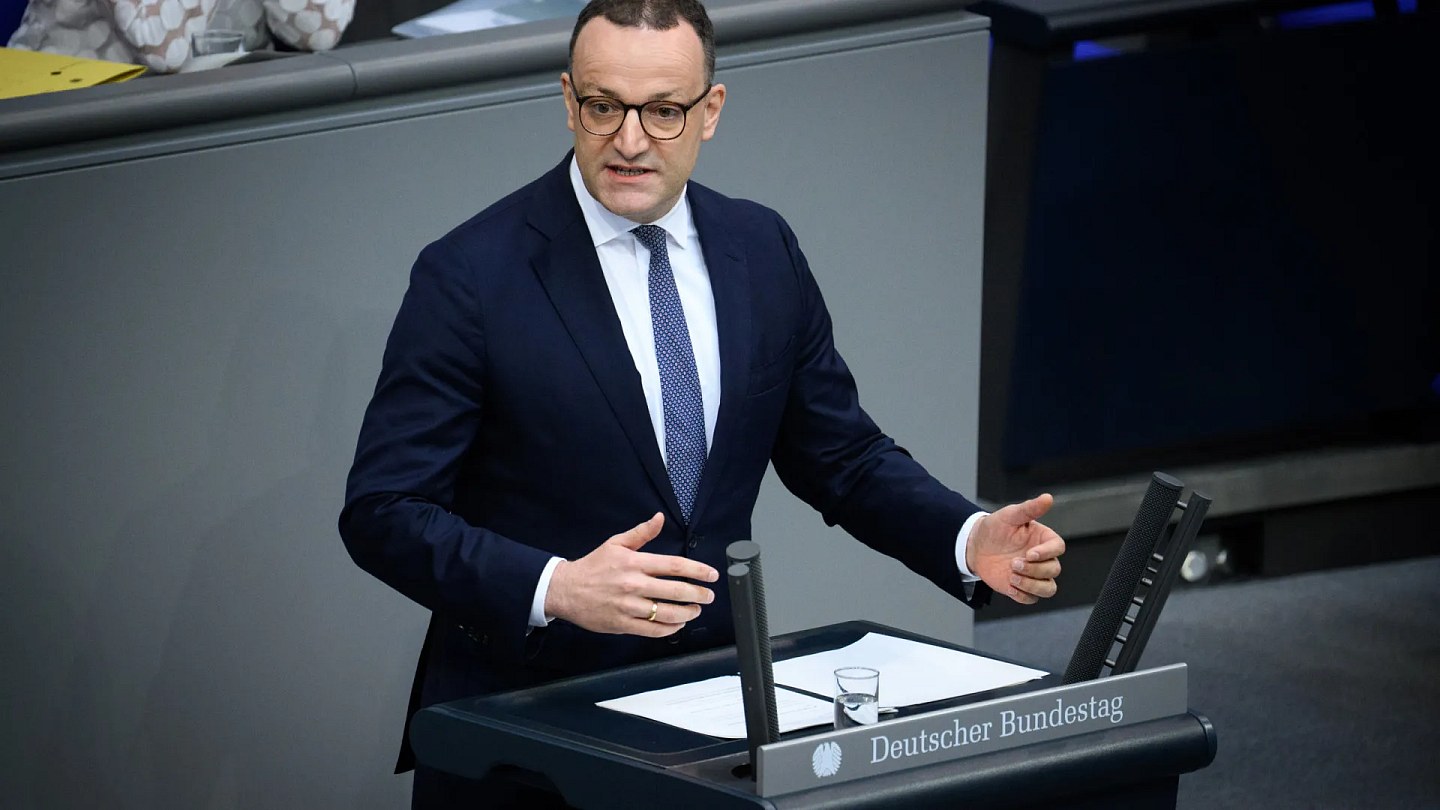
Jens Spahn, one of the key men in the Friedrich Merz government, resigned last weekend, sparking a political crisis and renewing the debate on reproduction in Germany.
"I realized that my personal happiness - forming a family with my husband and becoming a father - is incompatible with my political position," Spahn wrote in the letter in which he informed his colleagues of his departure from the Union, the parliamentary group formed by Merz's CDU and the CSU, its state equivalent in Bavaria.
On social media, the prime minister classified the decision as "correct and inevitable". "Credibility is the most precious asset in politics." Days earlier, the head of government had congratulated Spahn on the birth of the child. The controversy had not yet settled.
Spahn, 46, a hard-line conservative who had weight in the government coalition created by Merz last year, even tried to come up with an explanation for his attitude. In an interview with the Bild tabloid, the country's most popular newspaper, he stated that he had experienced an internal conflict "for a long time, including over the issue of surrogacy."
It didn't work. While party colleagues called for his resignation, the opposition and the press recalled that the CDU, at a party conference in February, voted against the revision of German legislation to allow altruistic surrogacy, as occurs in Brazil. And that Spahn, as Minister of Health, in 2020, had already refused to discuss its flexibility.
Even a sentence from the parliamentarian was excavated from a 2015 interview. "As a gay and Christian man, I personally have a lot of difficulty accepting the idea of a surrogate mother. Accepting that I won't be a father naturally requires a great deal of humility. I don't know if I'm capable of that."
A 1990 law criminalizes the practice in Germany, but does not prevent couples from seeking the remedy in other countries. Like many Germans, Spahn and her husband came to the United States to have their first child. Critics noted that the conservative followed in the footsteps of his friend Peter Thiel, the billionaire founder of PayPal and Palantir, who organizes lectures on the Antichrist and has two daughters born through surrogacy.
"Anyone who advocates rules in the political sphere should be able to clearly explain why these rules apparently do not apply to him personally," said Janosch Dahmen, spokesman for the Greens in the Bundestag, the German parliament.
Damage done, Merz stated in an interview with public TV that he would take advantage of the episode to reorganize forces within the CDU. Furthermore, he did not rule out promoting changes in his cabinet, which he shares with the SPD Social Democrats.
The Prime Minister's quick disposition is also explained by the electoral moment in Germany. In September, the AfD, an ultra-right party, with regional wings considered extremist by the country's security services, is tipped to win the elections in two states.
So far, research shows the party is close to a significant group in Mecklenburg-Western Pomerania and an unprecedented government formation in Saxony-Anhalt. Such a situation would generate a lot of political pressure on Merz at the federal level, who is already facing one of the worst popularity ratings in the country's history.
Worse, the lack of coherence, characteristic of the AfD and most European populists, is not an option for Merz, as the episode with his former parliamentary leader shows.
While the Prime Minister and his parties discuss who will replace Spahn, Germany is seeing a renewal of the debate that has been going on for decades about surrogacy, a sensitive issue that, in the country, ranges from bioethics to faith, including sexuality.
Frauke Brosius-Gersdorf, a jurist whose nomination to the country's highest court was torpedoed last year by the CDU, for being "libertarian" and supposedly in favor of abortion, said in an interview with the newspaper Die Zeit that the ban on the procedure is not compatible with the Fundamental Law, the Constitution, guided by self-determination.
"I consider it regrettable that Mr. Spahn has not revived the debate on surrogacy in Germany based on his own personal experience. In doing so, he could have offered many people the opportunities he had abroad."
Trump's new tariff against Brazil begins this Wednesday (22) and threatens up to US$ 11 billion in exports
New additional tariff of 25% affects around 3,000 Brazilian products exported to the United States. Lula government estimates impact on 18% of sales to the country, while business entities warn of loss of competitiveness and retraction of bilateral trade
Source: Noticias ao Minuto - Ultima Hora
This story was originally published by Noticias ao Minuto - Ultima Hora. Visit the original publication for further details.
Open original publication