SÃO PAULO, SP (FOLHAPRESS) - Police and local forensic experts have mobilized additional teams to try to identify the bodies of around 80 migrants found after last week's massive entry into the Spanish exclave of Ceuta.
Spain creates task force to identify and bury immigrants killed in Ceuta
SÃO PAULO, SP (FOLHAPRESS) - Police and local forensic experts have mobilized additional teams to try to identify the bodies of around 80 migrants found after last week's massive entry into the Spanish exclave of Ceuta....
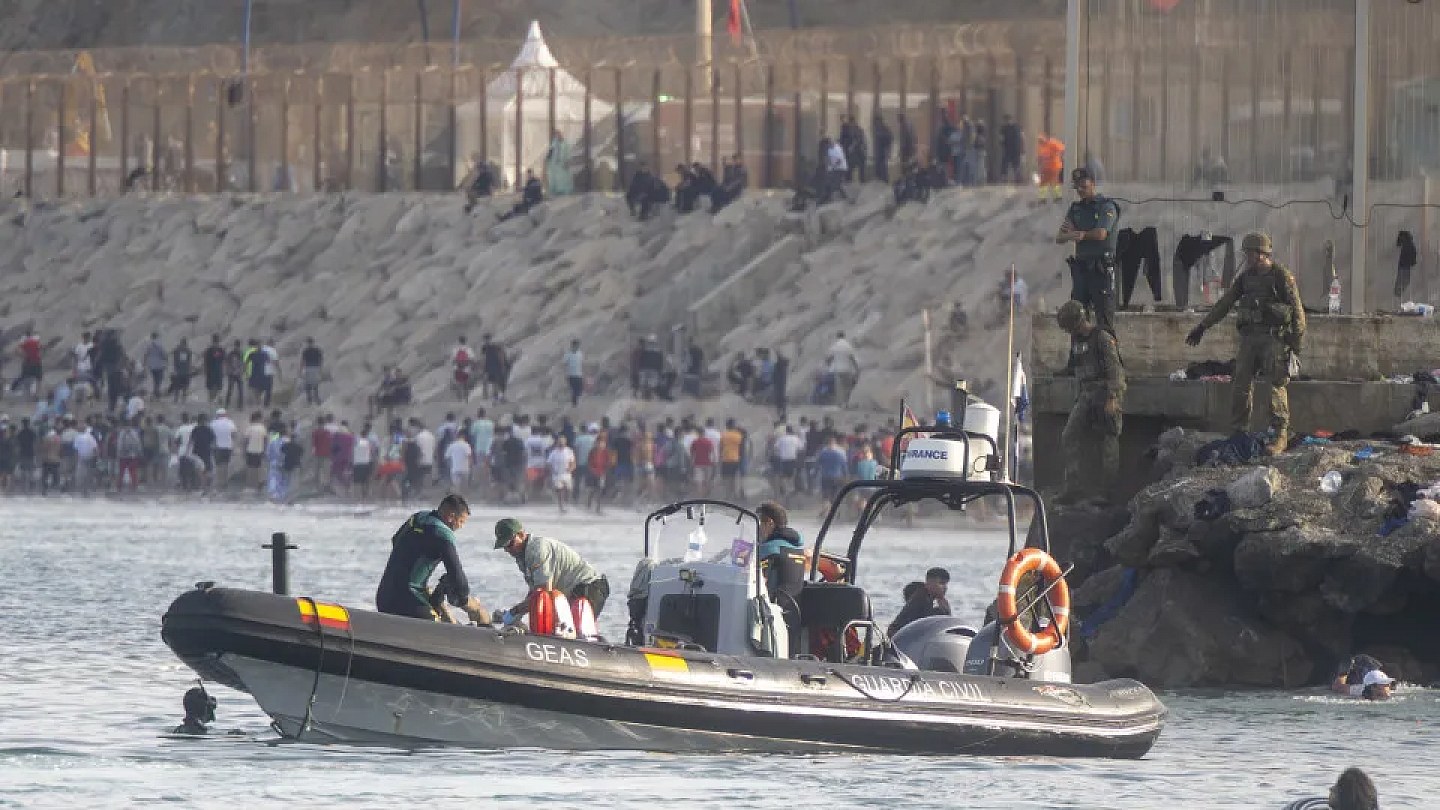
The majority will be buried in Spanish territory in the coming days, authorities said. Of those who did not have their identities confirmed, the teams collected fingerprints and DNA samples and will continue working to associate the bodies with their names and, later, with their family members.
The influx of people and resulting deaths overwhelmed Ceuta's five-person forensic team, which had dealt with just 76 deaths during the entirety of last year. Eight extra professionals were moved from the Spanish mainland, and a larger morgue was installed in a former military hospital.
"We faced a number of casualties that exceeded our operational capacity," said team director Manuel Aparcero, who was called to certify the migrants' deaths as they were brought to the beach on July 30.
While his team continues work a week after the incident, families post messages on social media and follow the news in search of information about their loved ones.
Jamal Bahloul, 26, said his brother Mohamed, 22, a construction worker, left his home in Tangier and made last contact on July 30. "We had no further news," Bahloul said. "We don't know if he is in Ceuta or if he died."
Other family members are gathering on the Moroccan side of the border to demand answers from authorities and visit local morgues. Around 72,000 people entered Ceuta illegally from Morocco in a 24-hour period, according to Spanish estimates.
Autopsies revealed that many of the 80 people whose bodies were brought to the Spanish coast died of cardiorespiratory arrest - a common feature in drowning cases, according to pathologists.
Only four were identified through fingerprints already in Spanish databases or through DNA samples, and tests are being carried out to confirm the identities of four others, according to a statement released by a local court.
Spanish police shared the fingerprints of all those killed with Moroccan authorities and opened a post along the border where family members can register the disappearance and provide DNA samples.
Efforts to identify migrants are being carried out under a multi-victim accident protocol generally applied to traffic accidents or natural disasters that mainly affect Spaniards.
All migrants' bodies will be buried in Ceuta in the coming days, unless a family member requests the transfer of an already identified body to the country of origin, said the head of coroners. The bodies may also later be exhumed for transfer abroad, subject to judicial authorization.
After the autopsies, forensic medicine teams have been cleaning the bodies in accordance with Muslim rites, Aparcero added. "We respect their ideology and religion."
The Spanish government also said on Friday that it hopes to transfer some underage migrants from overcrowded reception centers in Ceuta to the mainland within a few weeks.
Most of the immigrants who crossed the border have already returned to Morocco, but hundreds of unaccompanied minors remained in Spanish territory. Youth Minister Sira Rego stated that 1,342 minors have already been registered and that more employees will be hired to assist in the efforts.
She acknowledged the "painful images" of children sleeping on the streets of Ceuta and said two schools had been opened and more spaces would be evaluated as possible reception centers. "I think it may only be a matter of a few weeks before we start to see them being transferred and welcomed onto the mainland," Rego said.
"We are prioritizing boys and girls under 13," she said, describing the situation in Ceuta as still challenging but "gradually returning to normality."
In parallel with its dealings with immigrants and their families, the Spanish government also warned Italy that it will implement "proportional measures" if Rome does not remove the border controls with Spain implemented after the start of the migration crisis before the end of this Sunday.
"We urge the Italian government to rectify this situation, to put an end to the controls and to treat Spaniards like all other European citizens. If it fails to do so, Spain will be obliged to adopt proportionate measures to protect the interests and dignity of its citizens," the government said in a statement.
Source: Noticias ao Minuto
Next recommended read
This story was originally published by Noticias ao Minuto. Visit the original publication for further details.
Open original publication