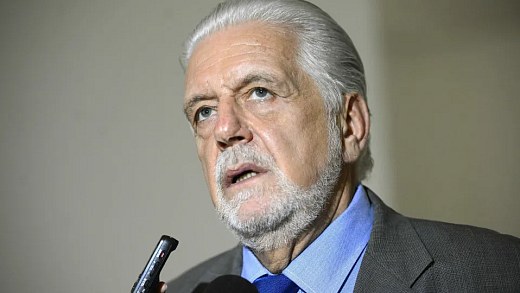
IGOR GIELOWSÃO PAULO, SP (FOLHAPRESS) - Saudi Arabia, Pakistan and Turkey signed this Friday (7) a mutual defense pact that has the potential to change the geopolitical balance of the Middle East and South Asia.
Saudi Arabia, Türkiye and Pakistan sign military pact
IGOR GIELOWSÃO PAULO, SP (FOLHAPRESS) - Saudi Arabia, Pakistan and Turkey signed this Friday (7) a mutual defense pact that has the potential to change the geopolitical balance of the Middle East and South Asia. The...
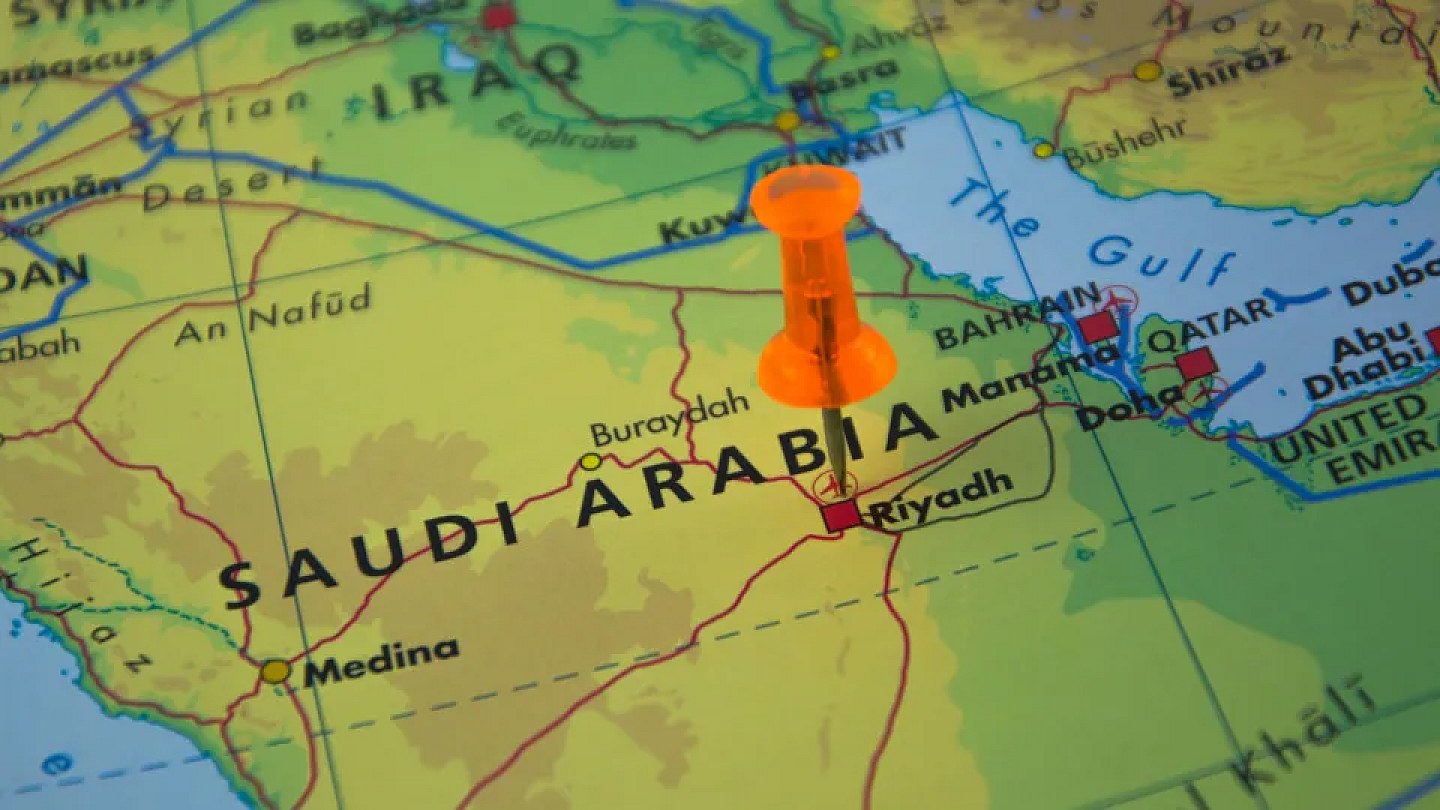
The alliance occurs amid regional escalation: Iran, reacting to aggression led by the United States and Israel, has attacked American allies in the region with drones and ballistic missiles. The Saudis still face a double threat from Tehran's proxies, Iraq's Islamist groups and Yemen's Houthi rebels.
On Thursday (6), dozens of soldiers from the coalition government ousted in the Yemeni capital in 2014, supported by Riyadh, were killed in a Houthi attack. According to the Saudis, Iran's Revolutionary Guard is coordinating attacks, breaking the peace established with Tehran with Chinese mediation in 2023.
Details of the triple agreement are scarce, but it accumulates symbolism in a region that has been reshaped by violence since Hamas terrorists attacked Israel in 2023, generating a domino of conflicts.
The text was signed in Mecca, Islam's holiest city, between three large Muslim nations with distinct ethnic characteristics, albeit with a Sunni majority, the majority branch of the religion. Shiism, a minority, is centered precisely in Iran.
Indeed, Pakistani Prime Minister Shehbaz Sharif and the country's powerful army chief, Asim Munir, made a religious pilgrimage to Mecca before the arrival of Turkish President Recep Tayyip Erdogan. They were received by the Saudi Crown Prince, Mohammed bin Salman.
From a military point of view, the agreement places the seventh largest defense budget in the world, that of Saudi Arabia, in a coalition with Pakistan and its 170 nuclear warheads and with Turkey, a heavily armed country with 355,000 soldiers, the second largest contingent in the NATO military alliance, behind only the USA.
Last year, the Saudis and Pakistanis had already signed a mutual defense pact that, in practice, transformed the desert kingdom into a nuclear power - in the Middle East, only Israel has the bomb, operating without taking on an estimated 90 warheads.
With the agreement, Islamabad deployed 8,000 soldiers and a squadron of fighter jets in Saudi territory. So far, the South Asian country has not been directly involved in retaliation against Iran due to specific attacks on Saudi Arabia, but has assumed the role of main mediator in the crisis.
The three partners already had several ties in the defense area. Pakistan, a nation that has fought four wars with India since the countries' separation in 1947, has provided assistance to the Saudis for decades and buys Turkish military material, as does Riyadh.
It is uncertain, however, whether the arrangement announced this Friday is explicit about the nuclear component of the equation.
Donald Trump is a potential defeat by this Friday's announcement, especially because he had been pressuring Riyadh to agree to make peace with Israel within the framework of the so-called Abraham Accords, implemented in his first term, which attracted the United Arab Emirates, Bahrain, Morocco and Sudan.
Last month, the American announced a long-awaited pact for the transfer of civil nuclear technology by the Saudis, only to condition it the following day on a peace agreement between the Sunni kingdom and the Jewish State.
Turkey and Pakistan are declared adversaries of Israel and, barring a turnaround that leads to the normalization of their relationship with Tel Aviv, the pact reinforces a joint position far from that intended by Trump's agreements. Furthermore, Pakistan had already left Washington's sphere after the upheaval of the years of the "war on terror", falling into China's political lap. The Turks have a turbulent, although recovering, relationship with Trump.
From a political angle, the pact is a great victory for Erdogan, who has been extending his geopolitical tentacles throughout the neighborhood.
In 2024, he supported Azerbaijan in its victory over Armenia around the contested territory of Nagorno-Karabakh and was later the driving force behind the overthrow of Bashar al-Assad's dictatorship in Syria, a seismic event of great magnitude in regional politics.
The installation of a government led by Islamic radicals who exchanged their uniforms for suits alarmed Israel, a country that asserted its position as the dominant military power in the Middle East in the wars following the Hamas attack on October 7, 2023.
In practice, Tel Aviv occupies an extended strip of Syrian territory in collaboration with the Druze minority, directly confronting the interests of Turkey, which in turn antagonized Russia, which was Assad's guarantor, but which lost the ability to intervene due to its focus on the Ukrainian War.
The same occurred in the Caucasus, where Vladimir Putin saw his virtual protectorate in Armenia evaporate with the military defeat by the Azeris and the subsequent peace between the rivals brokered by Trump.
Source: Noticias ao Minuto
Next recommended read
This story was originally published by Noticias ao Minuto. Visit the original publication for further details.
Open original publication