(FOLHAPRESS) - The vast majority of Brazilians are afraid to go out at night because of violence, according to a new survey released this Friday (30). Furthermore, 60% of people have stopped going to places they would like and 30% have stopped using public transport for the same reason.
Research shows that 8 out of 10 Brazilians are afraid of going out at night
(FOLHAPRESS) - The vast majority of Brazilians are afraid to go out at night because of violence, according to a new survey released this Friday (30). Furthermore, 60% of people have stopped going to places they would...
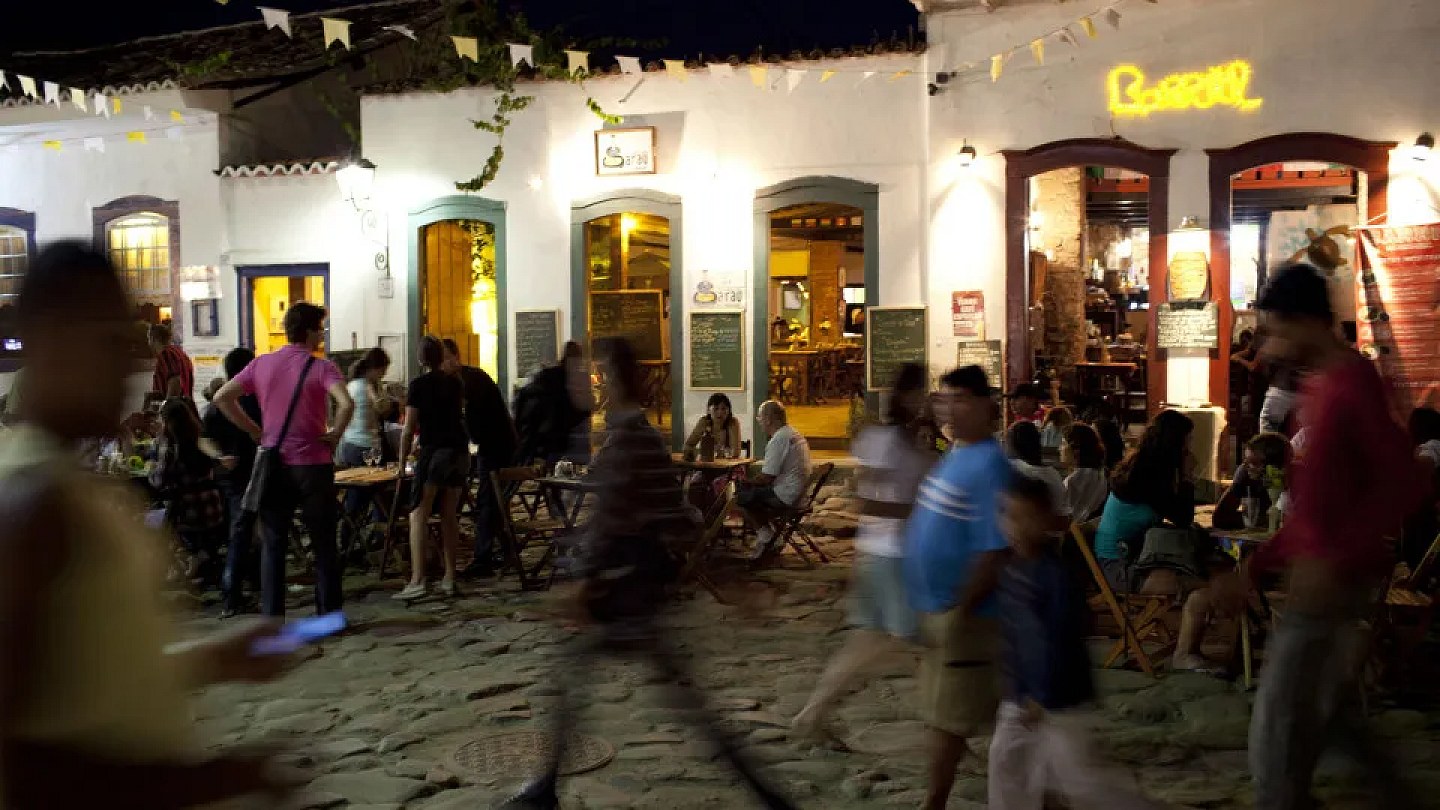
The survey also shows that 68% of those interviewed stopped using their cell phones on the street and 41% no longer let their children and teenagers go out alone.
The data comes from research commissioned by Instituto Update and Instituto Fogo Cruzado. In addition to pointing out that fear restricts the movement and opportunities of women in Brazil, the survey shows that 92% of the population agrees that women are more exposed to violence.
Interviewees point out that they are subject to specific risks such as harassment, domestic violence and physical or psychological abuse.
The survey "Women, police and factions - What is at the center of the debate on public security?" is composed of a quantitative survey conducted by Ideia Instituto de Pesquisa based on telephone interviews with 2,000 people carried out in all regions of the country from March 24th to 31st. The sample's overall margin of error is 2.2 percentage points.
The document also includes two qualitative surveys prepared by the Latina Strategy. These point out that women live in a "permanent state of alert" because of the fear of violence.
"The participants describe a routine in which it is necessary to be constantly aware of the risk of assault, harassment and sexual violence, mobilizing a series of micro protection strategies - such as hiding the cell phone in improvised compartments, sharing location on applications, monitoring service providers at home or organizing 'surveillance' networks with neighbors and friends", says the document.
According to those interviewed, this state of alert also extends to leisure time and caring for children, especially given the fear of kidnapping, mentioned in Manaus and Fortaleza.
In the qualitative stage dedicated to the female experience, buses, subways, trains, waiting points and app rides appeared among the most insecure spaces. This perception was corroborated by the quantitative survey, in which 39% of women said they felt unsafe on public transport, compared to 26% of men.
The reports also revealed that insecurity leads women to adopt increasingly restricted routines – often concentrated between home, church, work and the supermarket. They state that they stopped carrying out leisure activities (concerts, gym, events), studying (going to the campus library), visiting relatives or traveling at certain times for fear of violence.
"There is an invisible and constant work of managing one's fear, and it has a cost that is not included in official statistics, because violence such as street harassment, restrictions on circulating hours and domestic violence rarely appear in traditional public safety indices", says Carol Althaller, executive director of Instituto Update. "This means that policies are designed based on data that leave out precisely the violence that most limits the freedom of half the population."
Presidential candidates incorporated proposals aimed at women's safety in their campaigns. Senator Flávio Bolsonaro (PL-RJ), promises chemical castration for rape and sexual crimes against children and AI assistant for women victims of domestic violence. Flávio is at a disadvantage of 10 percentage points in voting intentions among women in relation to President Luiz Inácio Lula da Silva (PT), according to the latest Datafolha survey.
The PT member launched a package to combat feminicide, with the creation of a national registry of aggressors and expansion of the hypotheses that justify the immediate removal of the aggressor from the home.
"The campaigns insist on talking about security thinking only about criminals and the police, but when you listen to women, you understand that violence happens at home, on the bus, at work. Security for women is a concrete issue, it is a daily issue: 28% point to domestic violence as the main reason for insecurity in their daily lives, 27% say that harassment is what they face most, and 96% recognize that women experience a risk that men simply do not experience", says Cila Schulman, CEO of Ideia Instituto de Search.
"As long as the campaigns don't understand this, they will continue talking to more than half of the electorate about a problem that isn't really theirs."
The survey also shows that the population supports punitive responses, despite not fully trusting their results.
Tougher sentences come first among the priorities, mentioned by 42% of those interviewed. At the same time, only 41% say they believe that the police actually protect the population and 22% perceive an improvement in security after police operations.
When asked about the best preventive measures, those interviewed were divided: 49% believe that arresting people helps considerably or completely to reduce violence, while 45% say the same about education and social policies.
"The survey shows that the country is divided, not decided: we have a similar percentage of Brazilians defending harsher sentences and those defending education and social policies. We understand that the defense of these harsher sentences has to do, precisely, with the lack of imagination on the subject. Those who experience the problem up close know that the solution is more complex than building prisons", says Althaller.
Source: Noticias ao Minuto
Next recommended read
This story was originally published by Noticias ao Minuto. Visit the original publication for further details.
Open original publication

