The Moroccan Ministry of the Interior attributed the mass entry of migrants into Ceuta to misinformation spread on social media, the activities of groups linked to human trafficking and the misinterpretation of legal and administrative regulations.
Morocco attributes crisis in Ceuta to disinformation and human trafficking
The Moroccan Ministry of the Interior attributed the mass entry of migrants into Ceuta to misinformation spread on social media, the activities of groups linked to human trafficking and the misinterpretation of legal...
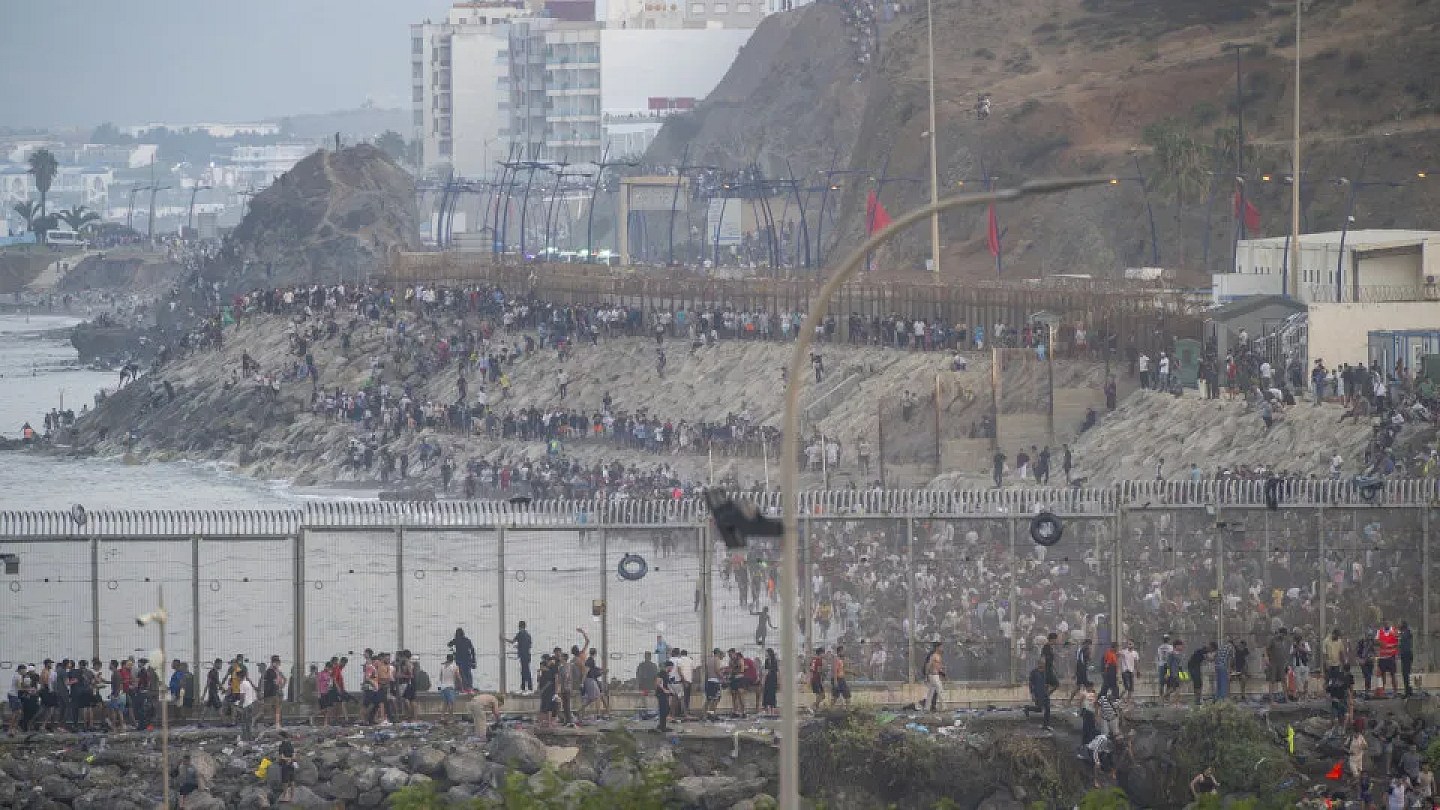
According to the Moroccan government, misleading content led part of the population to believe that it would be possible to reach European territory easily and without legal consequences.
In a statement cited by the newspaper Hespress, the ministry stated that the security forces adopted, from the beginning, prevention measures, increased surveillance and operational reinforcement. According to the ministry, the strategy made it possible to control the situation, protect lives, preserve public order and reinforce border security.
Data released by Morocco indicate that around 40 thousand people tried to enter Ceuta irregularly. Another 1,135 sought to reach Melilla. All migrants who managed to reach Melilla were repatriated, according to the statement.
The ministry also linked the increase in crossing attempts to a recent decision by the Spanish Court. At the beginning of July, Spain's Supreme Court ruled that people who arrive in the country irregularly by sea cannot be immediately returned to the authorities of another State.
Direct return continues to be permitted when entry occurs by overcoming physical barriers installed at the border, such as fences. For the Moroccan government, the distorted publicity of this decision fueled the perception that entry by sea would prevent immediate return.
Morocco recorded one case of accidental death, caused by a fall into a rocky area near Ceuta, and ten deaths from drowning. According to the ministry, the short distance at some points of the crossing, less than 70 meters, and the low depth of the water contributed to many people underestimating the risks.
Moroccan and Spanish authorities also opened border posts to allow migrants to return. The measure, according to the statement, helped to reduce pressure on Ceuta and gradually restore normality in the region.
The Moroccan Public Prosecutor's Office has opened investigations to clarify the circumstances of the crisis, identify responsibilities and assess possible legal consequences.
The Moroccan government also defended that the management of migratory flows must be based on shared responsibility, international cooperation and burden sharing between the countries involved.
The ministry stated that Morocco will continue to act as a partner of Spain and other nations in combating irregular immigration and human trafficking, with measures aimed at protecting borders, public order and the safety of the population.
Since Thursday, thousands of migrants have left Moroccan territory towards Ceuta. Spanish local authorities estimated the entry of approximately 60 thousand people, while the Madrid government counted around 50 thousand.
Most would have voluntarily returned to Morocco. Spanish security forces have estimated that approximately 73,500 people have left Ceuta since the start of the crisis, although the total may include migrants who were already in the city before the mass entry.
At least 72 people have died since Thursday trying to swim to Ceuta, according to the most recent report from Spanish authorities.
With around 83 thousand inhabitants, Ceuta is located in North Africa, on the coast of the Strait of Gibraltar. Alongside Melilla, Spanish territory constitutes one of the only two land borders between Africa and the European Union.
Around 69,500 migrants are returning to Morocco from Ceuta
The State Security Forces estimate that around 69,500 migrants left Ceuta towards Morocco in the last 30 hours. According to police sources interviewed by the EFE agency, the number may include people who arrived in the autonomous city in the days before the mass entry and even migrants who, throughout this Friday (31), crossed the border more than once.
Source: Noticias ao Minuto
Next recommended read
This story was originally published by Noticias ao Minuto. Visit the original publication for further details.
Open original publication