The memory of the Falklands War - when Argentines and English fought in the 1980s for control of the archipelago in the extreme south of South America - contributed to the defeat of Javier Milei's government in the project that expanded the sale of the country's land to foreigners.
Mobilizations lead Milei to backtrack on land foreignization
The memory of the Falklands War - when Argentines and English fought in the 1980s for control of the archipelago in the extreme south of South America - contributed to the defeat of Javier Milei's government in the...
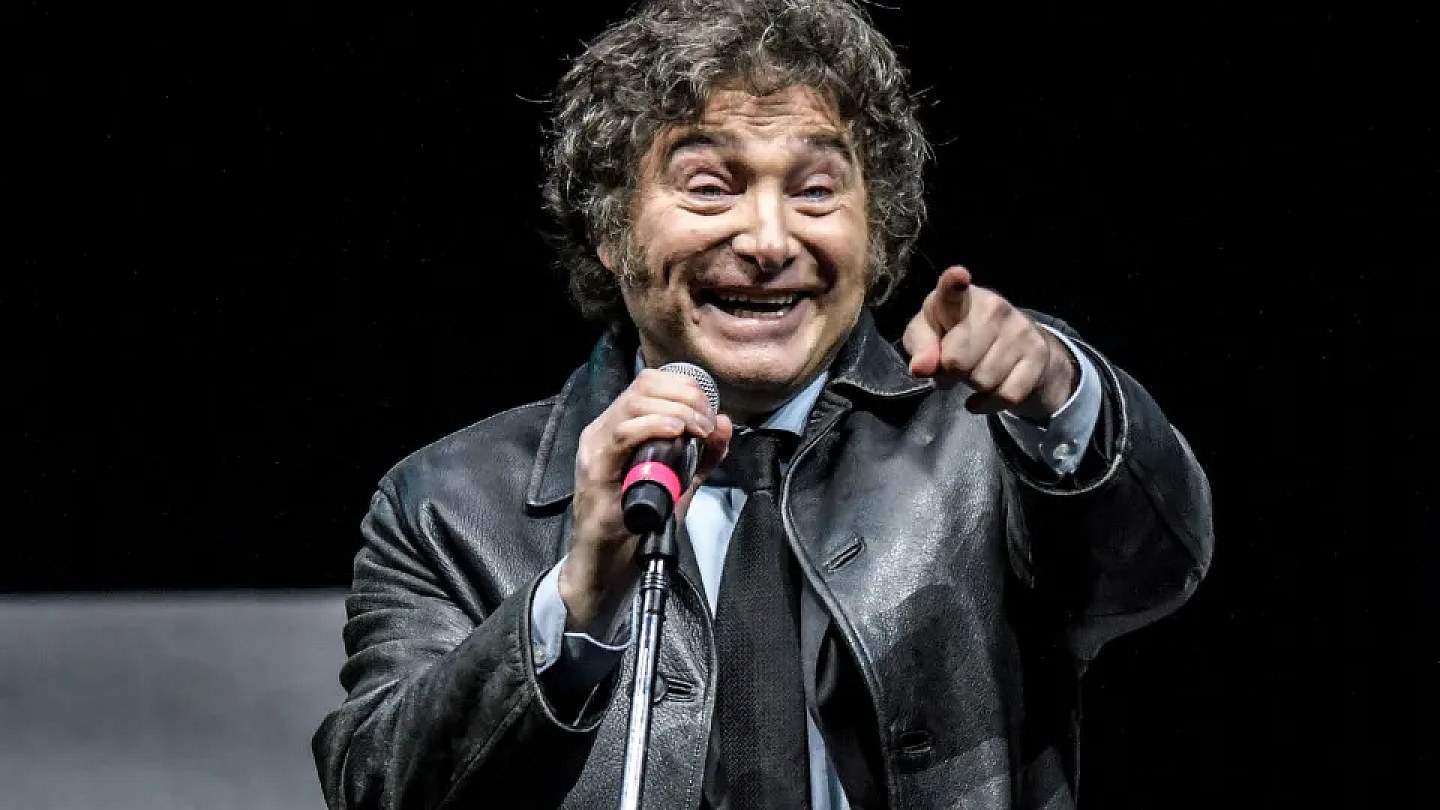
Dubbed the “foreignization of Argentine lands”, the project was the target of mobilization that brought together governors from all political fields, famous singers, actresses and actors in Argentina, some who do not usually take a political stance, in addition to the player from the country's runner-up team, defender Lisandro Martinez.
Faced with social pressure and the lack of support in the Senate, the Milei government decided to remove the topic from the vote scheduled for this Thursday (6). However, he maintained the vote of
another project targeted by protesters, which allows the sale of protected areas that have been affected by forest fires.
The text on the foreignization of lands that would be voted on was more moderate compared to the original proposal, which intended to end any limit on the sale of land to foreigners. The government argues that the limit makes international investments difficult.
According to the most recent text, the limit would be increased from 15% to 25% of the total land in each province that could be in the hands of foreigners.
Before sending the project to the Senate, Milei tried to overturn this limitation through a presidential decree, as soon as he took power, in December 2023. But the change was suspended by the Judiciary.
The Malvinas are Argentine
Environmental activist Hernán Hougassian, professor of agronomy at the University of Buenos Aires, participated today in the march in the country's capital where thousands of people protested against the foreignization of land. Hougassian highlights that the “spark” that ignited the mobilizations was the use of the banner “the Falklands are Argentine” by the national team's players in the semi-final against England the day before the Milei government tried to vote on the issue in the Senate.
“This phrase — ‘the Falklands are Argentine’ — appeared at the exact moment that Milei’s government sought to approve this law authorizing the purchase of land by foreigners in our country; that is, foreign billionaires could come and buy Argentine land without any limit”, he commented.
The “open wound” of the Falklands war acted as a catalyst against the project. “The Falklands are Argentine, and so is the entire territory,” read the slogan of the Center for Former Combatants of the Falkland Islands (Cecim La Plata), calling for protests.
The mobilization began to gain support from nationally known artists. Among them, Lali Espósito, with 11.9 million followers on a single social network, as well as Milo J, a recent Argentine music phenomenon, and Nicki Nicole, with more than 22 million followers on a single platform.
Argentine political scientist Leandro Gabiati explained to Agência Brasil that a “great politically transversal majority” was formed, which generated great pressure on the Senate, and even a split within the Milei government, with the opposite position of vice-president Victoria Villarruel.
“When you raise a sensitive issue such as sovereignty and a foreign presence buying land and occupying national territory, logically it is a politically sensitive issue”, commented the expert. Senators Alfredo De Angeli and Maximiliano Abad, despite not being from Milei's party, Libertad Avanza, had been supporting the government in several projects, but criticized the foreignization of the country's lands.
Gabiati believes that the pressure from provincial governors who went public against the measure was decisive for the government's retreat.
"The governors felt harmed by the proposal. Due to social pressure, but also local pressure, they entered the discussion by pressuring the senators of their states. There was an important federalization of the discussion, which was what finally led the Senate to not move forward in evaluating the proposal", he concluded.
The Milei government justified that it is “reevaluating” the proposal, without admitting a definitive shelving. However, there is no indication of when the matter may return to the Senate.
Defense of private property
The project on the sale of Argentine land to foreigners is part of a broader package of legislative changes defended by the Argentine government, called the Private Property Inviolability Law.
Among other changes, the measures speed up eviction processes, make state expropriations more difficult and reduce restrictions on the sale of environmentally protected areas after forest fires.
Environmentalist Hernán Hougassian says that society will continue to mobilize against these other measures and criticizes the text on areas affected by fires.
“Under the project, large landowners and large businessmen can set fire to native forests, wetlands and environmentally sensitive regions and then — once the flames have gone out and the ashes are removed — carry out real estate developments and dedicate them to speculative commercial activities”, he criticized.
Argentine legislation prohibits, for at least 30 years, the sale of protected areas affected by fires. Sanctioned in 2020, the law seeks to prevent the use of arson as a way to accelerate land use change.
According to the Milei government, the deadlines are excessively long and violate the right to private property. Casa Rosada also claims that the legislation has not served to protect the environment.
Source: Noticias ao Minuto
Next recommended read
This story was originally published by Noticias ao Minuto. Visit the original publication for further details.
Open original publication