SÃO PAULO, SP (FOLHAPRESS) - The dollar is falling this Monday (20), with investors monitoring the escalation of the conflict in the Middle East.
Dollar retreats and Stock Exchange fluctuates with war in the Middle East on the radar
SÃO PAULO, SP (FOLHAPRESS) - The dollar is falling this Monday (20), with investors monitoring the escalation of the conflict in the Middle East. A new exchange of attacks between the United States and Iran keeps...
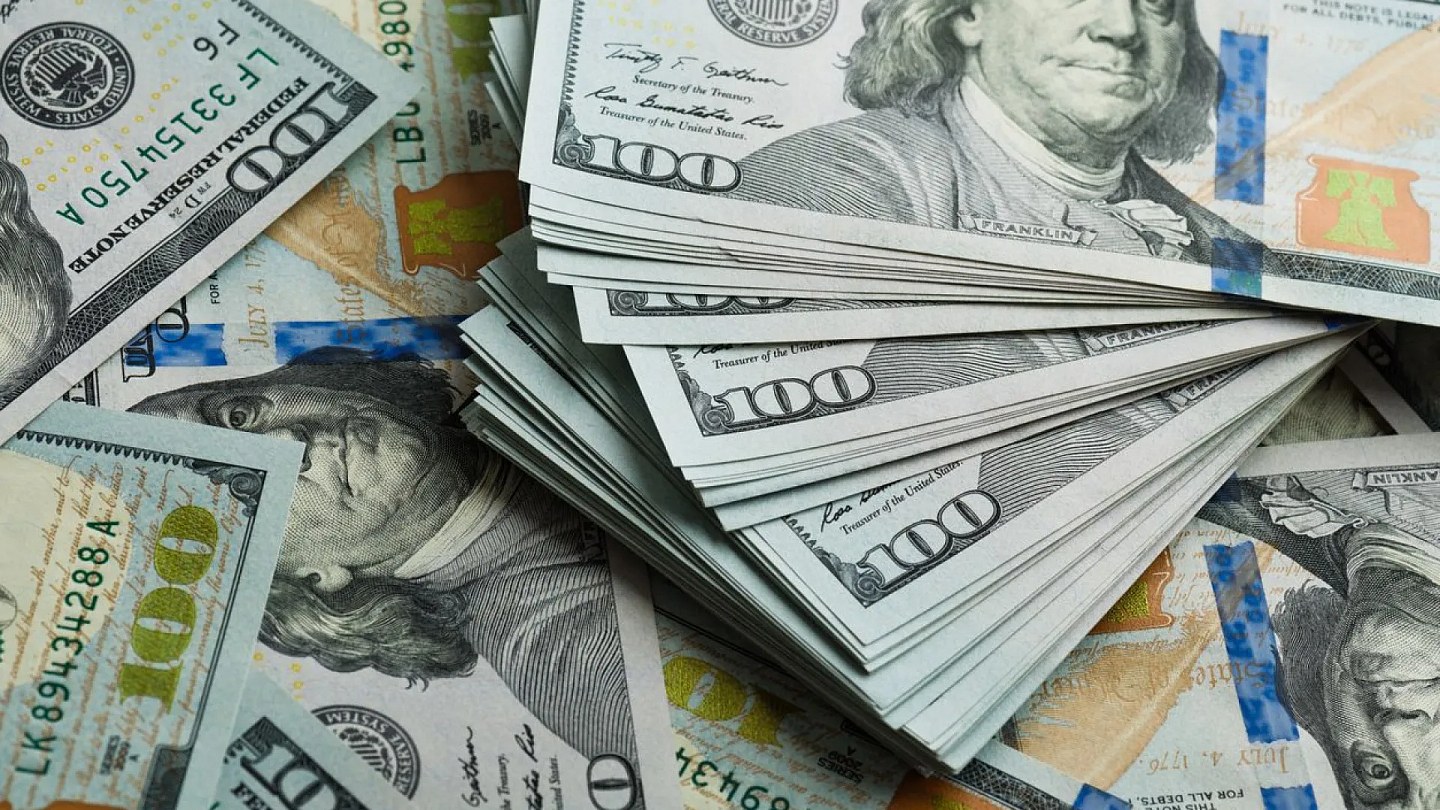
A new exchange of attacks between the United States and Iran keeps markets under pressure, but signs of a possible truce ease risk aversion. In this session, Brent oil is around stability, quoted at US$88 per barrel.
At 12:49 pm, the US currency fell 0.38%, quoted at R$5.090. The Stock Exchange had a positive variation of 0.11%, at 173,910 points.
Iran's Revolutionary Guard said on Monday that it had struck American military targets across the Middle East, after another night of bombings by Washington against Iranian cities.
This is the ninth consecutive day of attacks. Offensives by both countries buried the ceasefire signed last month, following mutual accusations related to Iranian control over the Strait of Hormuz.
The new phase of the war shifted the focus once and for all to the sea, responsible for transporting a fifth of all the oil produced in the world. The closure of the Strait by Iran and attacks on oil tankers reignited pressure on the price of the commodity, which dropped to a low of US$70 a barrel after the ceasefire and returned to US$90 at the weekend.
In this session, Brent oil, an international reference, fluctuated in stability, quoted at US$88. Signs of a possible agreement ease tensions in the market and place it in a cautious mood.
Both the US and Iran signaled that they would be willing to resume negotiations to reach a definitive truce.
A high-ranking Iranian official told Reuters that conflict mediators presented Tehran with a proposal to contain the escalation of the conflict with the US. The plan provides for a ten-day ceasefire so that the parties can try to resume the provisional agreement reached last month.
Iranian Foreign Ministry spokesman Esmaeil Baghaei told reporters on Monday that the country had received proposals to reduce tensions, but did not provide details. President Masoud Pezeshkian said the country is in a "full-scale war" with the US.
According to the AFP agency, Iran's Interior Minister, Eskandar Momeni, is expected to travel this Monday to the capital of Pakistan, the country that acts as a mediator in the conflict.
Donald Trump's administration has also signaled a cautious willingness to begin new negotiations. Washington's head of diplomacy, Marco Rubio, told reporters on Sunday night (19) that "if that door opens, we will be happy to see it open." However, he added that Iran's "behavior needs to change for ours to change as well."
On the other hand, in an increase in tension, Yemen's Houthis, aligned with Iran, stated that they are imposing a naval blockade on Saudi Arabia, a measure that opens a new front of war against the US and expands the threat to global energy supplies and trade beyond the Gulf region.
"The tension between the US and Iran remains without a definitive solution, but recent signs of openness to dialogue help to contain a stronger reaction in risky assets globally", says Bruno Shahini, investment specialist at Nomad.
In Brazil, says Shahini, "performance reflects less the external scenario and more the uncertainty that continues to hover over the interest rate cut cycle."
This Monday's Focus Bulletin showed that economists reduced their inflation forecast this year for the third consecutive week, but at a slower pace than in previous surveys.
Analysts interviewed by the BC (Central Bank) expect the IPCA (Broad National Consumer Price Index) to end 2026 at 5.15%, just 0.01 percentage points less than last week. In the last survey, the drop had been 0.14 percentage points.
Even with the decrease, the inflation forecast still remains above the target limit, which is 3% with a variation of 1.5 percentage points plus or minus.
For the Selic rate, the forecast for December remains at 14% per year - just 0.25 percentage points below the current level, of 14.25% per year.
"The market continues to expect a cut in the Selic rate to 14% at the next meeting, but the interest rate curve does not reflect the same optimism for the longer horizon, a sign that there are still doubts about how far the easing cycle can advance. This uncertainty tends to keep the exchange rate and the Stock Exchange more sensitive to any noise, domestic or external", says Shahini.
In this session, future interest rates fluctuate with slight increases. The DIs (Interbank Deposit) rate for January 2028 was 14.115%, an increase of 0.01 point. At the long end of the forward curve, the contract expiring in January 2035 was at 14.62%, an increase of 0.03 points.
At the same time, the yield on the ten-year treasury - a US fixed income bond, a global reference for investment decisions - rose 0.02 points, to 4.564%.
Read Also: US target, Pix is at the center of dispute over who controls the world's money rails
Source: Noticias ao Minuto - Ultima Hora
This story was originally published by Noticias ao Minuto - Ultima Hora. Visit the original publication for further details.
Open original publication

