(FOLHAPRESS) - The president of El Salvador, Nayib Bukele, will run for a third term in the February elections next year after the Legislature - controlled, as well as most of the country's institutions, by the leader - modify the Constitution and approve indefinite re-election for the position.
Bukele heads for third term in El Salvador without opposition
(FOLHAPRESS) - The president of El Salvador, Nayib Bukele, will run for a third term in the February elections next year after the Legislature - controlled, as well as most of the country's institutions, by the leader -...
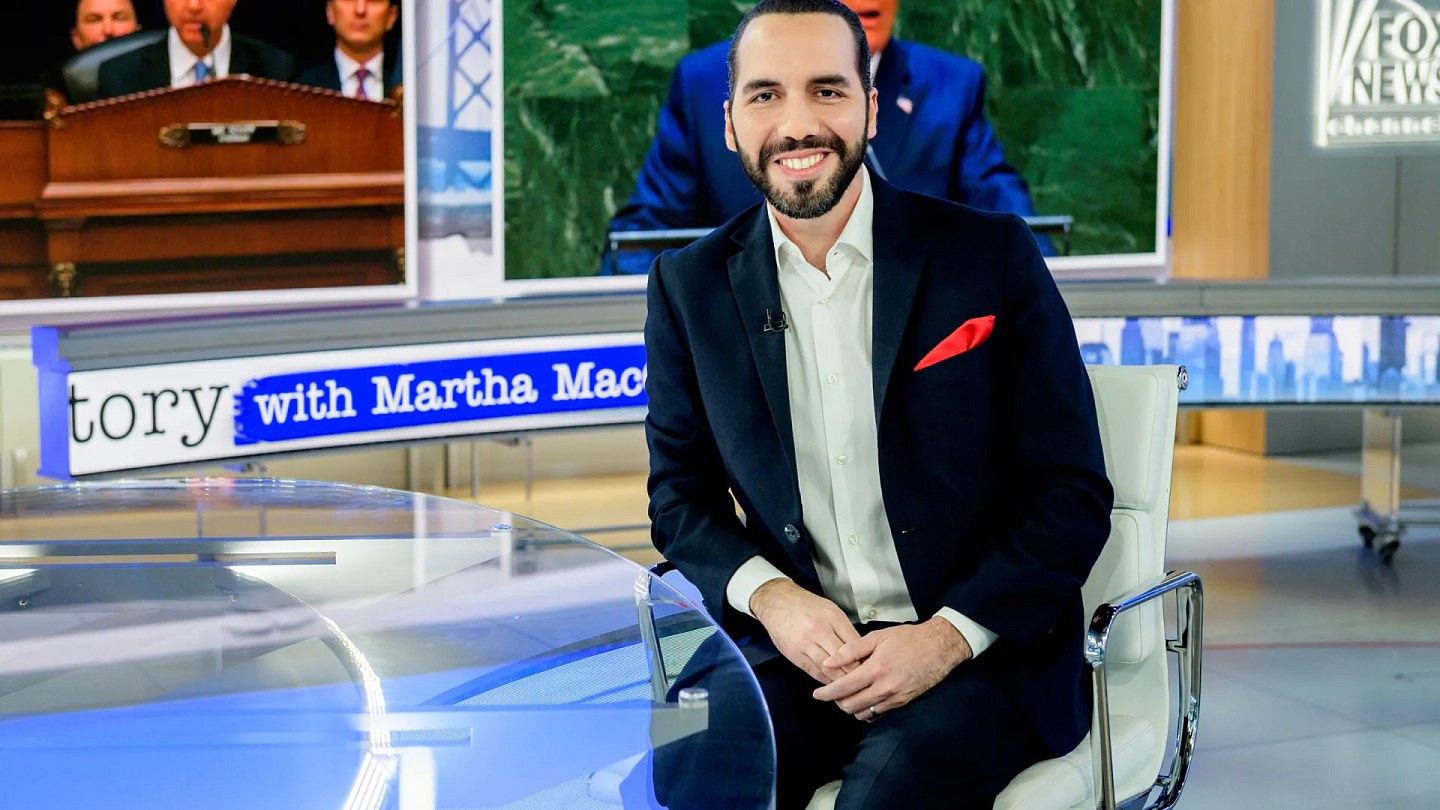
The news was announced last Sunday night (12), when the Nuevas Ideas party confirmed the 44-year-old politician as a presidential pre-candidate in internal elections in which he ran alone.
The announcement had been expected since July last year, when the Legislative Assembly paved the way for Bukele to remain in power indefinitely in a quick vote. Controversial measures have been approved in the country since Nuevas Ideas won 56 out of 84 seats in the 2021 legislative elections - since 2024, after a reform that favored Bukele, the party has had a supermajority of 54 seats out of 60.
In December last year, Bukele made clear his desire to remain in power. "I wouldn't want to leave now, but we'll see what God, my family and the country say," he said, in an interview with a Spanish YouTuber. "But if it were up to me, I'd stay for another ten years."
The statement is one of many that contradicts past statements. In 2013, he said that in El Salvador it was possible to be president 80 times, but not consecutively, "to ensure that [the politician] does not remain in power and uses his power to stay in power."
Bukele was elected in 2019 and should have left the Presidency within five years, as had been happening since the Peace Accords that ended the country's civil war in 1992. However, in 2024 he circumvented the Constitution with the help of bodies that he set up after his victory in the 2021 legislative elections, such as the Constitutional Chamber, the equivalent of the Federal Supreme Court in Brazil, the Public Ministry and the Supreme Electoral Court.
At the time, he said that this would be his last term.
Apparently, next year's elections will be like those of 2024: practically without opposition. Two years ago, the president won with 84.65% of the votes, while the parties that once alternated power in the country, the FMLN (Frente Farabundo Martí para la Liberación Nacional) and the Arena (Alianza Republicana Nacionalista), managed 6.4% and 5.57%, respectively.
Currently, the opposition remains practically non-existent. This leaves few characteristics of a democracy in El Salvador.
In 2025, more than 50 journalists fled the country, according to Apes (Association of Journalists of El Salvador, in its Spanish acronym). The organization itself, in fact, changed its registration to another nation for the first time since its creation in 1936 – which means that the institution managed to go through military regimes and a civil war in the 20th century, but not Bukele's government.
Apes, like other Salvadoran civil society organizations, is fleeing possible reprisals as a result of the Foreign Agents Law, approved last year. The norm, known by countries such as Daniel Ortega's Nicaragua, Viktor Orbán's Hungary and Vladimir Putin's Russia, taxes transfers made from international bodies to organizations in the country by 30% and establishes that these groups "refrain from carrying out activities that alter" public order.
One of the most attacked entities is Cristosal, the main entity in terms of human rights in the country. The organization has been the main voice denouncing violations that have occurred since El Salvador entered a state of exception, in March 2022, and never left.
The showcase for the measure, popular for having reduced the country's crime rate, is the Cecot (Terrorism Confinement Center). This is where the government supposedly sends former members of the gangs that placed the country at the top of the list of the most violent in the world a few years ago. The lack of transparency and mass trials, however, make it impossible to know whether the sentences are fair.
In 2025, the place gained prominence after receiving more than 250 Venezuelans deported by the government of Donald Trump, Bukele's ally. Released months later, dozens of them denounced torture and ill-treatment in a report carried out by Human Rights Watch in partnership with Cristosal.
Ruth López, a member of the second organization, has been in prison for more than a year on charges of embezzlement of resources for more than a decade.
"The prolonged incommunicado detention, the restrictions on her legal representation and the lack of transparency in the process raise serious concerns regarding respect for judicial guarantees and due legal process, not only in her case, but also in that of thousands of people arbitrarily detained in El Salvador", said Amnesty International in May this year.
FGTS allows withdrawals of up to R$6,220; see who has the right
Benefit is not intended for all workers. The modality serves residents of cities in an emergency situation or officially recognized public calamity
Source: Noticias ao Minuto - Mundo
This story was originally published by Noticias ao Minuto - Mundo. Visit the original publication for further details.
Open original publication