(FOLHAPRESS) - Bodybuilding can play an important role both in preventing Alzheimer's and in caring for people who have already been diagnosed with the disease. In addition to helping to preserve strength, mobility and functionality throughout aging, activity is associated with biological mechanisms that promote brain health and can help reduce the risk of cognitive decline.
Bodybuilding helps prevent Alzheimer's and improves independence for people who have the disease
(FOLHAPRESS) - Bodybuilding can play an important role both in preventing Alzheimer's and in caring for people who have already been diagnosed with the disease. In addition to helping to preserve strength, mobility and...
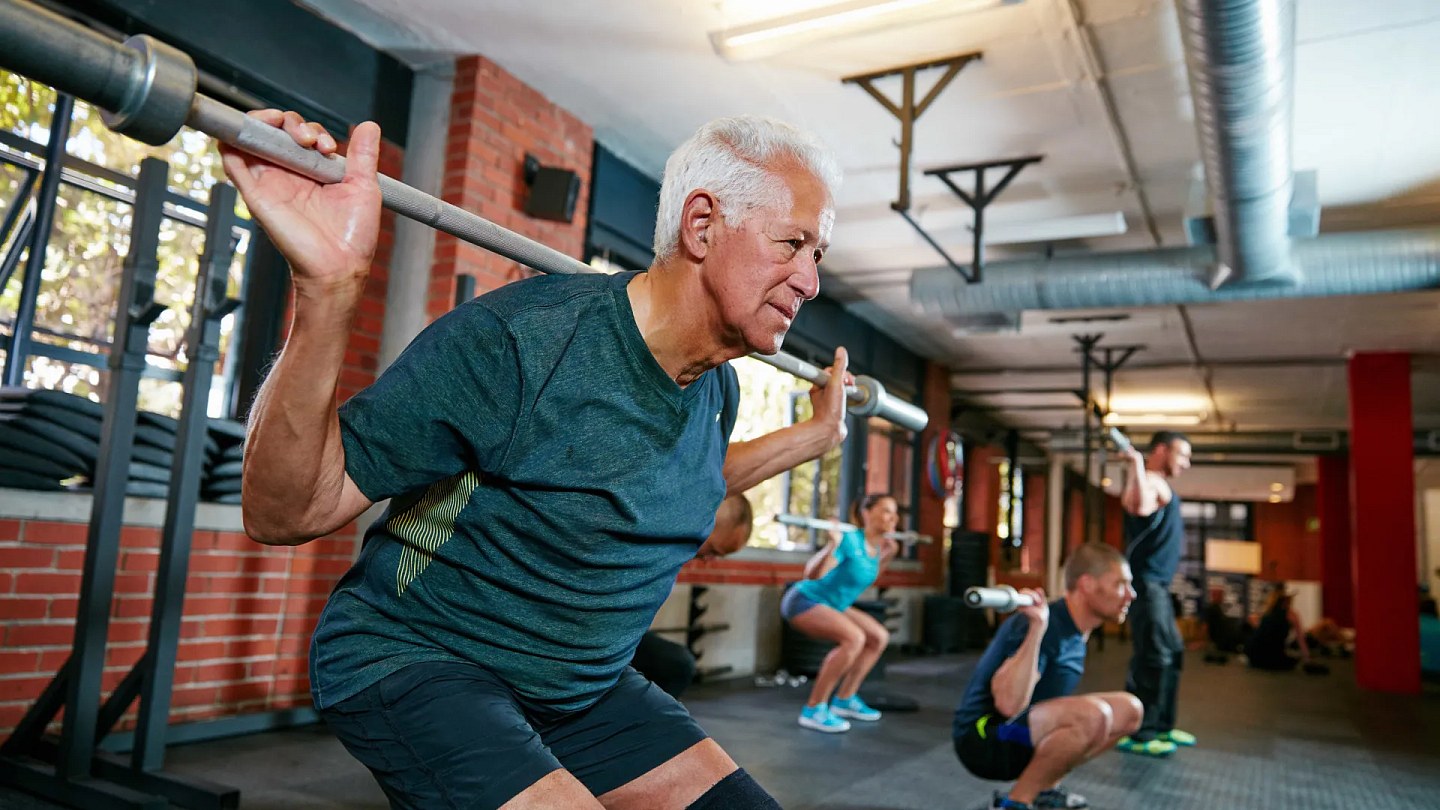
Retired Rogério Beck, 59, was diagnosed with Alzheimer's about two years ago. Since then, he started doing more physical exercise as part of his treatment. He switched from running to weight training and trains three to four times a week, dividing the sessions by muscle group. He says he feels the difference on the days he doesn't go: "I spend the day a little irritated, I end up sleeping worse."
His wife Karin Beck, 55, takes the opposite approach: she trains to prevent the diagnosis. With a family history of Alzheimer's - her mother died in 2004 due to complications from the disease - she does Pilates twice a week, a modality that combines strength, balance and mobility, and has added two walking sessions to her routine.
Paulo Caramelli, neurologist and professor at UFMG (Federal University of Minas Gerais), states that physical activity, including weight training, is considered a fundamental part of Alzheimer's prevention and care strategies. According to him, a sedentary lifestyle is one of the main modifiable risk factors for dementia, which places physical exercise at the center of non-pharmacological interventions.
Among the biological mechanisms associated with bodybuilding, Caramelli highlights the action of myokines, substances produced by the muscle during contraction. These molecules enter the circulation and can reach the brain, where they stimulate the formation of new connections between neurons and contribute to the maintenance of brain plasticity – the brain's ability to reorganize itself, create new connections between neurons and adapt throughout life.
In people already with Alzheimer's, especially in phases in which there is sarcopenia (loss of muscle mass), weight training can help improve mobility, reduce the risk of falls and mitigate the functional decline associated with the progression of the disease. But there is still a lack of robust evidence of a direct effect on disease progression.
Physical educator and researcher Luiz Sinésio Neto, professor at UFT (Federal University of Tocantins) and scientific director of Abraz (Brazilian Alzheimer's Association) in the state, recommends the so-called multicomponent exercise, which combines weight training, aerobic activities, balance and mobility exercises.
He cites a study published in 2015 in the journal The Lancet, which followed 1,260 people between the ages of 60 and 77 who were at increased risk of developing Alzheimer's. The intervention combined cognitive training and control of cardiovascular factors with activities such as weight training, aerobic exercises and balance and mobility practices. At the end of two years, the group undergoing the intervention showed better cognitive performance compared to the control group.
A report from The Lancet published in 2024 gathered evidence on modifiable factors associated with lifetime risk of dementia. The document identified 14 risk factors, including physical inactivity, and highlighted that changes in these determinants can reduce the likelihood of developing the disease.
Karin adopted many of these changes in the family's lifestyle, including eating based on the Mediterranean pattern. The model prioritizes the consumption of fruits, vegetables, legumes, whole grains, olive oil and fish, with a reduction in red meat and ultra-processed foods. “My goal is health,” she says.
Rogério, in addition to weight training, does cognitive activities at a separate time, under the supervision of a neuropsychologist. He received the diagnosis after he began to notice subtle changes in his daily life, especially in short-term memory and simple tasks, which were previously automatic.
According to Neto, the relevance of bodybuilding is also linked to the role of muscle in the body. "Muscle is one of the largest and most important tissues in the human body. Weak muscle represents disease and, with adequate quantity and quality, represents health", he states.
Another point associated with strength training is the reduction of inflammatory processes and the improvement of glucose metabolism and cerebral circulation, factors considered relevant to the vascular health of the brain.
Psychiatrist Arthur Danila, coordinator of the Habit and Lifestyle Change Program at the Institute of Psychiatry at the Hospital das Clínicas at USP (University of São Paulo), highlights that the focus should not only be on hypertrophy, but on functionality: maintaining autonomy for everyday tasks such as getting up from a chair, climbing stairs and walking safely.
Research published in 2016 in the Journal of the American Geriatrics Society followed one hundred adults with mild cognitive impairment and evaluated a high-intensity resistance training program for six months. The results showed improvements in muscle strength, aerobic capacity and cognitive performance.
Danila adds that current evidence shows more consistent effects on autonomy, mobility, muscle strength and quality of life than on direct slowing of the biological progression of the disease. Still, maintaining functionality can help preserve independence for longer and reduce the impact of Alzheimer's on the daily lives of patients and caregivers.
How to include weight training in your routine to protect your brain
Physical education professional Talita Cezareti, from SBGG (Brazilian Society of Geriatrics and Gerontology), states that the general recommendation is that strength training be carried out regularly, two to three times a week, always with professional guidance and respecting each person's individuality and level of conditioning.
She reinforces that weight training can be combined with aerobic exercises and other practices throughout the week, forming a broader health and aging care program.
The general recommendation for adults and the elderly follows international guidelines of at least 150 minutes of moderate physical activity per week, distributed throughout the week, with weight training included consistently in this routine.
Silent symptoms of ovarian cancer may delay diagnosis
Experts warn that signs such as persistent bloating, abdominal pain and frequent urge to urinate are often ignored or confused with common problems, making it difficult to detect ovarian cancer early.
Source: Noticias ao Minuto - Ultima Hora
This story was originally published by Noticias ao Minuto - Ultima Hora. Visit the original publication for further details.
Open original publication