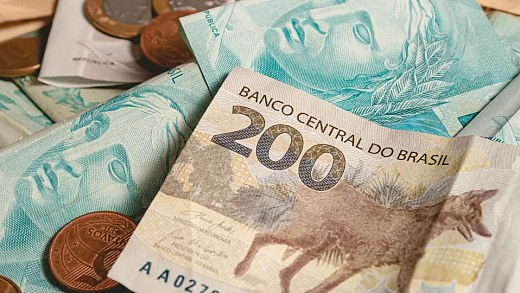
SÃO PAULO, SP (FOLHAPRESS) - The dollar is falling this Friday (3), a day of low liquidity due to an early holiday in the United States.
Dollar retreats and Stock Exchange advances on a day of low liquidity due to an early holiday in the USA
SÃO PAULO, SP (FOLHAPRESS) - The dollar is falling this Friday (3), a day of low liquidity due to an early holiday in the United States. Investors continue to reflect data on the North American labor market, released...
Investors continue to reflect data on the North American labor market, released the day before, which showed lower job creation than expected and led to adjustments in bets on interest rates from the Fed (Federal Reserve, the US central bank).
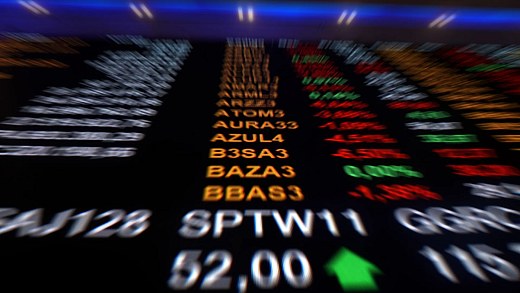
At 3:45 pm, the currency fell 0.74%, quoted at R$5.168, following the global trend. The Stock Exchange advanced 0.92%, to 174,379 points.
In this session, the early July 4th holiday in the United States keeps American markets closed and significantly reduces trading liquidity.
"This environment makes market behavior more difficult to anticipate. On days of low liquidity, it is common to see sessions of little volatility and lateral movement. However, the absence of American operators can also increase market sensitivity, causing higher volume operations to cause more intense fluctuations than usual", says Leonel Mattos, market intelligence analyst at StoneX.
Without specific triggers for the session, investors continue to reflect on the United States payroll jobs report, released on Thursday. 57 thousand jobs were opened in June, below the 110 thousand projected. Even with the worse-than-expected result, the unemployment rate fell from 4.3% to 4.2%, contradicting stability forecasts.
The slowdown was likely caused by seasonal factors, says Matthew Ryan, head of global market strategy at Ebury, rather than structural weakness in the economy.
The numbers cooled speculation that the Fed would raise interest rates in the short term. With the labor market relatively balanced, family consumption tends to remain stable, reducing inflationary pressures. When considering the easing of tensions in the Middle East and the consequent normalization of energy markets, the scenario opens the door to a possible slowdown in prices for American consumers.
"The data is unlikely to convince Fed officials that an immediate tightening of monetary policy is necessary," says Ryan.
More than half of traders (64%) now predict that interest rates will rise in October; Before, the majority bets were concentrated on the September meeting.
Added to this data are recent statements by Kevin Warsh, new president of the Fed. At the annual monetary policy forum of the ECB (European Central Bank) in Sintra, Portugal, he reaffirmed that the monetary authority will be combative against rising prices.
"If there are people in households, in business or in financial markets who thought this central bank would be comfortable with an inflation target above 2% - well, I think they will be disappointed: we are going to guarantee price stability in the US," he said on Wednesday.
Warsh has avoided signaling the central bank's next steps, leaving investors in the dark. On the other hand, the reinforcement of the fight against inflation has been read as an indication of a tougher stance by the Fed in the coming months. The PCE index, the central bank's favorite benchmark for inflation, rose 4.1% in the 12 months to May, more than 2 percentage points above target.
The Fed works with a dual mandate: the objective is to calibrate monetary policy to ensure maximum employment and inflation at around 2% per year.
"The market did not stop pricing in a new interest rate hike, but began to see less urgency for the Federal Reserve to promote this adjustment in the short term, postponing expectations for the coming months", says Leonel Mattos, market intelligence analyst at StoneX.
The scenario led to a sharp devaluation of the dollar globally the day before. With no immediate increase in interest rates expected, yields on US treasuries, fixed income securities, fell, pulling the US currency down and encouraging the search for risky assets.
In Brazil, however, the market softened without there being any specific trigger, according to traders. The dollar closed with a negative variation of 0.03% the day before, quoted at R$5.207, and future interest rates soared.
"The market has been trying to digest a series of events, such as the repricing of expectations for the Selic, the prospect of higher interest rates in the United States, the news with an impact on inflation, the risk of approval of bomb agendas in Congress, the electoral news, among other factors", says Luis Felipe Vital, chief macro and public debt strategist at Warren Investimentos.
"On days like this, even without a specific trigger, there is a worsening in the tone of the markets."
The electoral race, according to an operator interviewed by Reuters, helped to worsen the perception of Brazilian assets. In recent days, the news revealed the strengthening of President Lula (PT) in the dispute with Senator Flávio Bolsonaro (PL-RJ) for Planalto, in addition to the friction between the parliamentarian and former first lady Michelle Bolsonaro.
Read Also: First investigations into INSS deviations should be concluded this month, says PF
Source: Noticias ao Minuto - Economia
This story was originally published by Noticias ao Minuto - Economia. Visit the original publication for further details.
Open original publication