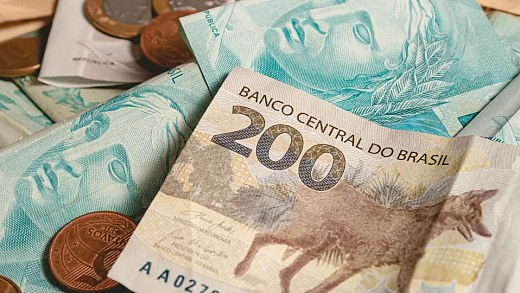
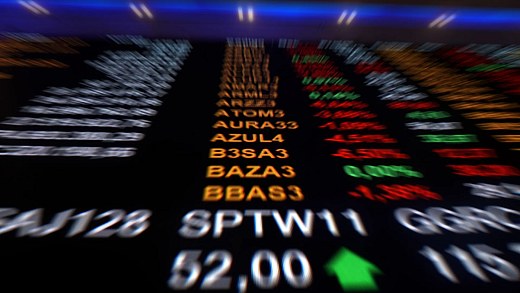
Understand what makes the price of the dollar rise or fall The dollar opened this Monday's session (13) on a high, with an increase of 0.21% close to 9 am, quoted at R$ 5.1198, as investors continued to pay attention to tensions in the Middle East. Ibovespa trading, the main index on the Brazilian stock exchange, begins at 10am. ?? Do you have any reporting suggestions? Send it to g1 ?? The escalation of tensions between the United States and Iran is at the center of attention in financial markets. After new attacks between the two countries, Tehran decided to close the Strait of Hormuz, a route through which around 20% of all global oil trade passes. As a result, commodity prices rose again this Monday (13). Around 9 am, a barrel of Brent, an international reference, rose 3.26%, quoted at US$78.49. West Texas Intermediate (WTI), from the USA, rose 3.32%, quoted at US$ 73.78 per barrel. ?? The Brazilian government's attempts to negotiate tariffs imposed by the US also remain on the radar. The deadline for the White House to decide whether or not to implement the tariff offensive, with rates of 25% and 12.5% ??against Brazil, ends on Wednesday (15). According to information from reporter Isabella Calzolari, the expectation of Lula's team is that the tariffs will come into effect, after American trade representative Jamieson Greer stated that the two countries are still far from reaching an agreement. ??On the economic agenda, investors evaluate retail sales data and the volume of services for May, in addition to the release of the IBC-Br, a monthly activity indicator from the Central Bank of Brazil. See below for more details on the day at the market. ?Dollar
Dollar opens higher, with tensions between the US and Iran in focus
Understand what makes the price of the dollar rise or fall The dollar opened this Monday's session (13) on a high, with an increase of 0.21% close to 9 am, quoted at R$ 5.1198, as investors continued to pay attention to...

a Accumulated for the week: -1.15%; Accumulated for the month: -1.05%; Accumulated for the year: -6.93%. ?Ibovespa
Accumulated for the week: +2.18%; Accumulated for the month: +3.40%; Accumulated for the year: +10.39%. Escalation of tensions in the Middle East Iran bombed, this Monday (13), United States military bases in Bahrei, Kuwait, Oman and Jordan, in retaliation for North American attacks against Iranian targets. Furthermore, the Iranian government threatened to abandon the Middle East war peace agreement signed with the US in June if Washington does not uphold its commitments to end the conflict. “Every time the other party [USA] has failed to fulfill its obligations, we will also fail to fulfill ours and will continue to act in this way,” said Foreign Ministry spokesperson Esmaeil Baqaei about the latest episode of hostilities between the two countries. The US said it had bombed military targets in Iran over the past few days. On Saturday alone, more than 100 Iranian locations were targeted. In response, Iran said it had "indefinitely" closed the Strait of Hormuz to commercial ships and retaliated against US bases in the Middle East. The Strait is one of the main maritime trade routes for oil. What is the Strait of Hormuz, essential for world oil? Donald Trump's government disputed the claim, and said that the sea route remains open. Vessel traffic in the region, however, remained mostly paralyzed. The two countries returned to exchange attacks more frequently throughout this weekend, something that violates the fragile peace agreement signed on June 17, which formalized a more lasting ceasefire and a path towards a definitive treaty. The Iranian government stated on Monday that it is continuing diplomatic dialogue with the countries mediating the conflict — Qatar, Pakistan and Oman — to "avoid an escalation" that would lead to a full resumption of the war against the USA. Global stock markets In Asia, stock markets closed mixed, as investors assessed uncertainties regarding tensions in the Middle East. The CSI 300, which brings together the largest companies listed in Shanghai and Shenzen, fell 1.79%, while the Shanghai composite index, the SSEC, lost 2.06%. Hong Kong's Hang Seng rose 0.16%, while Japan's Nikkei fell 1.92% and South Korea's Kospi fell 8.95%. A bank employee in Jakarta, Indonesia, counts dollar bills on April 10, 2025. Tatan Syuflana/ AP
This story was originally published by G1 Economia. Visit the original publication for further details.
Open original publication