One of the biggest hits in Brazilian cinema can be seen again on screens across the country starting this Thursday (16). Xica da Silva (1976), by Cacá Diegues, returns to cinemas 50 years after its original release, in a restored 4K version.
Xica da Silva, by Cacá Diegues, returns to cinemas restored in 4K
One of the biggest hits in Brazilian cinema can be seen again on screens across the country starting this Thursday (16). Xica da Silva (1976), by Cacá Diegues, returns to cinemas 50 years after its original release, in...
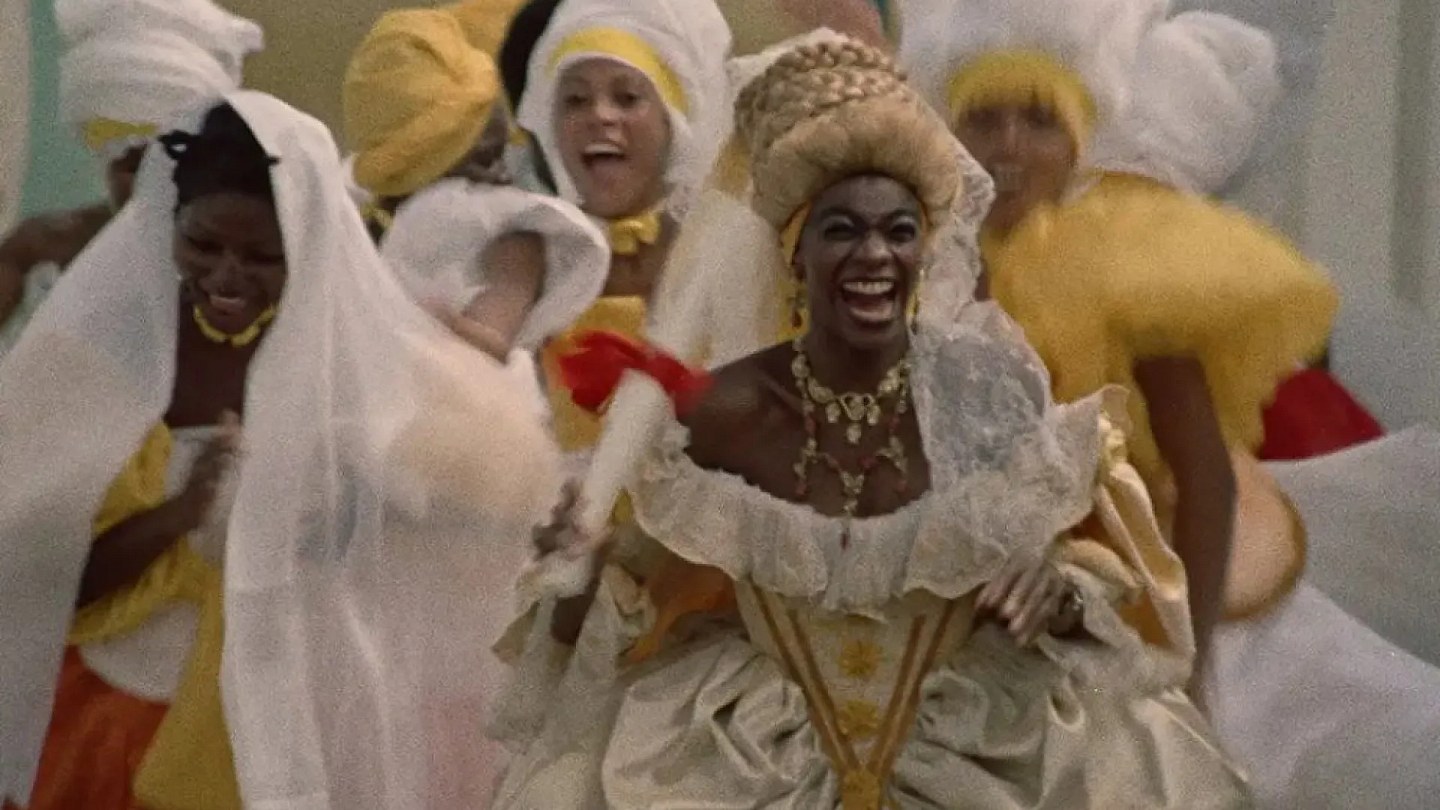
The film reinvented the representation of the historical character inspired by Chica da Silva, an enslaved black woman who achieved manumission and achieved a prominent position in society in the Diamantino District, in Minas Gerais, in the 18th century.
In addition to its public success, the film received important national awards, represented Brazil internationally and consolidated Zezé Motta as one of the biggest names in Brazilian audiovisual.
In a restored version, the work returns to cinemas with the aim of preserving the memory of national cinema and presenting one of the greatest Brazilian classics to a new generation of spectators. The relaunch is part of the Sessão Vitrine Petrobras project, which seeks to put fundamental Brazilian audiovisual works back into circulation.
The new copy was presented to the public on Monday night (14), at Sala José Wilker, in Rio de Janeiro, in a preview marked by emotion and tributes to director Cacá Diegues, who passed away last year.
Actress Zezé Motta, protagonist of the film, participated in the session; the filmmaker's widow, Renata Magalhães; representatives of the distributor Vitrine Filmes; members of the Acadêmicos do Salgueiro samba school and researcher Débora Butruce, coordinator of the work's restoration process.
3 million viewers
More than celebrating 50 years of a classic, the re-release aims to bring new generations closer to one of the most important films in national cinematography, which brought more than 3.1 million spectators to cinemas in the 1970s.
Responsible for coordinating the digital restoration, Débora Butruce highlighted that the work sought to recover the original quality of the work, preserving the characteristics conceived by its creators:
"This idea came up to release Xica da Silva again in theaters and, along with that, carry out digital restoration in 4K, so that it would return to theaters as beautifully as possible and could present the film's full potential to this new generation of spectators, who I believe will be watching the film for the first time", he stated.
According to her, restoring a film does not mean modifying the work, but recovering what was lost through time:
"Restoring is not improving the work. It is recovering what time and poor preservation conditions may have caused. It is bringing back all the aesthetic potential that already existed in that film", he explained.
"The restored film reduces the damage caused by time and deconstructs the idea that Brazilian cinema is precarious. These restorations show the films in the same way they were shown 50 years ago", he said.
During the ceremony, a curiosity was also remembered that links the film to Rio's Carnival. Before she even existed on screen, Xica da Silva was born from the inspiration that Cacá Diegues found in the 1963 Acadêmicos do Salgueiro parade, dedicated to the historical character Chica da Silva. The coincidence took on new meaning because the school will once again honor the character in the 2027 parade.
"The film was based on the 1963 Salgueiro parade. Cacá saw this parade and had the desire to make a film about Chica da Silva, which he managed to achieve in 1976. And, by a beautiful coincidence, Salgueiro will once again have Chica da Silva as its theme. It all came together: Salgueiro, Xica returning to the cinemas and also returning to the avenue", highlighted Débora.
Zezé Motta applauded
Representatives of the samba school paid tribute to Zezé Motta during the preview, remembering that the character remains one of the greatest symbols in the association's history.
Applauded by the public, she expressed gratitude for the affection she received five decades after playing the character that marked her artistic career:
"My emotion is very great. I want to thank everyone for coming. It's great to know that, 50 years later, everyone is still interested in this film", said Zezé Motta at the premiere.
Excited, Renata Almeida Magalhães, producer with more than four decades of experience in Brazilian audiovisual and the first woman elected president of the Brazilian Academy of Cinema and Audiovisual Arts, as well as widow of Cacá Diegues, recalled the first time she watched the film, when she was still a teenager. She highlighted the current nature of the work.
"I was 15 years old when I saw Xica da Silva for the first time. I left the film completely enchanted. It was a carnival on the screen, talking about Brazil. Five years later I was married to Cacá, with whom I was lucky enough to live for 43 years", she said.
She recalled that the filmmaker used to define the production as "the samba school film" of his career and stated that the work remains current: "It continues to be a film. It's a totally current film, about Brazil, about the country's ambiguities. It continues to talk to the audience.
Also Read: The best action movies of all time
Source: Noticias ao Minuto - Ultima Hora
This story was originally published by Noticias ao Minuto - Ultima Hora. Visit the original publication for further details.
Open original publication