SÃO PAULO, SP (FOLHAPRESS) - President Donald Trump's idea of ??establishing a toll to guarantee free navigation in the Strait of Hormuz did not last a day. This Tuesday (14), the American published a post in which he said he would exchange the proposal for investment and trade agreements with nations in the Persian Gulf.
Trump now says he will trade tolls in Hormuz for business
SÃO PAULO, SP (FOLHAPRESS) - President Donald Trump's idea of ??establishing a toll to guarantee free navigation in the Strait of Hormuz did not last a day. This Tuesday (14), the American published a post in which he...
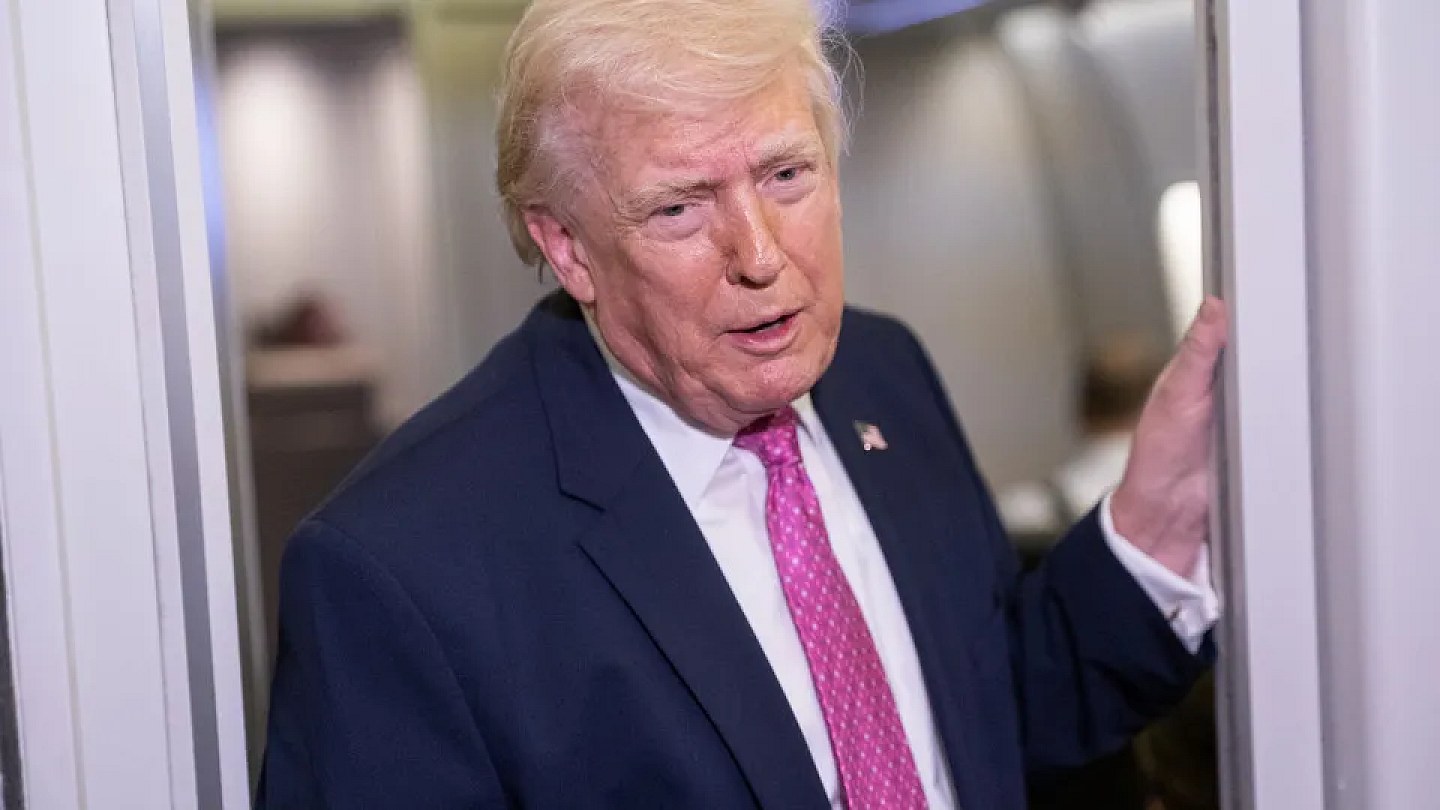

"Based on highly productive conversations with Middle Eastern leaders, I have decided to replace the 20% US Reimbursement Fee [on cargo] with investment and trade agreements with several Gulf States," he wrote on the Truth Social network.
The day before, Trump had announced the tariff, which is illegal under international law and whose implementation is questionable given that Iran has the greatest military control over the strait through which 20% of the world's oil and liquefied natural gas traffic passed before the war that began on February 28.
Talking to reporters later, the Republican tried to explain himself. "I don't think anyone can charge a fee. I don't like the concept of the fee, but at the same time, it's not fair that we are protecting this strait for the world at large," he said, without any basis in reality regarding such protection.
The American's other measure, the reintroduction of a naval blockade of Iranian ports from 5pm this Tuesday, Brasília time, remains in effect. According to Trump and the US Navy, ships that have stopped in or are affiliated with the Persian nation will be prevented from entering or leaving the region.
The announcement of the toll caused discomfort in US-allied nations, which continue to receive daily attacks from Iran since Trump declared null last week the ceasefire agreement he had signed with Tehran for 60 days from June 17.
After all, the idea of charging for traffic in the region is Iranian, and it was the theocracy's great geopolitical discovery to bargain for an end to the conflict. The US even applied a blockade that was effective in putting pressure on the Iranians, but Tehran kept the flow through the strait reduced due to threats to ships.
Not just threats: on Wednesday last week (8), Trump decided to abandon the truce because the Revolutionary Guard had attacked three oil tankers. Since then, with the exception of Friday (10), there has been a daily exchange of fire between the rivals.
The US again bombed Iranian positions near the strait this Tuesday, and Tehran attacked at least two more ships in the waters near Hormuz, one with a Dutch flag and the other with a Norwegian flag. The United Arab Emirates said two other ships were hit in its waters, and a sailor died. The theocracy also attempted to target American facilities in Kuwait and Bahrain.
Trump had been critical of the Iranian toll idea, promising to keep Hormuz free. As he cannot do this without risking a naval battle with a reasonable chance of casualties for his Navy, given the geography of the strait, he preferred to take the proposal on himself. Still, it is doubtful that it would have been possible to implement it.
At an international level, the 20% would be less than the 37% that Egypt charges on the value of oil transported through the Suez Canal, but that route is exclusive to Cairo. Hormuz is made up of Iranian and Omani waters.
Tehran has negotiated a joint tariff with the sultanate on the other side of the strait, given that strictly speaking there is a route that passes only through the sultanate's waters. It has been used by an unknown number of ships with their satellite tracking system turned off, risking attacks.
According to the MarineTraffic monitor, from consultancy Kpler, this Tuesday only four ships passed through the region with their identifiers activated, all through the Iranian area. The Straits Authority created by Tehran accused the US of "closing Hormuz" and said that, during the ceasefire, 200 ships made the crossing.
These are all data well below the pre-conflict average of 140 vessels coming and going through the region, which generated a disruption in the supply of oil, gas, fertilizers and inputs around the world. The benchmark barrel of Brent oil futures contracts continues to rise moderately this Tuesday, reaching almost US$85.
HOUTHIS SAY THEY HAVE SHOT DOWN SAUDI DRONE
Another point of attention is on the other side of the Arabian peninsula, where the Houthi rebels exchanged fire with Saudi Arabia for the first time since the freezing of the civil war in Yemen, in 2022. On Monday (13), a bombing hit the airport in the capital controlled by Shiite allies of Iran, Sanaa.
They retaliated against points in the Saudi south, and Riyadh did not comment on the crisis. This Tuesday, the rebel group's military spokesman said his forces shot down a rival observation drone over their territory, but there is no independent confirmation of this yet.
The Houthis, who have already caused a major headache in maritime trade passing through the Red Sea, are now threatening to copy the US and impose a blockade in the south of this region, which would make it difficult to use the desert kingdom's alternative oil export route.
Finally, after days of silence, Israeli Prime Minister Binyamin Netanyahu said this Tuesday that the Jewish State will "strike hard" on Iran if the theocracy launches rockets or missiles against its territory. So far, Tehran has avoided this, seeking to limit the dispute with the Americans to the Persian Gulf.
Still, Tel Aviv's maintenance of military presence in Lebanon to combat its ally Hezbollah is the main reason stated by the Iranians for saying that the terms of the ceasefire with Trump had been violated. Israel was the only de facto US ally in the war so far, participating in the most active phase of fighting against Iran, which lasted five weeks.
Read Also: Trump pays $5.6 million to writer who accused him of sexual abuse in the US
Source:
Noticias ao Minuto - Ultima Hora