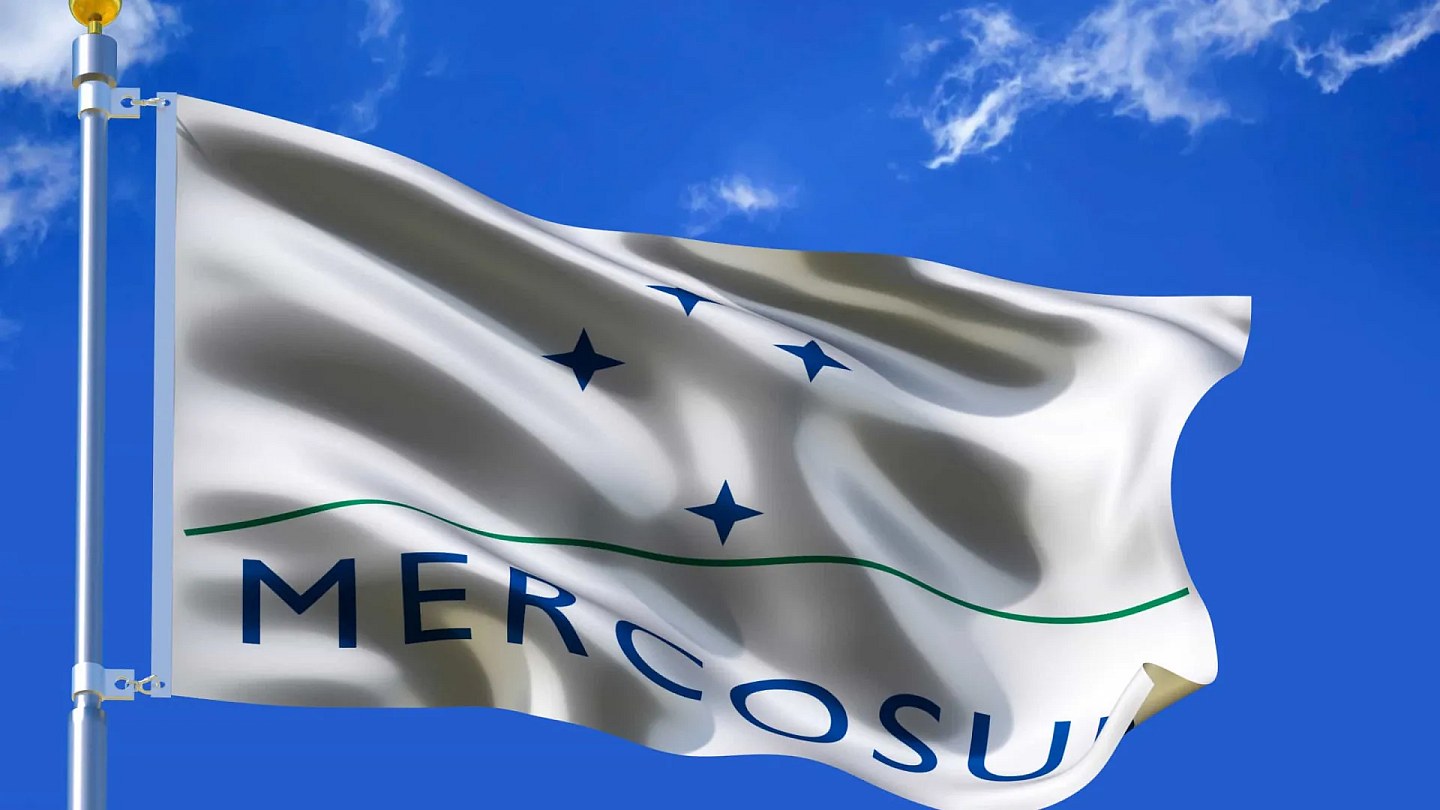
(FOLHAPRESS) - Brazilian exports to the European Union grew by US$2 billion (R$10 billion) in May and June, the first two months of the trade agreement between Mercosur and the European bloc that entered into force provisionally, according to a survey by ApexBrasil anticipated by Folha. The increase was 26% compared to the same period in 2025.
Exports from Brazil to the EU grow by US$ 2 billion after agreement with Mercosur comes into force
(FOLHAPRESS) - Brazilian exports to the European Union grew by US$2 billion (R$10 billion) in May and June, the first two months of the trade agreement between Mercosur and the European bloc that entered into force...
In the first half of the year, sales from Brazil to the EU totaled US$26.9 billion (R$137 billion), an increase of US$3 billion (R$15 billion), or 12.8%, compared to the same period in 2025.
The agency's president, Laudemir André Müller, avoids attributing this advance exclusively to the EU-Mercosur agreement, but states that there are "many signs" that the tariff reduction has already started to influence the trade flow between Brazil and European countries.
For him, it would be "too much of a coincidence" that US$2 billion of the US$3 billion growth recorded in the semester occurred precisely in the months of May and June.
The agreement began to be provisionally applied on May 1, with the immediate elimination or reduction of tariffs for thousands of products. For definitive validation, the agreement still needs to be approved by the European Court of Justice, as well as the European Parliament.
The expectation of the Brazilian government and the private sector is that trade liberalization will increase the competitiveness of exporters and encourage the diversification of partners in the face of a scenario of greater instability in international trade, caused by the Donald Trump government.
The new tariff imposed by the United States on Brazilian products reinforces, in ApexBrasil's assessment, the importance of expanding access to other markets. In the first half of the year, Brazilian exports to the USA totaled US$17.4 billion, a drop of 13% compared to the same period in 2025. The performance contrasts with the increase in exports to other relevant partners.
Müller states that the strategy adopted since the beginning of trade tensions was to encourage companies to diversify export destinations, with the European Union as one of the main focuses. According to him, the United States "continues to be important", but the geopolitical scenario requires reducing dependence on a single market and expanding Brazilian presence in Europe, Asia and India.
According to the president, 72% of the 2,400 companies monitored by ApexBrasil started exporting to at least one new market since the beginning of the commercial turbulence.
For Müller, the agreement reduces Brazil's historical disadvantage compared to competitors who already had tariff preferences with the European Union. "Without any agreement with Europe, you end up having a difficult time. [...] We become part of a different club", he states.
In addition to the higher value sold to the EU, Brazil's export list to the European bloc became more diverse at the end of the first half of the year. The list of items with the highest growth includes industrial goods, chemicals, steel and machinery, suggesting that the reduction in tariffs can benefit segments with higher added value, traditionally identified as potential winners of the agreement.
Comparing the first half of this year with the same period in 2025, the products that registered the greatest growth in exports to the European Union were honey, with an increase of 246.7%, turboreactor parts (+141.9%) and orange essential oil (+110.1%). Sales of mangoes (+36.5%), coffee extract (+36%) and parts for diesel engines (+19.1%) also increased.
A study prepared by ApexBrasil, obtained by Folha, mapped opportunities opened up by the agreement for the entire country. In a section that concentrates only the main potentialities, São Paulo has 127 commercial opportunities for the state's products to enter the European market, the second highest number in the country, behind only Santa Catarina, with 167.
The agency classifies as an "opportunity" a product that already has consolidated production and export in the state to an international market and that, with the reduction in tariffs provided for in the agreement, now has the potential to expand sales to the European bloc.
The survey also shows that São Paulo has the largest base of companies ever inserted in the European market, with around 4,000 exporters. Furthermore, most of the opportunities identified for the state are in the transformation industry: 96 are for industrial products and 31 for agribusiness.
According to ApexBrasil, the result reflects both the profile of the São Paulo economy and the design of the agreement, which provides for a faster tariff opening for industrial goods than for agricultural products.
For a product to be included in the survey, the state needed to export it to some market, even if not to the EU. According to the agency, the methodology was conservative to avoid suggesting opportunities in sectors that do not yet have consolidated production or export capacity.
Based on these criteria, the greatest potential for expanding sales to the EU is concentrated in the south of the country. Behind Santa Catarina, Paraná (76) and Rio Grande do Sul (74) appear. The three states are also among those with the largest number of companies that already export to the European bloc, indicating a production base that is more prepared to immediately take advantage of the reduction in tariffs.
In the Northeast, the scenario is more heterogeneous. Bahia, with 67 opportunities, Ceará (69) and Pernambuco (53) appear to have relevant potential, driven by specific industrial and agro-industrial sectors. Maranhão (13), Piauí (7) and Alagoas (13) register a significantly lower number of opportunities, reflecting a less diversified export list.
Brazilian ports expand capacity to export pre-salt oil, which breaks production records
The investment of R$180 million was approved in 2023, given the prospects for growth in pre-salt production. It is not the only one: the port of Açu and Petrobras itself have plans to expand their oil terminals.
Source: Noticias ao Minuto - Ultima Hora
This story was originally published by Noticias ao Minuto - Ultima Hora. Visit the original publication for further details.
Open original publication