The 2030 World Cup is right around the corner. After the sixth consecutive fall and the worst campaign since the 1990 World Cup in Italy, Brazilian football turns its attention to the next four years. And most importantly: who can get there?
Discover Brazil's options for the next World Cup; midfield is the focus
The 2030 World Cup is right around the corner. After the sixth consecutive fall and the worst campaign since the 1990 World Cup in Italy, Brazilian football turns its attention to the next four years. And most...
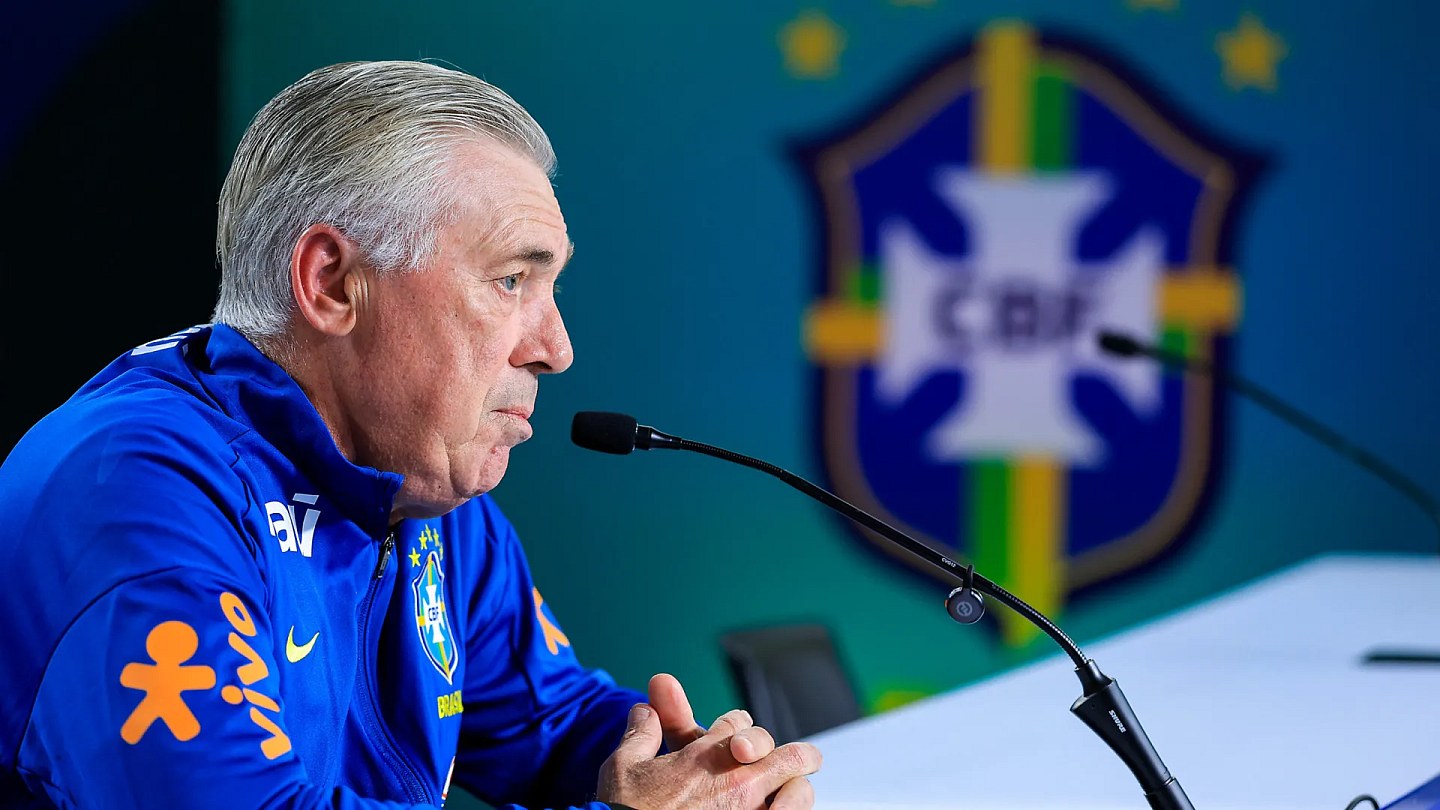
At the press conference he gave in the United States after the 2-1 defeat to Norway, coach Carlo Ancelotti admitted the need for renewal. Especially in midfield.
The sector was far from unanimous in the World Cup. Despite scoring a goal in the 2-1 victory over Japan, in Houston, in the round of 32, Casemiro was the target of complaints from fans during the tournament. At 34 years old, the midfielder will be 38 at the next World Cup. For this year's World Cup, the oldest outfield player among Ancelotti's squad was 35-year-old full-back Alex Sandro.
Casemiro's immediate replacement, Fabinho turns 33 in October. In other words, he will be close to 37 at the time of the 2030 World Cup. The only one of the names called by Ancelotti for midfield in the current World Cup who will be under 30 years old in the next edition is Danilo Santos, who will be 29. The midfielder, who would be the natural replacement for the injured midfielder Lucas Paquetá, was passed over for striker Gabriel Martinelli in the game against Norway.
"It's clear that, in midfield, I think you have to have quality, young players. We have young people in Brazilian football who could be in the national team in the future," said Ancelotti, last Sunday (5).
Midfield options
Among the names already called up by the Italian, the earliest is Andrey Santos, from Chelsea (England). Former Vasco, the 22-year-old player will be 26 in 2030 and was part of the World Cup pre-list.
Another young player is also the 24-year-old midfielder André, from Wolverhampton (England). Libertadores Champion with Fluminense, in 2023, he was a name mentioned at the beginning of the last cycle to be a starter in 2026, but he lost space amid his club's bad phase, relegated to the English second division.
The European club also has midfielder João Gomes, 25 years old, ex-Flamengo and another on the pre-list.
We also cannot forget Lucas Beraldo, from Paris Saint-Germain (France). Despite appearing as a defender at São Paulo, the 22-year-old has been used as a midfielder by coach Luís Enrique.
From the new generation that has not yet had a chance in the main Amarelinha, some names are already fundamental for their teams in the Brazilian Championship. These are the cases of 21-year-old midfielder Bruno Bidon, from Corinthians; also 24-year-old midfielder Martinelli, from Fluminense; and 21-year-old midfielder Gabriel Bontempo, from Santos.
Renovation on the sides
In addition to the midfield, the two sides received criticism throughout the 2026 cycle. Proof of this is that, after the cut of Wesley, who would be the starter on the right side in the World Cup, Ancelotti preferred to call Éderson, a midfielder, instead of another athlete in that position.
In the debut, against Morocco (1-1 draw, in New Jersey), the coach selected Ibañez, a defender. In the second half, Danilo came, who is not an absolute starter at Flamengo nor has he played on the wing, a position in which he played regularly until 2018, when he moved to defense at Manchester City (England).
Wesley, from Roma (Italy), should remain in the Brazilian team for the new cycle. The former Flamengo player turns 23 in September and is who Ancelotti was counting on to be a starter in the World Cup, as he would not have the injured Éder Militão, from Real Madrid (Spain). The coach's idea was to use Militão, with whom he has already worked, on the right flank. In 2030, the defender will be 32 years old.
Another one that the Italian coach called to the right side was Vanderson, from Monaco (France). The former Grêmio full-back, however, had to be removed from friendlies against South Korea and Japan, in October 2025, due to injury. He will be 29 years old in the next World Cup, one more than Vitinho, from Botafogo, who replaced him at the time.
Yan Couto, from Borussia Dortmund (Germany), also took Vanderson's place in the winger's previous cut, in 2023. Revealed at Coritiba, the 24-year-old player will be 28 at the 2030 World Cup. Arthur, from Bayer Leverkusen (Germany), is 23 years old and was called up by the then interim coach Ramon Menezes, in the first call-up of the cycle for 2026.
On the left, as Alex Sandro and Douglas Santos will be older (39 and 36, respectively) in the next World Cup, the renewal must be more radical. From the pre-list, the highlights are Kaiki Bruno, from Como (Italy), and Luciano Juba, from Bahia. The first, 23 years old, debuted for the Brazilian team in the friendly against Croatia, in March, and is three years younger than the second, 26 years old, who has not yet played for Brazil.
Cuiabano, on loan to Vasco from Nottingham Forest (England), is the same 23 years old as Kaiki Bruno. Abner Vinícius, from Lyon (France), has the same 26 as Luciano Juba. Souza, traded by Santos to Tottenham, is younger (20 years old), but still needs to establish himself in England.
Future of shirt 1
After two World Cups with the same trio of goalkeepers, the expectation is that Brazil will have new faces for 2030. If Weverton (38 years old) tends to give way to the new generation, Alisson (33) and Ederson (32), at least initially, should be part of the next lists. The Liverpool (England) goalkeeper is the most expensive player in the position among Brazilians, according to the specialized website Transfermarkt, valued at 15 million euros (around R$88.5 million).
Considered to be the third option for the Brazilian goal in 2026, Bento dropped in production in the final stretch of the cycle and was surpassed by Weverton. At 27 years old, the Al-Nassr (Saudi Arabia) goalkeeper, revealed at Athletico-PR, will be 31 in 2030 and should return to the Canarian national team in the future.
Another who could get a new opportunity is Hugo Souza, from Corinthians. The goalkeeper ? who is the same age as Bento ? divided opinions on his debut for Brazil, in the friendly against Japan, in October 2025.
Another 27-year-old, Carlos Miguel, from Palmeiras, has not yet received a chance with Amarelinha, but has the possibility of joining the new cycle.
Brazil's second most valuable goalkeeper in the eyes of the international market, Luiz Júnior, from Villarreal (Spain), played in the São Paulo Junior Football Cup for Mirassol, in 2019, but only made his professional debut in Portugal, at Paços de Ferreira. At 25 years old, he is regularly a starter for the Spanish team.
Luiz Júnior has the same age and market value ? 12 million euros (around R$ 70.8 million) ? as Gabriel Brazão, from Santos since the 2024 Series B, after the injury of then starter João Paulo. And it was in that competition, broadcast at the time on TV Brasil, that Pedro Morisco, from Coritiba, aged 22, also emerged.
What lies ahead
Brazil, for now, does not know what the qualification process for the World Cup will be like. Although Portugal, Spain and Morocco will be the hosts, three of the competition's games will be held in Argentina, Paraguay and Uruguay, one in each country. An ode to the centenary of the event, held for the first time in 1930, in Uruguayan territory.
With this, the three nations on the continent are guaranteed the next World Cup, as well as the original hosts. The South American Football Confederation (Conmebol) has not yet announced whether the format of the qualifiers will be the same, with the unclassified countries facing each other in two rounds and fighting for three direct places and one in the repechage ? or whether there will be new developments.
The first FIFA date (period for matches between national teams) after the World Cup will be between September 21st and October 6th. Brazil has two friendlies against Australia, both at the opponent's home ground. The first in the city of Townsville, on September 25, at the Queensland Country Bank Stadium. Four days later, the game will be at Suncorp Stadium in Brisbane.
Read Also: World Cup: Argentina suffers but beats Egypt 3-2
Source: Noticias ao Minuto - Ultima Hora
This story was originally published by Noticias ao Minuto - Ultima Hora. Visit the original publication for further details.
Open original publication