SÃO PAULO, SP (UOL/FOLHAPRESS) - Sources from the Spanish Ministry of the Interior reported, this Saturday morning (01), that the night in Ceuta passed without incident, that the entry of immigrants had completely ceased and that departures towards Morocco continued.
Around 69,500 migrants are returning to Morocco from Ceuta
SÃO PAULO, SP (UOL/FOLHAPRESS) - Sources from the Spanish Ministry of the Interior reported, this Saturday morning (01), that the night in Ceuta passed without incident, that the entry of immigrants had completely...
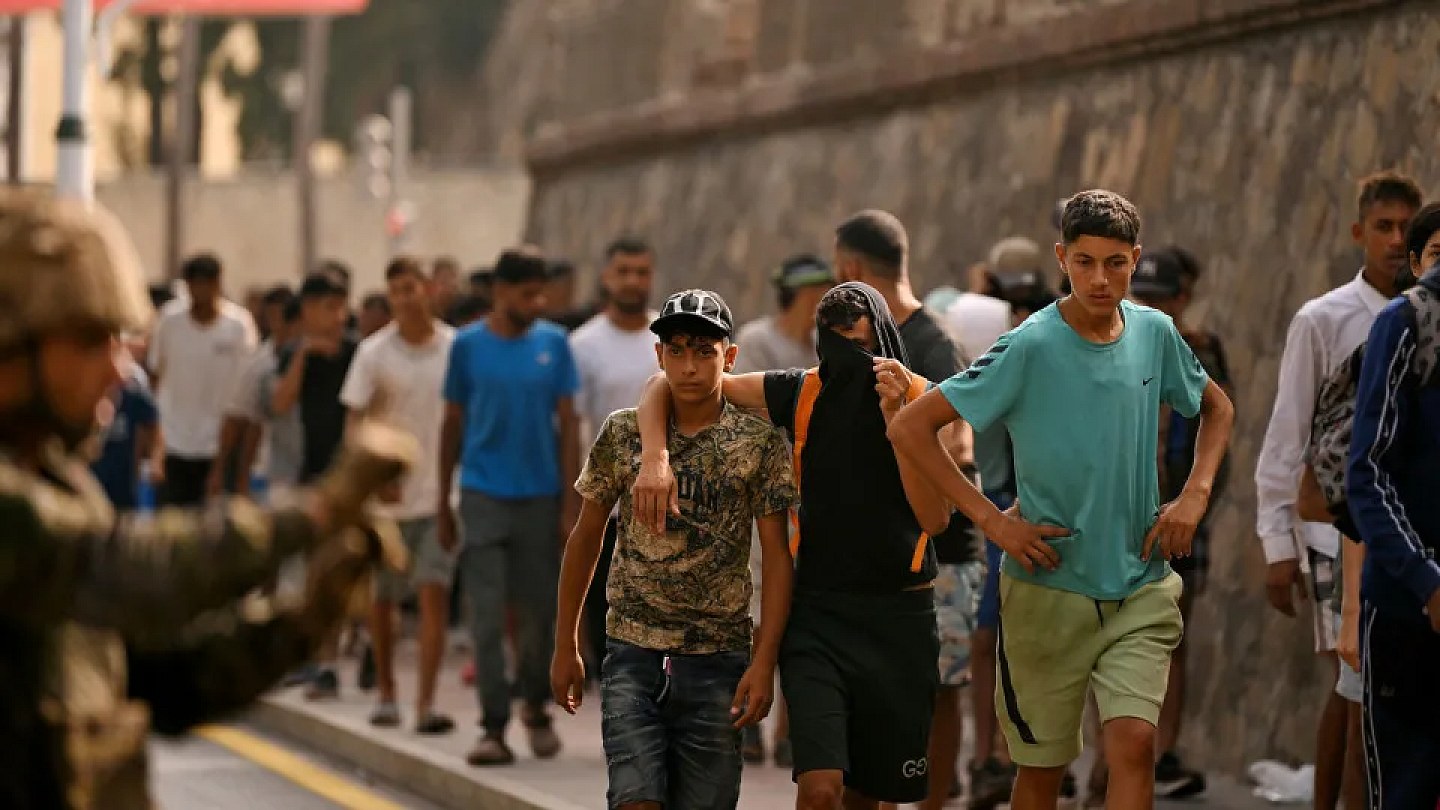
The State Security Forces estimate that around 69,500 migrants left Ceuta towards Morocco in the last 30 hours. According to police sources interviewed by the EFE agency, the number may include people who arrived in the autonomous city in the days before the mass entry and even migrants who, throughout this Friday (31), crossed the border more than once.
The Moroccan Interior Ministry stated that the return could reach around 150 people per minute, and many gave up after spending the night in the open and concluding that they would not be able to regularize the situation.
The number of bodies found on the coast of Ceuta rose to 67, according to data provided to the EFE agency by sources from the Government Delegation in the autonomous city. The Civil Guard continues to search the region for other victims.
The return was also due to reports of hostility and overcrowding in the city. The newspaper 'El País' reported that some of the migrants decided to return on their own after mistreatment by residents, who threw stones and made threats, or because 'there were too many people' in Ceuta.
Spain estimates that around 50,000 migrants entered Ceuta in one day. The Spanish government cited figures reported by agencies and newspapers, while the president of the territory, Juan Jesús Vivas, spoke of 60 thousand; the Department of National Security published 49 thousand, but deleted the publication, according to Reuters.
Crossings occurred mainly by sea, bypassing the land passage. Images showed people swimming from the Moroccan side, using buoys and other floating objects, and the Civil Guard said that the entry took place 'en masse from the sea' through the Tarajal breakwater.
The flow has already left dozens dead, and searches continue near the border. Spanish authorities reported deaths during the crossing, and teams of divers are working in the region to locate victims.
WHY CEUTA BECAME ROUTE AND WHAT MAKES THE PLACE SO SENSITIVE
Ceuta is an autonomous city in Spain in African territory and is part of the European Union. Along with Melilla, it is one of the only land borders between Europe and Africa, which makes the enclave a gateway for those trying to reach the European continent.
Morocco does not officially recognize Spanish sovereignty over Ceuta and Melilla. The Moroccan government tends to treat the two cities as occupied areas, and the region is described as a recurring focus of diplomatic tension.
The current crisis comes after Spain's Supreme Court ruling on immediate returns. On July 8, the court ruled that migrants arriving by sea cannot be returned immediately across the border, as is the case in some cases of land crossings; Pedro Sánchez said that 'human trafficking mafias' made a 'biased interpretation' of the decision.
The National Police union (Jupol) accused Moroccan authorities of 'absolute passivity'. In a statement, the entity said that the lack of action to contain departures towards Spanish territory overloads the National Police and causes the situation to repeat itself periodically.
IMPACT ON EUROPE AND REACTION FROM OTHER COUNTRIES
Italy suspended free movement with Spain and re-established controls. The Italian government announced the temporary closure of air and sea borders with Spain and ordered mandatory inspections for passengers arriving in Italy from Spanish territory.
The Italian government cited the Schengen Agreement to justify the measure. The treaty allows controls to be reestablished in situations considered a threat to public order or internal security, and Prime Minister Giorgia Meloni stated that the suspension seeks to 'safeguard national security'.
HOW IS CEUTA
Ceuta has around 18.5km² and just over 83 thousand inhabitants. The territory brings together Christian, Muslim, Jewish and Hindu communities, with churches, mosques, synagogues and Hindu temples spread throughout the city.
The Christian and Muslim communities are the largest and shape everyday life. Celebrations such as Holy Week, the end of Ramadan and Eid al-Adha are part of the local calendar, and the city also records Jewish and Hindu festivities such as Hanukkah and Diwali.
Source: Noticias ao Minuto
Next recommended read
This story was originally published by Noticias ao Minuto. Visit the original publication for further details.
Open original publication