The Australian Space Agency reported that it was able to identify the likely origin of the six metallic spheres found on the beach at Forrest Beach, in the state of Queensland, Australia.
Mystery of metallic spheres on Australian beach gets explanation
The Australian Space Agency reported that it was able to identify the likely origin of the six metallic spheres found on the beach at Forrest Beach, in the state of Queensland, Australia. According to the BBC, the alert...
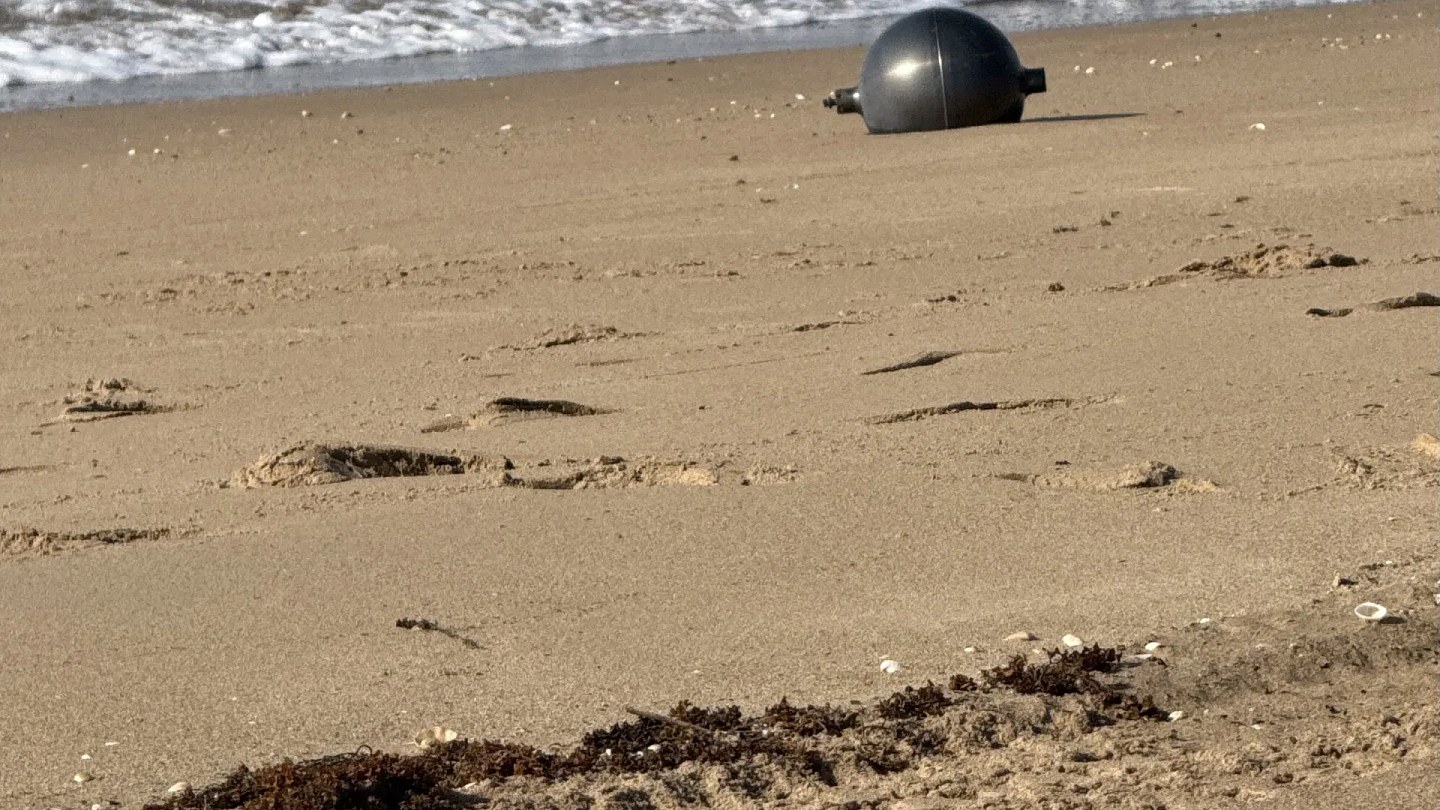
According to the BBC, the alert was issued on Sunday (5), after the objects appeared in the sand. Authorities cordoned off an area of ??50 meters around the spheres to prevent the public from approaching, as they were initially classified as “potentially dangerous objects”.
One of the first hypotheses was that the parts were fuel tanks used in rockets. Therefore, the security perimeter was adopted given the possibility of there still being residues of flammable or highly reactive substances.
On Monday (6), the Australian Space Agency stated that it had identified the “probable origin” of the objects.
“The location and characteristics of the objects are consistent with debris from a foreign rocket that recently re-entered the atmosphere from Earth orbit,” the agency said in a statement.
Millions of satellites threaten sky observation
A study released at the beginning of the month warns of the possible “devastating consequences for astronomy” of placing more than 1.7 million new satellites in Earth orbit. Among them are extremely brilliant equipment planned by private companies.
The research was led by an astronomer from the European Southern Observatory. According to the organization, the work is the first to calculate the extent of the impact of large constellations of bright satellites on astronomical observations.
The increase in these objects in orbit can make the night sky brighter and hinder the observation, through telescopes, of distant galaxies, planets outside the Solar System similar to Earth and potentially dangerous asteroids.
The European Southern Observatory, of which Portugal is a member, also highlights that light pollution caused by constellations of very bright satellites can affect the health and functioning of life on Earth, by interfering with biological clocks and ecosystems.
Another point of concern is the environmental impact. Large satellite constellations require numerous launches to be placed and maintained in orbit. Furthermore, the re-entry of this equipment into the atmosphere, at the end of its useful life, can generate pollution.
Currently, there are more than 14,000 active satellites orbiting the Earth. The number rises to 32 thousand when inactive satellites or remains of this equipment are included.
The study, signed by Belgian astronomer Olivier Hainaut, states that SpaceX, Elon Musk's company, intends to launch 1 million new satellites intended to serve data centers in space. According to the researcher, this expansion could significantly change the appearance of the sky.
According to Hainaut's calculations, hundreds and, at times, thousands of these satellites can be seen in the night sky, in a quantity similar to the number of stars visible to the naked eye under good observation conditions.
Another company mentioned in the study, the North American Reflect Orbital, intends to launch 50 thousand satellites by 2035. The equipment was designed to reflect the Sun's light towards the Earth at night, with beams capable of reaching at least five kilometers from the surface.
Hainaut estimates that, when complete, this constellation will be the brightest ever placed in orbit and will make hundreds of very luminous satellites visible to the naked eye.
Seen from the reflected beam of light, each satellite could be four times brighter than the full Moon. Even when not pointing directly at a telescope, the satellites may have a brightness similar to that of Venus.
The study, which will be published in the scientific journal Astronomy & Astrophysics, points out that, in a city with light pollution like Munich, Germany, hundreds of these satellites could become the only “stars” visible in the night sky.
Overall, the night sky would be three to four times brighter with Reflect Orbital's complete constellation of 50,000 satellites.
"Satellites illuminated by the Sun are much brighter than distant galaxies. When a satellite passes through what we observe, it leaves a bright streak in the image, altering what is behind it," said Hainaut.
To measure the impact of these constellations on astronomical observations, the researcher simulated positions, movements and brightness of current and future satellites, based on observations made by the VLT telescopes, at the European Southern Observatory, and Vera C. Rubin, both in Chile.
According to the author, to preserve the observation of the night sky with modern telescopes, Earth's orbit should not have more than 100,000 satellites with low luminosity, below the limit of visibility with the naked eye.
NASA is considering sending a Martian rover to the Moon
The agency announced the hiring of four new private robotic missions to the lunar surface and said it was studying sending a replica of the Curiosity and Perseverance rovers to the moon's south pole, but avoided setting deadlines for the next steps.
Source: Noticias ao Minuto - Tech
This story was originally published by Noticias ao Minuto - Tech. Visit the original publication for further details.
Open original publication

