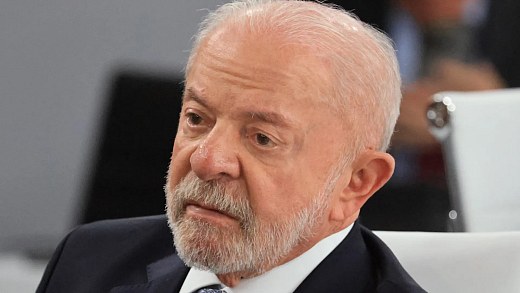
SÃO PAULO, SP (FOLHAPRESS) - The assessment of President Lula's (PT) government remained stable in the most recent Datafolha survey, despite Donald Trump's new tariff. 38% of those interviewed consider the management to be bad or terrible, while 32% see it as excellent or good. Another 28% classify it as regular.
Lula's rating remains stable after Trump's tariff, shows Datafolha
SÃO PAULO, SP (FOLHAPRESS) - The assessment of President Lula's (PT) government remained stable in the most recent Datafolha survey, despite Donald Trump's new tariff. 38% of those interviewed consider the management to...

Researchers interviewed 2,004 people over the age of 16 in 139 cities from Wednesday (22) to Thursday (23). The margin of error is two percentage points, and the survey is registered under code BR-01166-2026.
The data repeats the results of the previous rounds, in May and June, and does not reflect the impact of the government's main clash in the recent period: the new round of American surcharges on products imported from Brazil.
This measure was announced on the 15th due to an American investigation into Brazilian commercial practices and received a reinforcement of surcharges due to accusations of work similar to slavery on Wednesday (22).
At the time of the first tariff, associated with the Trump administration's intention to influence the Federal Supreme Court not to convict former president Jair Bolsonaro for an attempted coup in 2025, Lula had reaped the rewards of the nationalist campaign he launched.
From July to September last year, it went from 29% to 33% of excellent and good, a level that has remained stable until today. In the measurement that July, however, Lula had not yet registered an improvement in levels, which came later.
It remains to be seen, therefore, whether the use of the new tariff in the electoral campaign against Bolsonaro's firstborn, his rival Flávio (PL), will have any effect now.
The government's approval rating also remained stable, rising from 48% to 49% from June to now. Disapproval fluctuated in the opposite direction, from 49% to 48%.
Throughout his third term, which began in 2023, Lula only had one major variation in his evaluation indices, when he saw his excellent/good drop from 35% to 24% between December 2024 and February 2025, reaching the worst level of all his governments that began in 2003.
At that point, there were multiple crises, the most striking being the confusion surrounding the taxation of Pix transactions. Interestingly, the instant payment system is at the heart of the American complaint now, which sees it as damaging to US credit card companies.
The Lula government is most disliked in the main groups of the sample among men (43% bad/terrible), residents of the South (46%), people with higher education (48%) and evangelicals (51%), data that is consistent with the record of their voting intentions in these groups.
Catholics (38%), the poorest (39%), those over 60 years old (42%), those from the Northeast (45%) and the least educated (46%) already evaluate it positively as above average, rates that also follow the line of electoral preference.
Datafolha also found out which topics most concern Brazilians, with results similar to those of the previous survey.
Health is ahead with 21%, followed by public safety, with 19% and the economy, with 14%. Further down are corruption (9%), education (8%) and unemployment (5%), as well as other items.
Read Also: Crises, disputes and reconciliations: conflicts between Michelle and Bolsonaro's children
Source: Noticias ao Minuto - Politica
This story was originally published by Noticias ao Minuto - Politica. Visit the original publication for further details.
Open original publication