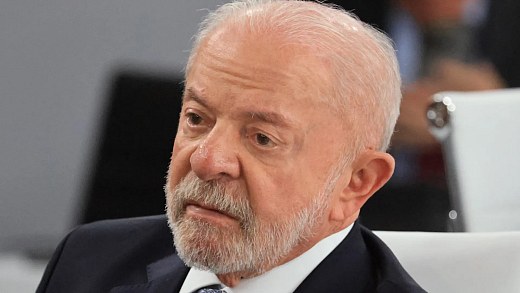
SÃO PAULO, SP (FOLHAPRESS) - New Datafolha research on the race for Planalto shows President Lula (PT) with 48% of voting intentions in the second round against Flávio Bolsonaro (PL), who has 43%. The scenario is stable compared to June, showing a low impact on voting intentions from the political crisis of the senator's campaign for Rio.
Lula has 48%, and Flávio Bolsonaro, 43% in the second round, according to Datafolha
SÃO PAULO, SP (FOLHAPRESS) - New Datafolha research on the race for Planalto shows President Lula (PT) with 48% of voting intentions in the second round against Flávio Bolsonaro (PL), who has 43%. The scenario is stable...
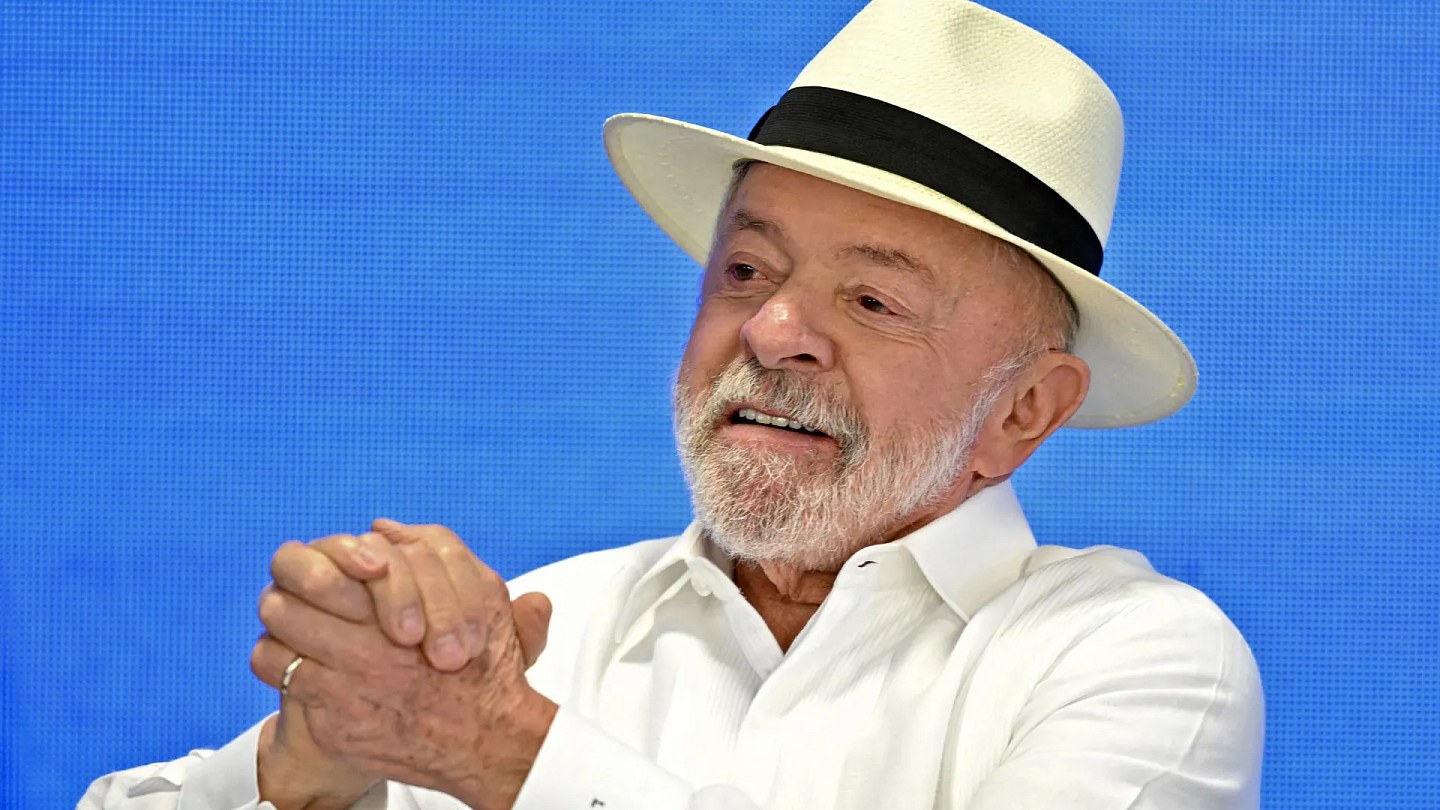
In the first round, the PT member scored 40%, compared to 32% for the first-born of the former president arrested for coup d'état Jair Bolsonaro. Although similar to what was measured in the previous round, direct comparison is not possible because the form with the names of pre-candidates changed, reaching 12 names. The bullshit is comparable.
In valid votes, a method of counting on election day that excludes blanks and null votes, Lula has 45% and Flávio, 36%. It takes 50% plus one vote to win, but the data needs to be read with caution, as the 8% of null/blank/no one indicated now tends to fall close to the election.
The distant lower group in the first round dispute is all tangled up with a margin of error of plus or minus two points and includes Ronaldo Caiado (PSD, 4% of total votes), Romeu Zema (Novo, 3%), Renan Santos (Missão, 3%), Augusto Cury (Avante, 2%), Samara Martins (UP, 1%), Cabo Daciolo (Mobiliza, 1%) and Rui Costa Pimenta (PCO, 1%).
Heitor Dias (PSTU), Edmilson Costa (PCB) and Leonardo Avalanche (PRTB) do not score. 3% say they are undecided. The institute interviewed 2,004 voters in 139 municipalities from Wednesday (22) to this Thursday (23). The survey is registered with code BR-01166/2026 at the Superior Electoral Court.
The consolidation of Flávio's name as Lula's main rival is also seen when the interviewee is asked about his favorite name spontaneously. The senator is remembered by 17% of those interviewed, compared to 30% who mention the president.
The bad news for the PL pre-candidate, who will have his candidacy confirmed at a convention this Saturday (25), is that this scenario has been stable since May.
In addition to continuing ahead in the first round, Lula would today defeat other rivals tested by Datafolha for second round clashes. Caiado would win by 47% to 40%, and Zema by 48% to 40%. The picture shows stability in relation to June.
The rejection scenario also remains the same, with 48% of voters saying they would not vote in any way for Flávio and 46% for Lula. All other candidates have lower levels, from 13% and below.
The new research measured the impact of a new crisis on Flávio's campaign, which had just stopped the initial effect of the revelation of his close relationships with the former owner of Banco Master, Daniel Vorcaro.
The senator saw his numerical advantage over Lula reverse, and the PT member gained some momentum. The case still promises new chapters, with the opening of the investigation into the money that Vorcaro gave to finance the hagiographic film about Bolsonaro, "Dark Horse".
Furthermore, the new problem emerged. A month ago, former first lady Michelle Bolsonaro released a video in which she harshly complained about her stepson, whom she accused of having treated her badly and considering her dispensable. She left the leadership of PL Mulher and put her candidacy for senator for the Federal District in check.
Initially, Flávio's reaction was to say that he did not treat women badly, a tactical error, as he reaffirmed the accusation before an electorate that is largely unfavorable to him. According to Datafolha, 50% of women, who make up 52% ??of the sample, prefer Lula in a second round, compared to 40% who declare their vote for the senator.
It didn't work, and Michelle demanded a retraction, which finally came on Thursday (23). She responded with a video accepting the apology, but the practical effect on the campaign is uncertain at this point. The isolation caused by the sum of episodes made the assembly of Flávio's ticket troubled, with potential allies refusing to join him.
Furthermore, the period between polls saw the return of Donald Trump's tariffs against Brazil, a practice associated with the Bolsonaro clan. In the first edition of the punitive measures last year, the family actively worked for them, believing that this would pressure the Supreme Court not to convict the former president.
It didn't work, and Lula still profited from it, betting on a campaign for national sovereignty that is now being reissued as an election theme. The senator even tried to take a stance against the tariff, but claiming that it would favor his rival.
The researchers took to the streets the day after Flávio's speech to foreign diplomats in which he disseminated false information about electronic voting machines, emulating the practice that rendered his father ineligible before he was even arrested.
From the point of view of the electorate's profile, there were no significant changes in the major socioeconomic groups in relation to previous surveys, even without direct comparison.
Northeasterners (55% of this 28% of the population), less educated (51% of the group, which totals 30% of the sample), the poorest (47% of 50% of those interviewed) and Catholics (46% of these 49% of Brazilians) continue to prefer the PT member in the first round.
Flávio, on the other hand, performs better in the middle class, which earns 2 to 5 minimum wages (38% among these 34% of Brazilians), southerners (41% of the group, which adds up to 15% of the sample) and evangelicals (47% among the 25% who declare themselves as such).
Read Also: Crises, disputes and reconciliations: conflicts between Michelle and Bolsonaro's children
Source: Noticias ao Minuto - Politica
This story was originally published by Noticias ao Minuto - Politica. Visit the original publication for further details.
Open original publication