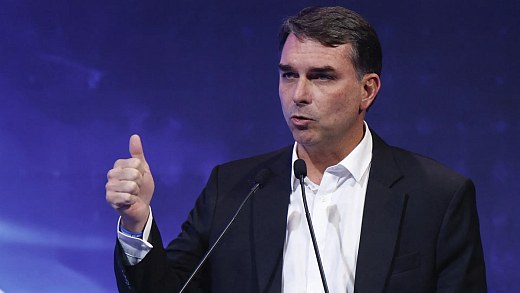
President Luiz Inácio Lula da Silva (PT) and senator Flávio Bolsonaro (PL-RJ) appear technically tied in a possible second round of the presidential election, according to research by Futura Intelligence, in partnership with Apex, released this Tuesday (14). The PT member has 46.3% of voting intentions, against 46.1% for the opponent.
Lula and Flávio Bolsonaro tie in 2nd round simulation, according to Futura/Apex research
President Luiz Inácio Lula da Silva (PT) and senator Flávio Bolsonaro (PL-RJ) appear technically tied in a possible second round of the presidential election, according to research by Futura Intelligence, in partnership...


The survey, registered with the Superior Electoral Court (TSE) under code BR-07294/2026, interviewed 2 thousand voters by telephone between the 7th and 11th of July. The margin of error is 2.2 percentage points, plus or minus, with a 95% confidence level.
Lula also appears technically tied with former first lady Michelle Bolsonaro. In this scenario, the president registers 46.1% of voting intentions, while Michelle has 44.3%.
All other right-wing names tested would lose to Lula in a possible second round, even considering the margin of error.
In the simulations, Lula appears with 45.1% against 38.9% for former governor of Goiás Ronaldo Caiado (PSD). In another scenario, the PT member has 46%, compared to 38.1% for former governor of Minas Gerais Romeu Zema (Novo).
In the confrontation with Renan Santos, from the Missão party, Lula recorded 46.4%, against 33.1% for the founder of Movimento Brasil Livre (MBL).
First round
The president also numerically leads the first round simulations.
In the first scenario tested, with Flávio Bolsonaro, Ronaldo Caiado, Romeu Zema, Renan Santos, the former minister of the Federal Supreme Court Joaquim Barbosa (DC), the psychiatrist Augusto Cury (Avante) and the former deputy Cabo Daciolo (Mobiliza), Lula appears with 40.1%, against 36.8% for Jair Bolsonaro's son. The two are technically tied within the margin of error.
Scenario 1:
Lula: 40.1%
Flávio Bolsonaro: 36.8%
Ronaldo Caiado: 5.0%
Romeu Zema: 3.7%
Renan Santos: 2.6%
Joaquim Barbosa: 1.4%
Augusto Cury: 1.1%
Cabo Daciolo: 0.7%
Nobody, white or null: 5.1%
Don't know, didn't answer or are undecided: 3.6%
In a second scenario, with just Lula, Flávio Bolsonaro, Caiado, Zema and Renan Santos, the PT member appears with 37.8% of voting intentions, also technically tied with the senator, who registers 35.7%.
Scenario 2:
Lula: 37.8%
Flávio Bolsonaro: 35.7%
Ronaldo Caiado: 7.9%
Romeu Zema: 5.0%
Renan Santos: 3.4%
Nobody, white or null: 7.3%
Don't know, didn't answer or are undecided: 2.9%
In the third simulation, without Flávio Bolsonaro, Lula leads with 42.1% of voting intentions. Combined, opponents reach 36.5%.
Scenario 3:
Lula: 42.1%
Ronaldo Caiado: 16.5%
Romeu Zema: 14.0%
Renan Santos: 6.0%
Nobody, white or null: 16.4%
Don't know, didn't answer or are undecided: 5.0%
In the last scenario tested, with Lula, Flávio Bolsonaro, Zema and Renan Santos, the president leads with 42.6%, while the PL senator registers 38.6%. The two appear technically tied, almost at the limit of the margin of error.
Scenario 4:
Lula: 42.6%
Flávio Bolsonaro: 38.6%
Romeo Zema: 6.2%
Renan Santos: 3.9%
Nobody, white or null: 6.3%
Don't know, didn't answer or are undecided: 2.4%
Rejection
Lula records the highest rejection among the names tested, with 47.6%, but is technically tied with Flávio Bolsonaro, who totals 45.4%.
Next comes Michelle Bolsonaro, with 32.2%; Romeu Zema, with 15.3%; Cabo Daciolo, with 14.7%; Ronaldo Caiado, with 13.3%; Renan Santos, with 12.3%; Joaquim Barbosa, with 10.5%; and Augusto Cury, with 9.6%.
Flávio's campaign calculates losses with banning visits and sees impact on strategies
Flávio Bolsonaro's pre-campaign will appeal to the STF against the ban on contact with Jair Bolsonaro. Allies claim that the measure interferes in the election and harms the definition of strategies, while opponents see an attempt at political victimization
Source:
Noticias ao Minuto - Politica