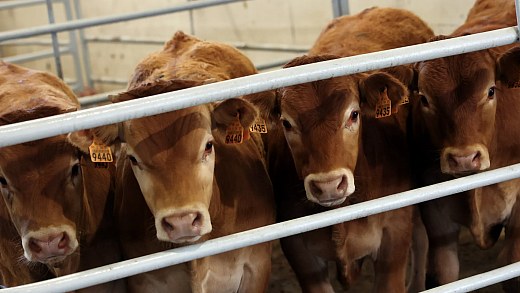
Since Trump took office for the second term, he has threatened different countries with taxation CNP/AdMedia/picture alliance via DW Brazil will have the highest tariff applied by the United States among South American countries from July 22nd, when the new taxes imposed by Donald Trump last Wednesday (15th) come into force. The data comes from Global Trade Alert (GTA), an initiative by the St. Gallen Endowment, an independent study center based in Switzerland, which compiles global trade statistics. Currently, Brazil is tied with Uruguay, with an average effective tariff of 11.66%, behind only Paraguay, with 12.92%. When the new tariff comes into effect, Brazil's import tariff will rise to 18.17%, according to the GTA, while its neighbors — at least for now — will continue with much lower rates. This percentage calculated by the GTA differs from the 25% rate announced by Trump because it considers the weight of each product in the export basket and the exceptions provided for in the new rules. Average tariff applied by the US after July 22 in South America DW But why did Brazil become one of the main targets of American tariff policy in the region? According to experts, the answer crosses at least four dimensions: political, economic, strategic and diplomatic. Ideological misalignment For Carlos Pio, former executive secretary of the Foreign Trade Chamber of the Ministry of Economy and professor at the University of Brasília (UnB), the tariff against Brazil reflects a broader change in Trump's trade doctrine: from free market logic to a nationalist vision, which prioritizes protecting industrial sectors affected by deindustrialization, in addition to favoring political alliances to the detriment of traditional diplomatic protocols. "It's a political action, but that doesn't mean it's not an action that has a commercial purpose", he ponders. According to Pio, Brazil becomes a preferred target not only because of its relatively closed economy and resistance to liberalization, but because of an ideological misalignment combined with the personal proximity that the Bolsonaro government cultivated with Trump. "It's not with the White House or the American government. It's with Trump", he summarizes. This logic, says the professor, also appears on other fronts of the global right initially supported by Trump — such as Marine Le Pen, in France, and the "frustrated expectations with [Giorgia] Meloni", in Italy, after she adopted more liberal positions. "As the PF [Federal Police] and the Supreme Court [Federal Court] were all over Bolsonaro, it reinforces this other side of: to my friends, everything." The comparison with Javier Milei's Argentina, according to Pio, reinforces the argument. "Argentina is also protectionist like Brazil, but Milei is in a different position than Lula in relation to politics." Proximity to China Jan Marcel, professor of International Relations at the Federal University of Rio Grande do Norte (UFRN), adds that Brazil is the largest economy in Latin America and has greater commercial relevance for the United States than its neighbors, which includes products with greater added value, such as aircraft, machinery, oil, steel and chemical products. Lula and Xi Jinping in Beijing, in May 2025 Florence Lo/AP/picture allaince via DW There is still a dispute between the United States and China for global influence on the board. As Brazil maintains a strong economic relationship with China and, at the same time, continues to be a relevant partner of the USA, "it ends up being at the center of this competition", says Marcel, which turns the tariff into an instrument of pressure on issues that go far beyond bilateral trade. Instrument of political pressure Celso Figueiredo, a lawyer specializing in international trade and professor of Government Relations at Fundação Getúlio Vargas (FGV), says that Trump's trade tariffs stopped being mere economic tools and became instruments of political pressure and tax revenue, under the America First doctrine: more competitiveness for American products, and more revenue for the government too. In the Brazilian case, however, Figueiredo sees "extra components". "When we look at the note published at the beginning of June by the Office of the United States Trade Representative (USTR), and this Wednesday's decision, the objective technical background of this decision ends up being shallow, which leads us to believe that, in fact, this decision-making has a more political aspect", says the lawyer. Beef is not included in the new 25% tariff Eraldo Peres/AP Photo/picture alliance via DW The expert recalls that the current level of taxation against Brazil being above its peers in the region may also not be definitive. According to him, there is even an ongoing investigation against 60 countries (including Brazil), aimed at finding out whether they gained a competitive advantage with items produced through forced labor, which demonstrates, according to the lawyer, that the instrument will continue to be used for other nations as well. This shows, according to the expert, that the United States closely monitors any sign that threatens the country's hegemony, as well as that of the dollar in international transactions — such as the idea, discussed within the Brics, of its own currency for the bloc of 11 countries that includes Brazil, Russia, India, China and South Africa. Is an escalation likely? In a note released after the US announcement, the Brazilian federal government classified the date as "a regrettable milestone" in relations between Brazil and the United States. For the Brazilian executive, there is no justification for unilateral measures against Brazil and that the trade balance is favorable to the USA. A White House source cited by the newspaper O Globo signaled that any Brazilian retaliation would force the United States to "potentially modify" its action to "guarantee the elimination of these practices." “If they choose to do so, there will probably be more action on our side.” Still, an escalation scenario is not the most likely, in Figueiredo's view. The Law of Re
Why Brazil will have the highest average tariff in the United States in South America
Since Trump took office for the second term, he has threatened different countries with taxation CNP/AdMedia/picture alliance via DW Brazil will have the highest tariff applied by the United States among South American...

Source: G1 Economia
This story was originally published by G1 Economia. Visit the original publication for further details.
Open original publication