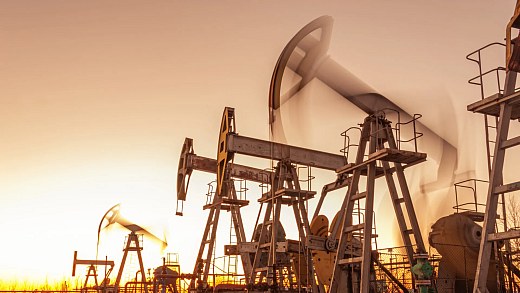
Guga: US toll proposal in Hormuz is illegal, disastrous and opens a breach for Iran Oil prices rose this Tuesday (14) and reached their highest level in around four weeks, after tension between the United States and Iran increased again. The market fears that the conflict will harm oil transport through the Strait of Hormuz, one of the world's main energy routes. ??Do you have any reporting suggestions? Send to g1 At around 7:50 am (Brasília time), a barrel of Brent oil, an international reference, rose 4.48%, to US$ 87.03. WTI, a reference in the USA, advanced 3.46%, to US$ 80.84. As a result, Brent reached its highest level since June 12, while WTI reached its highest level since June 16, before the US and Iran signed, on June 17, a memorandum of understanding to end the conflict. On Monday (13), prices rose almost 10% following the escalation of tensions in the Middle East. The increase in oil prices comes after President Donald Trump's government reestablished a naval blockade of Iran and intensified military attacks against the country, despite a memorandum of understanding signed in June that provided for an end to hostilities. According to analysts, the market has started to incorporate the risk that the agreement between the two countries will not be sustainable. Why is oil rising? The main reason is the fear of interruptions in oil transport through the Strait of Hormuz, a sea passage between the Persian Gulf and the Gulf of Oman. Before the conflict, around 20% of all oil and liquefied natural gas sold in the world passed through this route. In recent days, the region has once again recorded episodes that have increased investor concern: the US has resumed blocking Iranian shipping; the American government proposed charging a 20% fee to protect vessels crossing the strait; two UAE tankers were hit by Iranian missiles, leaving one crew member dead and eight injured; the number of oil tankers crossing the Strait of Hormuz has fallen to its lowest level in two months. In the opinion of ANZ analysts, if the interruptions continue, oil could remain between US$85 and US$90 per barrel in the coming weeks. When oil prices rise, fuel and transportation costs increase in many countries. This can make products and services more expensive, putting pressure on inflation. In the US, this concern gained strength precisely on the day that investors await the release of inflation data for June. The fear is that a new rise in energy prices will make it difficult for the Federal Reserve (Fed), the American central bank, to control prices. Furthermore, recent statements by Fed officials reinforced the possibility of interest rates remaining high — or even rising again — if inflation continues above the target. Asian stocks rise; US futures operate without a single direction The rise in oil prices also influenced the performance of financial markets this Tuesday. In Asia, stock markets closed mostly higher. In China, the Shanghai index advanced 1.36%, while the CSI300, which brings together the largest companies in Shanghai and Shenzhen, rose 2.15%. In Hong Kong, the Hang Seng index gained 0.52%. In Japan, the Nikkei index closed up 0.74%, while the Kospi, from South Korea, advanced 0.73%. In Singapore, the Straits Times rose 0.43%. In Taiwan, Taiex fell 1.42%, and the Australian stock exchange ended the session practically stable. In China, investors' good mood was also boosted by the 27% increase in exports in June, in the annual comparison in dollars, favored by strong global demand for chips and equipment focused on artificial intelligence. Shares in the energy sector stood out, following the rise in oil prices. In Europe, the mood was cautious. In London, the FTSE 100 index fell 0.3%, while the FTSE 250 fell 0.7%. The losses were mainly driven by shares in the financial and travel sectors, which offset the gains of energy companies, benefiting from the rise in oil prices. Shares in oil company BP rose after the UK-based company said rising oil prices and better performance from its refineries should boost second-quarter profit. In the foreign exchange market, the dollar remained close to the highs in 13 months with the expectation that the rise in oil prices will once again put pressure on inflation in the US and keep interest rates high: the euro rose 0.2%, to US$ 1.1399, the pound sterling advanced 0.2%, to US$ 1.337. The Japanese yen was trading at 162.27 per dollar, near its lowest level in about 40 years. On Wall Street, futures contracts on exchanges operated without a single direction. Dow Jones futures fell around 0.2%, S&P 500 futures were close to stability and Nasdaq futures advanced around 0.5%. *With information from Reuters Oil, dollar, war in the Middle East, oil crisis, Iran Reuters
Oil rises to highest level in a month after tension in Strait of Hormuz
Guga: US toll proposal in Hormuz is illegal, disastrous and opens a breach for Iran Oil prices rose this Tuesday (14) and reached their highest level in around four weeks, after tension between the United States and...

Source:
G1 Economia