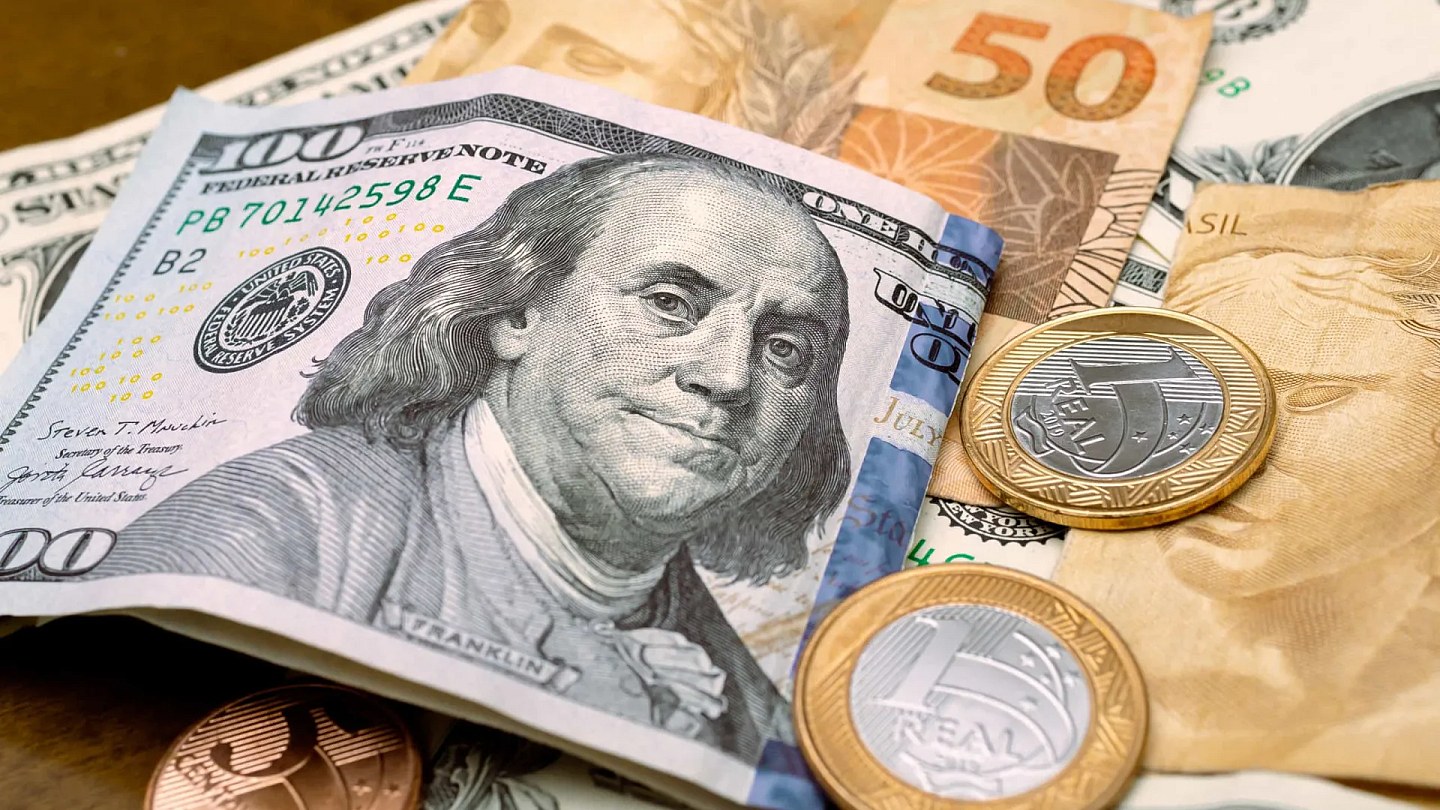
The dollar fell again and closed below R$5.09, with the real favored by high interest rates and the appreciation of oil. The stock exchange recorded its fourth consecutive drop, pressured by losses from mining companies.
Dollar falls to R$5.08, and stock market falls for the fourth time in a row
The dollar fell again and closed below R$5.09, with the real favored by high interest rates and the appreciation of oil. The stock exchange recorded its fourth consecutive drop, pressured by losses from mining...
At the beginning of the day, the market reacted to signs of a possible reduction in tensions in the Middle East, but new statements from American President Donald Trump kept investors cautious.
Main numbers:
Spot dollar: -0.42%, at R$5.089;
Ibovespa: -0.20%, at 173,371.35 points;
Brent oil: +1.27%, at US$89.22 per barrel;
WTI oil: +0.85%, at US$82.48 per barrel.
Exchange
The commercial dollar fell 0.42%, ending the session at R$5.089. In July, the currency fell 1.42% against the real. In 2026, the devaluation reaches 7.28%.
The movement followed the devaluation of the US currency in relation to currencies from emerging countries, even with the dollar rising against currencies from advanced economies.
The currency operated above R$5.11 at opening, but began to retreat after confirmation that international mediators presented proposals to reduce tensions between the United States and Iran, reducing global demand for assets considered safer.
In the domestic scenario, the high interest rate difference between Brazil and the United States continued to support carry trade operations, a strategy in which investors raise funds in low-interest countries to invest in markets with higher rates.
Another factor supporting the real was the appreciation of oil, which improves the outlook for the entry of dollars into the country through exports. The Brazilian trade balance recorded a surplus of US$526.3 million in the third week of July, with exports growing 6.7% in the month, driven by the extractive industry.
Scholarship
The Ibovespa ended the session down 0.20%, at 173,371.35 points, accumulating the fourth consecutive session of losses.
The index reached over 174 thousand points in the morning, driven by the expectation of resumption of negotiations between the United States and Iran. However, it lost strength throughout the afternoon after Trump toughened his speech against Tehran, once again increasing caution in the markets.
The rise in Petrobras shares, favored by the advance in oil, was not enough to offset the fall in mining company shares.
Oil
International oil contracts closed higher after fluctuations throughout the day, reflecting doubts about the evolution of the conflict in the Middle East.
Brent, a reference for Petrobras, advanced 1.27%, to US$89.22 a barrel, after briefly surpassing US$91 during the session. Texas' WTI barrel rose 0.85%, ending the day at US$82.48 per barrel.
Prices lost some of their gains after the Iranian government confirmed that it had received proposals from mediators to reduce tensions with Washington. However, the commodity rose again after Donald Trump promised to respond more intensely to new attacks on American military personnel.
Restrictions on maritime traffic in the Strait of Hormuz region and new threats by the Houthis to block routes in the Red Sea also remained on the market's radar, factors that continue to fuel concerns about global oil supply.
*With information from Reuters
Read Also: Property auctions in 20 states have options for R$27,000 and an 89% discount
Source: Noticias ao Minuto - Economia
This story was originally published by Noticias ao Minuto - Economia. Visit the original publication for further details.
Open original publication
