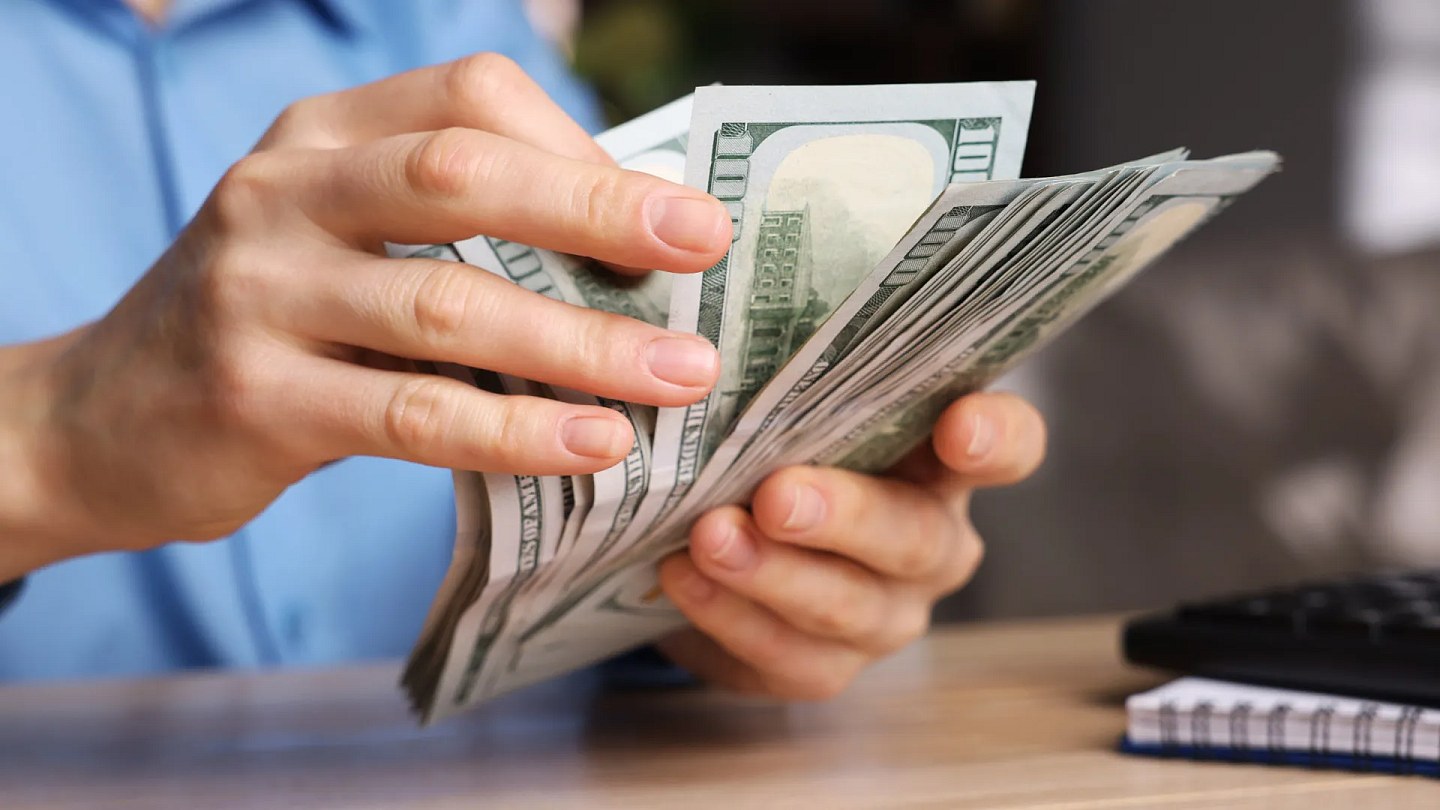
SÃO PAULO, SP (FOLHAPRESS) - The dollar closed up 0.39% this Tuesday (7), quoted at R$5.152, with investors paying attention to tensions in the Middle East.
Dollar closes higher and Stock Exchange falls, with tensions in the Middle East and investments in AI on the radar
SÃO PAULO, SP (FOLHAPRESS) - The dollar closed up 0.39% this Tuesday (7), quoted at R$5.152, with investors paying attention to tensions in the Middle East. The United States revoked the general license that authorized...
The United States revoked the general license that authorized the sale of Iranian oil after attacks on tankers in the Strait of Hormuz. There was no immediate comment from Tehran, nor any claim of responsibility for the attacked ships.
Oil prices rose more than 5% after the announcement, with Brent, the international benchmark, trading at US$75 in the late afternoon. The scenario inspired risk aversion and fears of a resumption of military tensions - US President Donald Trump threatened Iran again on Monday.
The currency then strengthened globally. The DXY index, which compares the dollar to a basket of six hard currencies, rose 0.2% to 101.05 points.
Concerns about the global technology sector and discussions in the US about tariffs on Brazilian products were also on the radar, putting pressure on the Brazilian Stock Exchange. The Ibovespa closed down 0.24%, at 172,020 points, with the steady advance of oil companies reducing further losses.
The revocation of the marketing license was confirmed by a US official, speaking on condition of anonymity. She stated that Iran's alleged actions in Hormuz were unacceptable and would have consequences.
On the other hand, the authority reinforced that negotiators continue working to reach a final agreement with Iran, despite the recent escalation of tensions.
The US measure was taken after three oil tankers reported being hit by unknown projectiles in and around the Strait of Hormuz in recent days, the UKMTO agency, linked to the British Navy, said in a report. Tehran did not comment, nor did it claim responsibility for the attacks.
On Monday, Trump also stated that the United States will reach an agreement with Iran or "finish the job." The new military threat to Tehran comes amid the funeral processions for Ali Khamenei, supreme leader killed at the start of the conflict in the Middle East.
"Either we're going to come to an agreement or we're going to get the job done. And it's not going to be difficult to get the job done. I'd rather get a deal, because I don't want to affect 91 million people," Trump told reporters in the Oval Office.
"We can tear down their bridges in an hour, we can cut off their power supply... They don't have any money now. We haven't given them any money."
Negotiations between the two countries ended last week without any public sign of progress. The 60-day ceasefire, despite this, remains in force, opening space for diplomacy after the attacks that triggered the conflict.
The secretary of Iran's Supreme National Security Council, Mohammad Baqer Zolqadr, called Trump's threat "delusional."
"Iranians are not used to the language of threats. Therefore, speak to the Iranian people with respect; otherwise we will respond in another language," Zolqadr said in statements carried by state media.
Amid the tensions, the price of a barrel of Brent oil rose again to US$75; WTI (West Texas Intermediate), to US$ 71.90.
The shares of oil companies on the Brazilian Stock Exchange followed the commodity. Petrobras' preferred and common shares rose 1.8% and 2.6%, while Prio and Petrorecôncavo rose 5% and 1.37%, respectively.
Risk aversion has intensified with concerns about the global technology sector. Investors question the momentum of the AI-driven rally despite Samsung's solid results, while news that China's DeepSeek is developing its own AI chip also dented general sentiment on Wall Street.
The South Korean company announced that revenues grew 70% compared to last year and that profits jumped 1,800% in the same comparison. "Still, investors seem concerned about the possibly excessive volume of investment in technologies related to artificial intelligence," says Leonel Mattos, market intelligence analyst at StoneX.
He states that investors remain optimistic about the possibilities of new technologies generating productivity gains and boosting global economic growth. "But this growth has been so explosive, so fast and so intense that, at times, concerns arise about the possibility of a bubble," he says.
The fear is that investments in artificial intelligence technologies are growing at a faster rate than demand. If the market is unable to absorb everything that has been produced, there is a risk that the contributions will not be profitable - in other words, that companies will face losses due to excessive investment.
Furthermore, according to three sources with knowledge of the matter, Chinese startup DeepSeek is developing its own AI chip, an initiative that could reduce its dependence on products from Nvdia and Huawei.
"From time to time, we see global financial markets and investors becoming more concerned about the possibility of future profitability difficulties. This pessimism ends up putting pressure on technology stocks and worsening the global appetite for risk," says Mattos.
In Brazil, part of the attention was still focused on discussions in the USA about tariffs on Brazilian products. Senator and presidential candidate Flávio Bolsonaro (PL-RJ), in a hearing in Washington to discuss the matter, defended Pix and argued against the moment chosen to impose the tariffs, according to a Reuters report.
Flávio seeks to persuade the Trump administration to postpone the 25% tariff on Brazilian products until after the October elections. In June, shortly after Flávio met with senior US officials in Washington, the Trump administration proposed tariffs on Brazil alleging trade violations and unfair practices.
The sequence of events led President Luiz Inácio Lula da Silva, who is expected to run for re-election, to accuse the senator of having helped trigger the measure - an accusation that Flávio denies.
Read Also: Coffee price soars 13.2% in July and threatens consumer pockets
Source: Noticias ao Minuto - Economia
This story was originally published by Noticias ao Minuto - Economia. Visit the original publication for further details.
Open original publication
