LUCIANO TRINDADEWEEHAWKEN, NEW JERSEY, USA (FOLHAPRESS) - In suits and dress shoes, Thierry Henry and Zlatan Ibrahimovic prove that they don't need cleats or more comfortable clothes to show off the talent that made the two stars football legends. Not even the polished floor of the Fox studio gets in the way of a duel of skills between them.
Unparalleled in the Globo x CazéTV dispute, the World Cup in the USA had TVs with an internet look
LUCIANO TRINDADEWEEHAWKEN, NEW JERSEY, USA (FOLHAPRESS) - In suits and dress shoes, Thierry Henry and Zlatan Ibrahimovic prove that they don't need cleats or more comfortable clothes to show off the talent that made the...
Sharing the moment on social media, where the video went viral, the Swede wrote: "The studio will never forget it."
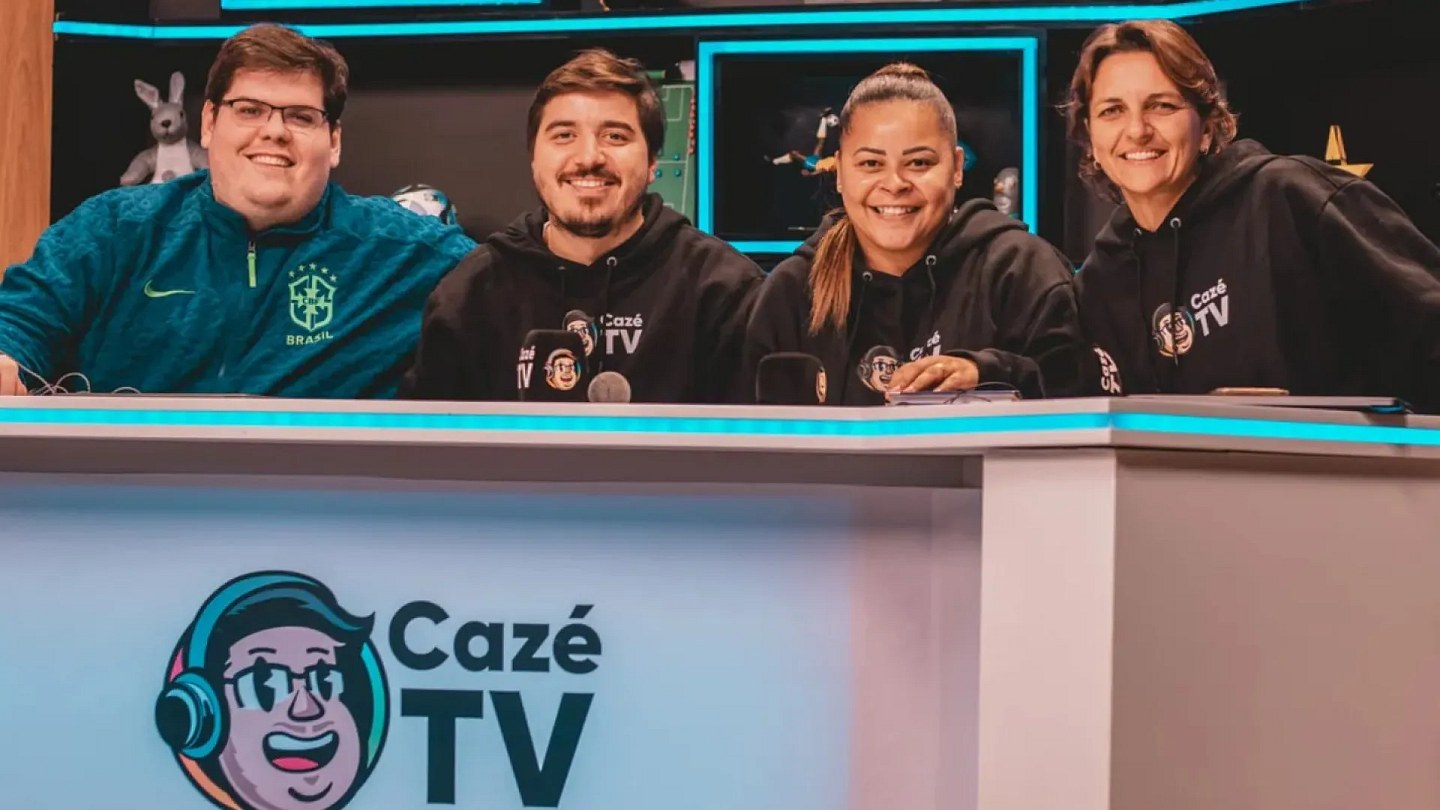
Henry and Ibrahimovic's interactions, as well as much of the Fox package, may seem familiar to anyone who followed the World Cup in Brazil. There is humor, personalities bigger than technical analysis and a conversation that seems strategically designed to yield cuts for the internet rather than informing about football. The impression is that American television has its own version of CazéTV. But it's not quite like that.
Unlike what happened in Brazil, where the CazéTV model shook TV Globo's hegemony in the country's sports broadcasts, betting on a relaxed language and connected to the style of the digital world, in the United States the transformation in broadcasts occurred within the traditional channels themselves.
Without a competitor equivalent to the broadcaster founded by Casimiro Miguel (currently controlled by Livemode), Fox and Telemundo – responsible, respectively, for showing the matches in English and Spanish in the USA – began to incorporate typical elements of digital culture, such as the valorization of characters and the multiplication of content distributed on different screens, to maintain control of the public audience.
According to Zac Kenworthy, vice-president of Fox Sports and responsible for World Cup coverage, the broadcaster sought to balance "football stories with cultural aspects, such as gastronomy, fashion and host cities, to broaden the connection with an audience that often only follows football during the World Cup".
Also according to the executive, the choice of commentators sought to "instantly connect with fans, offering entertainment and analysis".
In terms of entertainment, Ibrahimovic tried to stand out. In the pre-game program for the semi-final between France and Spain, when asked who would be the "king of the jungle" between Mbappé and Yamal, the Swede maintained the stance he had as a player: "I'm the king of the jungle", he said, drawing laughter from the stands.
The strategy also appears in the way Fox organized its programming on social media. Instead of just promoting the games, the broadcaster presented a schedule made up of parallel broadcasts, studio programs, cameras dedicated to players, lives for TikTok and YouTube and, above all, videos starring Henry, Ibrahimovic and Rebecca Lowe, a British presenter responsible for offering a more journalistic tone to the programs.
The movement to seek a logic similar to what channels that were born on the internet do in Brazil occurred even without the threat of dividing the World Cup broadcasting rights in the USA. Fox took over broadcasts in English in 2018, starting with the World Cup in Russia, and already has talks lined up to renew the agreement for the 2030 edition.
"With exclusive broadcast contracts, there is really no competition for the big events. If you want to watch the World Cup in the United States and prefer the English version, you will have to watch it on Fox," Kevin Hull, head of sports media specialization at the University of South Carolina, explained to Folha.
The same happens with those who want to watch broadcasts in Spanish, as Telemundo also bought the rights in 2018 and is in advanced negotiations for the next edition.
Without a break in competition, the fight for audience took place on the so-called "second screen", especially on cell phones, where fans interact with content before, during and after games.
“Broadcasters need to find ways to keep audiences engaged enough so they continue to tune in, even with all this additional information at their disposal,” Hull added.
Maxwell Foxman, associate professor of media and games studies at the University of Oregon, defines the model of American broadcasters as an "attention ecosystem", in which it is not enough to broadcast the games, as it is necessary to remain relevant while the fan is on their cell phone.
“Attention-based ecosystems are providing relevant complementary commentary and generating emotional reactions around the World Cup,” said Foxman. For him, despite the importance of interactions on the second screen, the main focus will continue to be broadcasting the event. "Distribution rights are fundamental for sports media. This is not going to disappear anytime soon, but the search for more segmented and community-oriented media to follow your favorite team is something that is becoming the standard", he explained.
In this model, according to the researchers, commentators are no longer just game analysts. Their personalities have become as important as what they are debating.
Despite the dispute that took place in Brazil between Globo and CazéTV, the American model helps FIFA avoid treating television and content creators as competing universes.
"We see them as complementary ecosystems", stated the entity in response to Folha, adding that the 2026 World Cup strategy was to create an integrated environment between broadcasters, digital platforms and so-called creators.
FIFA itself organized official events and programs for influencers and internet content creators, with the aim of expanding its base among younger audiences, with a focus on distributing this content on YouTube and TikTok, the entity's official partners.
Sports media researchers, however, note that the change goes beyond cooperation between formats and creates a new dispute. For Kevin Hull, "very few people today only watch the game on television". The challenge for broadcasters, he says, became keeping the public’s attention
Source: Noticias ao Minuto - Ultima Hora
This story was originally published by Noticias ao Minuto - Ultima Hora. Visit the original publication for further details.
Open original publication