SÃO PAULO, SP (FOLHAPRESS) - The price of oil rose more than 8% this Wednesday (8) after the United States carried out a new series of attacks against Iran, suffered retaliation and announced that the ceasefire was suspended. There is also uncertainty as to whether the Strait of Hormuz will be blocked again, which would impact oil supplies.
Oil price soars more than 8% after new attacks in Hormuz
SÃO PAULO, SP (FOLHAPRESS) - The price of oil rose more than 8% this Wednesday (8) after the United States carried out a new series of attacks against Iran, suffered retaliation and announced that the ceasefire was...
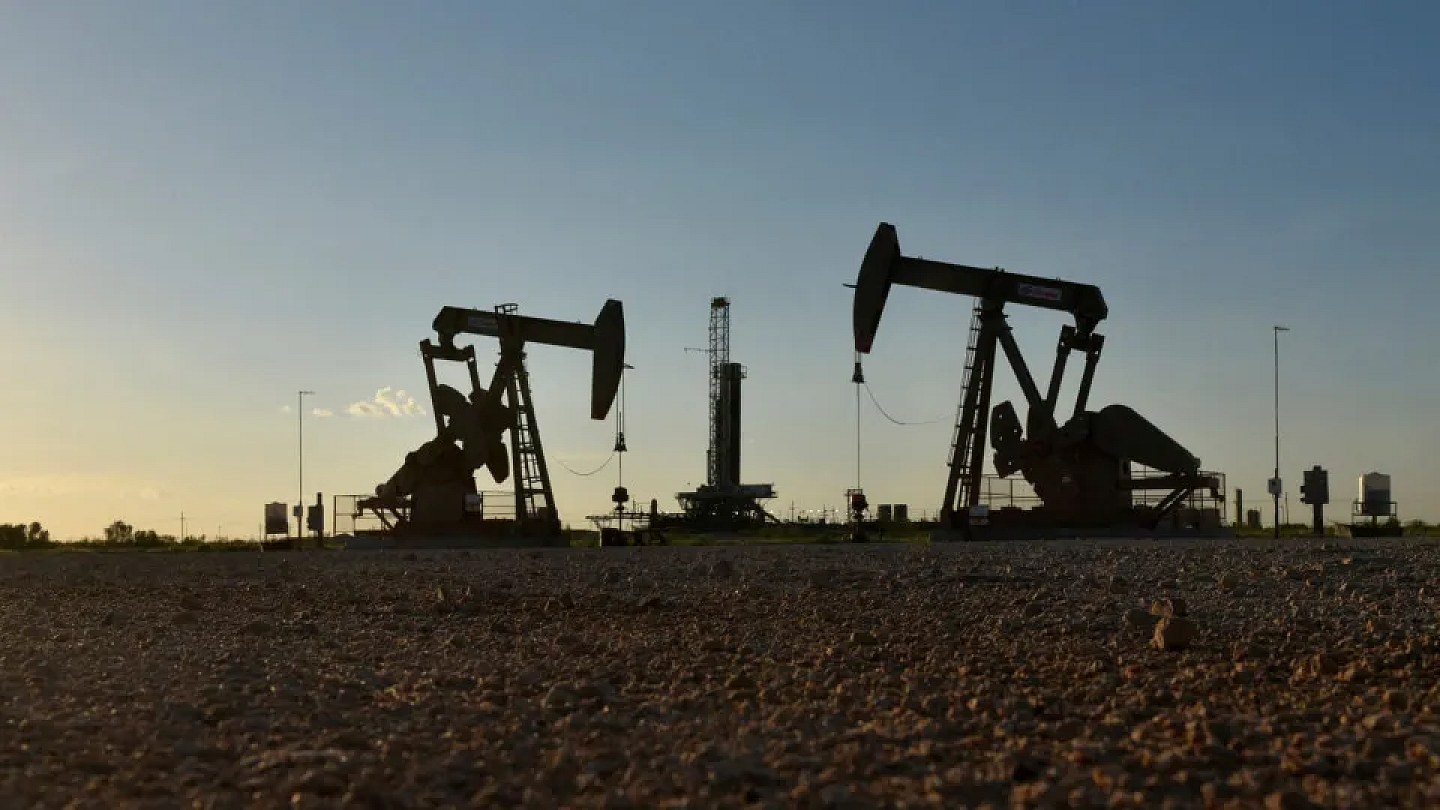
The Brent barrel, a global reference, reached US$80.59 (R$414.73) at around 12:45 pm (Brasília time), rising 8.67% compared to the previous day. It is the highest value of the commodity since June 22, when the price was US$81.65. At around 2:30 pm, the price was US$78.29 (R$402.89), an increase of 5.57%.
WTI (West Texas Intermediate) oil, used in the USA, was traded at US$73.83 (R$379.94), an increase of 4.81%.
The surge in oil prices was the result of the return of fears of an intensification of the conflict in the Middle East after new attacks carried out against tankers in the region. This morning, US President Donald Trump stated that the ceasefire agreement between his country and Iran has "ended" the theocracy's retaliatory attacks against American targets in Persian Gulf countries.
Trump made new criticisms of the Iranian regime. "As far as I know, it's just a waste of time dealing with them [Iranians]. They're liars, there's something wrong with them. They're crazy. As far as I know, [the agreement] is over," said the American alongside NATO Secretary General Mark Rutte, during the Western military alliance summit in Ankara (Turkey).
True to form, however, Trump also said he could still negotiate. "I'm going to talk to our negotiators. They want to negotiate, they are good people, [American envoys] Steve Witkoff, Jared Kushner, but they have to talk to me," he added.
On Tuesday, three tankers were hit by bombings that the US blamed on Iran, which did not claim responsibility.
Between Tuesday night and Wednesday morning, Centcom (US Central Command) announced that it carried out "powerful attacks against Iran" and had hit 80 alleged Iranian military targets. Iran's Revolutionary Guard said it responded with missiles and drones at 85 suspected US military installations in allied countries such as Bahrain and Kuwait.
Mohammad Bagher Ghalibaf, Iran's top negotiator with the US, accused the White House of "serious violations" of the deal, including reimposing oil sanctions and launching military strikes against southern Iran.
"The era of bullying and extortion is over. It's going nowhere. We won't give in," commented Ghalibaf in a post on X (formerly Twitter).
Despite attacks by both sides, shipping data companies said some vessels continued to pass through the Strait of Hormuz, including an oil tanker owned by ExxonMobil and belonging to Japanese shipping company NYK and a container ship owned by French company CMA CGM.
A day earlier, attacks on ships led the White House to revoke a license granted to Iran to sell oil. The new escalation of the conflict interrupted the fragile truce between Washington and Tehran, in force since the end of June, and pushed oil prices up.
After the new attacks, maritime authorities raised the risk level for vessels transiting the waterway to "serious". Although traffic through the strait has recovered over the past week, it remains irregular, ranging between a third and a fifth of pre-war levels.
Washington's decision to revoke the license came with a warning to Iran that its actions in the strait were "totally unacceptable" and would have consequences. The White House granted the permit in June, easing decades-old sanctions as part of a deal to reopen the strait.
The JMIC (Joint Maritime Information Center), led by the US Navy, on Tuesday raised the threat level for crossing the strait from "substantial" to "severe", citing deliberate hostile actions likely under current conditions; This is the first time the threat level has been defined this way since June 15th.
"U.S. Central Command forces have initiated a series of forceful attacks against Iran to impose a heavy price for targeting and attacking commercial vessels," the U.S. forces statement said. "The aggression demonstrated by Iran was unjustified, dangerous and a clear violation of the ceasefire," he added.
Qatar also blamed Iran for the attack on the vessels, and the Qatari Foreign Ministry said it had summoned the Iranian deputy ambassador and handed him a note of protest following the incidents.
Iran's Foreign Ministry, for its part, said the accusations are disconcerting and that Tehran is diligently fulfilling its commitments, but stressed that commercial ships run risks when using routes not coordinated with the regime.
An official interviewed on condition of anonymity by Reuters said Tuesday's American strikes targeted air defense systems, coastal surveillance systems, surface-to-air missiles, anti-ship cruise missiles and Iranian drone launch sites.
As a result, investors once again feared for the flow of oil and a new interruption in traffic in Hormuz. "Any suggestion that negotiations have failed increases the risk of further supply disruptions or stricter sanctions," said Daniela Hathorn, an analyst at brokerage Capital.com.
DROP IN STOCK EXCHANGES AROUND THE WORLD
The intensification of the conflict in the Middle East brought down the world's main stock exchanges this Wednesday. The biggest drop occurred in Asia with investors also impacted by doubts as to whether the valuation of companies linked to the artificial intelligence sector had reached its peak.
The Seoul Stock Exchange once again led the losses by falling 5.35%, followed by Hong Kong (-2.99%) and Tokyo (-2.11%). In China, the CSI300 index, which brings together the largest companies listed in Shanghai and Shenzhen, fell 0.77%, while the Shanghai SSEC index lost 0.49%.
In Europe, the Euro STOXX 600, a reference in the European Union, closed down 1.8%, at 634.91 points, its lowest level in a week. The trend was followed in Frankfurt (-2.23%), London (-1.66%), Paris (-2.18%), Madrid (-2.73%) and Milan (-1.22%).
In the USA, the loss was a little smaller, with devaluations in Dow Jones (-1.16%), the S&P 500 (-0.44%) and the Nasdaq (-0.16%), at around 2:50 pm.
Read Also: See how Pix pension, approved by the Senate, will work
Source: Noticias ao Minuto - Ultima Hora
This story was originally published by Noticias ao Minuto - Ultima Hora. Visit the original publication for further details.
Open original publication