BERLIN, GERMANY (FOLHAPRESS) - Keir Starmer has resigned, and Andy Burnham, former mayor of Manchester, will be his replacement before the end of the month. That is if the Labor Party's roadmap does not suffer any setbacks. Until then, a term linked to the likely future prime minister is occupying analysts. What is “Manchesterism” and what will it mean for the future of the United Kingdom?
Future Prime Minister bets on 'Manchesterism' to transform the United Kingdom
BERLIN, GERMANY (FOLHAPRESS) - Keir Starmer has resigned, and Andy Burnham, former mayor of Manchester, will be his replacement before the end of the month. That is if the Labor Party's roadmap does not suffer any...
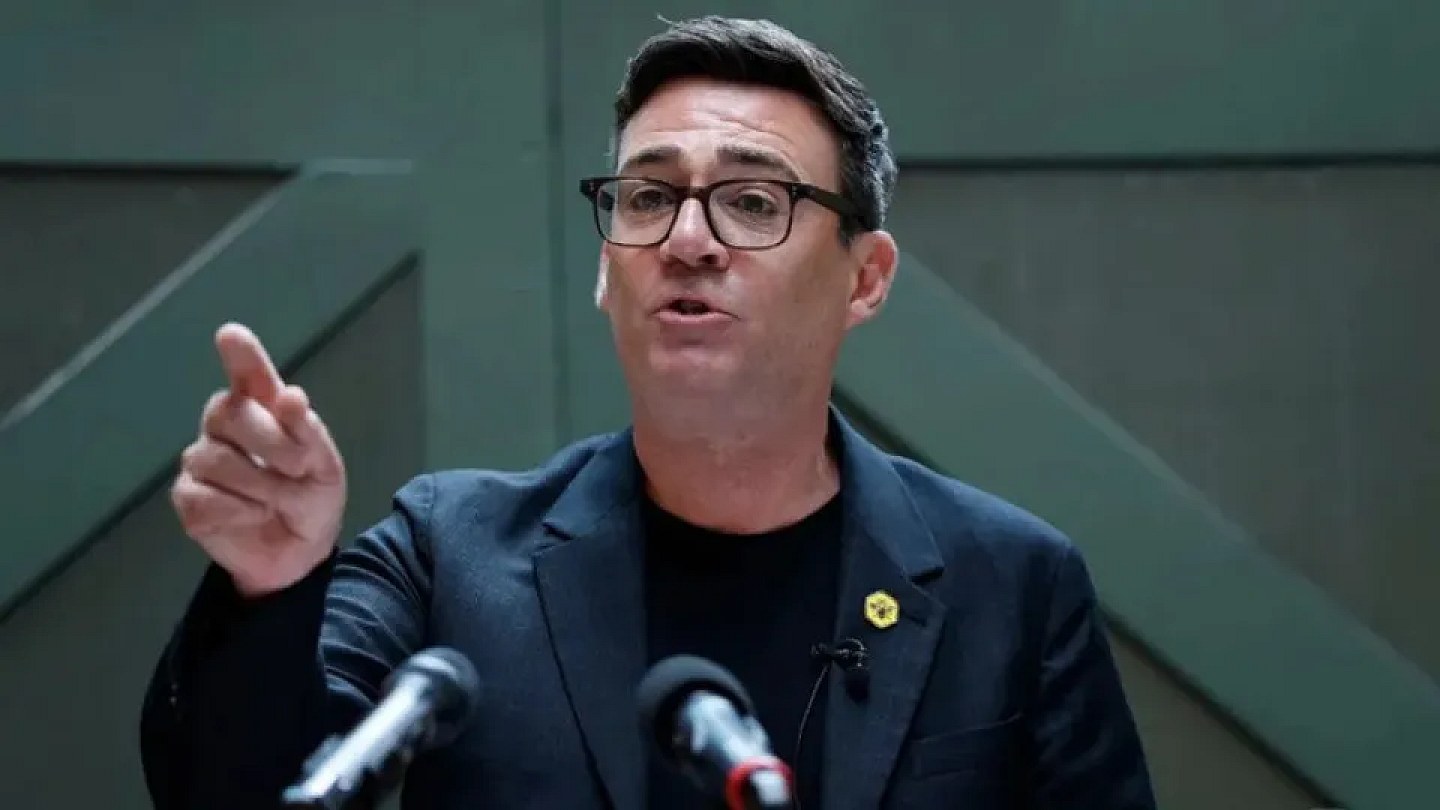
In short, decentralization of power and "pro-business socialism", as Burnham himself recently defined it. There is much more to the package, which has been revealed, discovered and speculated in recent weeks, as well as omissions.
Burnham, who left the leadership of Greater Manchester to be elected to Parliament, a condition that Starmer's group forced to try to stop his rise, is expected to be the only Labor member to register a candidacy this Thursday (9), at the beginning of the party's succession process.
The registration window lasts a week and if, as it seems, there is no other interested party, Burnham will be able to present himself to King Charles III on the 20th. If a competitor emerges, the process should extend a little longer, but without taking away the former mayor's favoritism.
Even described as a left-wing extremist while his name was just one possibility, Burnham has been careful in his choice of words in recent weeks. He ensured, for example, the maintenance of fiscal responsibility in his government.
He avoided the mainstream press, but clarified voters' doubts in a question and answer session on Reddit. He even attended to Kemi Badenoch, the leader of the Conservatives, who accused him of selecting amenities and avoiding difficult questions at a professional press conference.
"It's a fair challenge, Kemi, but don't forget it's only been two weeks since I answered questions from 74,000 Makerfield citizens," Burnham responded, naming the Manchester-area constituency that elected him to Parliament in mid-June.
A more forceful demonstration occurred last week. During a speech given at a museum in Manchester, Burnham spoke about several issues, starting with the decentralization of power, the basis of what he calls "Manchesterism".
Decentralization, in this case, is an approximation of "devolution", the return of competences, the British alternative to federalism. It is Parliament that holds power, but historically distributes it in the form of attributions. "The aim will be to provide new opportunities to extend devolution in Scotland, Wales and Northern Ireland by devolving powers," Burnham said.
The United Kingdom is the G7 country with the most centralized tax and spending policy and, among developed nations, one of the most unequal. Burnham, the first mayor of the Manchester metropolitan area, is living proof of how much the decentralization of power bears fruit - annual growth of 3.1%, or double the average achieved by the country.
Bringing the decision-making process to the local level, especially in areas such as taxes, professional training, transport and housing, according to the likely future prime minister, means directly serving citizens and making the economy work where it is most needed.
Burnham's plan, in this sense, is so elaborate that he proposes a hub at 10 Downing Street, the seat of the British government, in Manchester. It would be up to this "northern branch" to study and implement the most necessary decentralization measures at the different levels of public administration. The more local, the better.
The program attracts attention and criticism. While focusing on the main problems that afflict the Labor electorate, the project may not be efficient nationally. Furthermore, Burnham's management revolution would have to be combined with the Treasury, responsible for the country's economic management.
In an article this month, Dave Richards, professor at the University of Manchester, recalled that the venture would only be successful if the British State gave up the mentality of standardized solutions, designed mainly to control expenses, adhering to an approach that respected the needs of each region, closer to the citizen.
"Burnham understands this feature of the Treasury better than most," the academic wrote.
In Manchester, the recipe worked. The decadent air of the old industrial center was replaced by a modern economy, focused on services, creative economy, technology and culture. Skyscrapers pop up in the city center.
"Pro-business socialism", which may sound like a dirty word to liberal ears, distributes, among other initiatives, £1 billion (R$6.8 billion) between ten districts of Greater Manchester. The allocation of resources is defined by local managers.
Private investment is part of the equation, but under the scrutiny of voters. The former mayor's most famous banner in Manchester is public transport, control of which the public authorities took back after concessionaires failed to respond to user requests regarding changes to lines and timetables.
The Bee Network, with its yellow vehicles, became a city brand and a model for other urban centers. The scheme even provides a free pass for the most vulnerable.
Standing up to the rising far right in the UK, personified by the populist Nigel Farage, seems to justify Burnham's focus on domestic aspects. For no other reason, his speeches and programs talk little about the outside world. Observers therefore expect Starmer's work to continue, based on crisis management, rapprochement with the European Union and the stressful relationship with Donald Trump.
Analysis by the European Council on Foreign Relations recalls that Burnham has Jim O'Neil, a former Treasury official and economist at Goldman Sachs, as one of his main advisors.
O'Neil is known for creating the acronym Brics and argues that the economic models of the West, with the United Kingdom at the forefront, need to be rethought in light of the relationship with medium-sized and emerging countries. It is clear that Brazil can enter this context.
Read Also: Under heat wave, Western Europe experiences hottest June in history, says Copernicus
Source: Noticias ao Minuto - Ultima Hora
This story was originally published by Noticias ao Minuto - Ultima Hora. Visit the original publication for further details.
Open original publication